
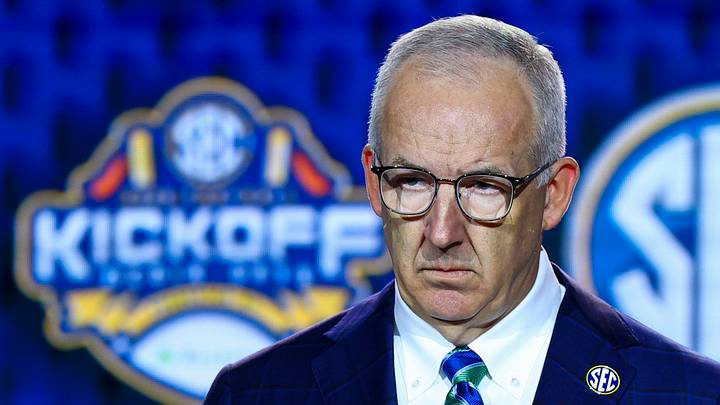
College football's usual villain appears to be on right side of a controversial topic for once. SEC commissioner Greg Sankey wrote a scathing affidavit arguing against judge-granted eligibility for athletes -- particularly in college basketball and football -- who already signed professional contracts.
"Permitting former professional athletes to return to competition creates a competitive disadvantage and fundamental unfairness for current student-athletes who have not pursued a professional sports career but instead have maintained their commitment to the collegiate athletics model," Sankey wrote in the document filed in Louisiana court.
He ripped judges who have recently ruled players that left college should be allowed to return to school and gain another year of eligibility. The confusion and angst stems from the introduction of the NCAA's new five-year eligibility clock rule, which those players argued should include them as 2026 would technically be their fifth year since the clock retroactively began. Sankey vehemently disagrees with that premise.
"These rules are grounded in the principle that athletics are an integral part of the academic experience," he continued. "The rules align the time permitted for college athletics with the pursuit of an undergraduate education and further the important purpose of preserving opportunities for future student-athletes to participate in college sports."
Greg Sankey's eligibility take actually protects the sanctity of college football
It's tough to admit it but the SEC commissioner is right. College sports needs to be for college athletes and once a player has decided they no longer want to attend college, that's it for their career there. Sure, it's unfortunate players who made their decisions before these rules went into effect are impacted the way they are but the cutoff has to be somewhere.
If a college player leaves for the NFL and signs a contract with a team, they are no longer amateurs. That was the old-school definition before the era of NIL and revenue sharing, but even now there are ways to distinguish between a college athlete and a professional. There are ways for players to keep their amateur status while exploring a pro career so that they can utilize eligibility should the venture not work out.
Think of the high school recruits that were promised significant playing time or convinced of crucial development paths they could only get at that institution. If a fifth-year player returns after being exposed to a professional atmosphere, he's got even more of a leg up on that freshman than he would had he just stayed on campus. That recruit possibly would've taken a different offer at a program where it didn't have such a veteran-filled roster.
There's a domino effect here Sankey is trying to prevent. An influx of fifth-year players will cause problems for coaches that already went through the offseason recruiting freshmen and transfers to fill out the voids left by those seeking professional opportunities. Also, those returning players may not want to play for their original programs again and, based on previous rulings, eligibility is contingent on playing for the school they left from.
Should the Louisiana judge that Sankey is appealing to choose to ignore his reasoning and rule against the NCAA, there will be irreversable chaos inflicted upon college sports. It's rare -- and somewhat painful -- to admit but the SEC is actually leading the righteous charge this time.
 Add us as a preferred source on Google