
Key Points
Bullet point summary by AI
- College football programs are securing massive private equity sponsorship deals, widening the competitive and financial gap across the entire sport.
- Ohio State's $15M Chase deal and Notre Dame's $18M-$20M SoFi patch lead a trend where major Big Ten and SEC brands outpace rivals in revenue.
- Wall Street funding ensures blue-blood programs maintain dominance, leaving mid-tier schools unable to match contract sizes or retain portal talent.
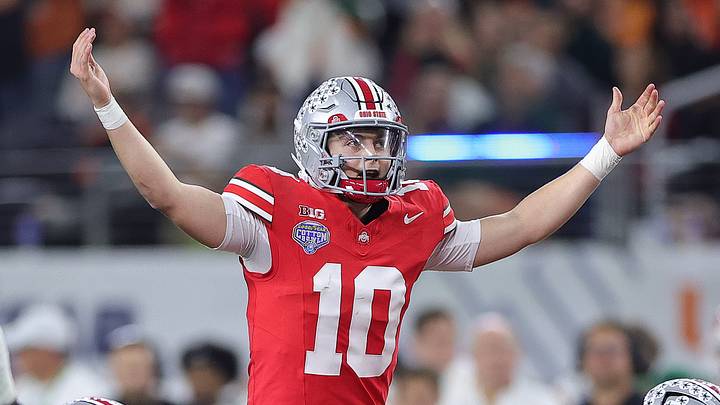
The Ohio State Buckeyes are going to Wall Street. Or, rather, Wall Street is coming to Columbus. The world's fifth-largest bank, JPMorgan Chase, will be the official jersey patch sponsor for Ohio State athletic programs starting with the 2026-27 college football season, injecting a massive amount of private equity cash that will leave competitors in the dust.
Ohio State Football 🤝 @Chase
— Ohio State Football (@OhioStateFB) July 28, 2026
The start of a new chapter begins today.#GoBucks | #ChasePartner pic.twitter.com/AJObEm04pD
The school unveiled the company's logo will appear on players' right shoulder, above the Big Ten conference logo patch. It'll join the first-of-its-kind regular season trend outside of sponsored bowl game patches worn in the postseason.
According to reporting by On3's Pete Nakos, the sponsorship deal is worth over $15 million annually with NIL opportunities attached -- one the largest jersey patch deals to date. Over 25 other schools have inked similar deals, but only one surpassed the lucrative value of Chase's.
Notre Dame also revealed Tuesday it signed a jersey patch deal with SoFi, the naming sponsor of the home of the NFL's Los Angeles Chargers and Rams. That contract is reportedly worth between $18-20 million annually and would make it the richest jersey sponsorship in college athletics history. That kind of cash infusion will only continue to separate the haves from the have-nots in college football.
CFB jersey patches will only benefit Big Ten, SEC in the long run
Other schools in the Big Ten have announced sponsorship deals like Ohio State's. Illinois partnered with Busey Bank, Wisconsin with popular fast food chain Culver's, and Michigan State with MSU Federal Credit Union. Compared to the Buckeyes and Fighting Irish, they'll be getting chump change.
However, the proof of concept that widely known and successful brands like Ohio State and Notre Dame can get the level of private equity investment like Chase and SoFi will only open the doors for teams of similar stature to earn their own deals. So far the Big Ten's biggest rival, the SEC, has just two jersey patch deals signed -- LSU with Woodside Energy and Arkansas with Tyson Foods.
You can expect an Alabama or a Georgia to get their own in short time, especially if they want to prevent the furthering of the Big Ten's national championship streak (three years running). However, the introduction of private equity funds into college football will only re-trigger the spreading gap between blue bloods and mid-level programs that seemed to be catching up with the advent of NIL and the transfer portal.
There's no way Wall Street-level firms are going to invest in the ACC or Big 12. The best those conferences can probably do are oil companies (Texas Tech for example) or regional chains. That's not going to strike a match to the power of a Chase or any other mega company that jumps in.
This kind of lucrative investment is exactly what the Big Ten and SEC are looking for in justifying their dominance over the sport. Heck, if the latter gets enough private funding, there may be legitimate grounds for secession, like it's recently threatened. That would be cataclysmic for college sports in general.
There's nothing stopping private equity investment now. Conferences are actively asking for it. SoFi and Chase's involvement is just the biggest green light for every company that the risk is worth it. Millions of eyeballs tune in for games each week in the fall. In fact, Ohio State vs. Michigan last year garnered 18.42 million viewers, by far the most of the season.
The bigger programs are going to get the bigger bucks, and that's simply something mid-tier schools can't make up ground on, especially with big names transferring each offseason. The effects of those investments will be seen down the road when the portal may become less effective because players are choosing the higher dollar amounts from big schools instead of the same-sized check for more playing time at a lesser-known program.
More college football news and analysis:
 Add us as a preferred source on Google