
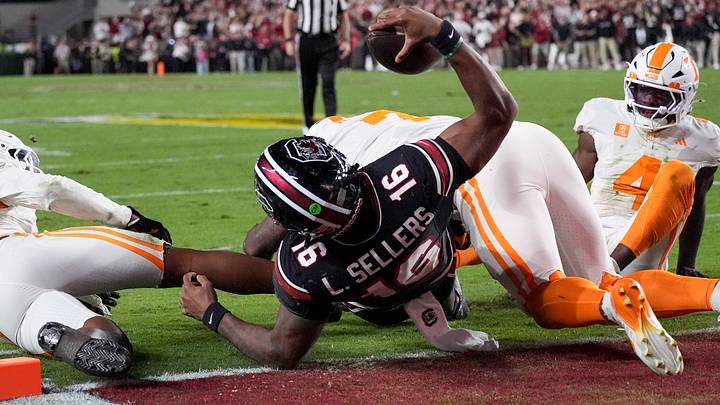
College football is making history. Over the last three weeks, 11 AP Top 10-ranked teams lost which is the most in the history of the poll across that span. There are fewer than four undefeated programs left this early in the season for the first time since 1977 — three lost in Week 8 and only three remain. It's got fans feeling like they stepped into a time machine and traveled back to "The Year of the Upset" — the famously chaotic 2007-08 campaign.
In fact, this is the first time since then that three Top 2-ranked teams fell to unranked opponents in three consecutive weeks (No. 1 Texas to Oklahoma in Week 6, No. 1 Georgia to Auburn in Week 7, and No. 2 BYU to UCF in Week 8). The 2007 season birthed the "Curse of the No. 2" where the No. 2-ranked team lost seven times in the final nine weeks of the year.
It's crazy how much 2026 is mirroring the legendary 2007 college football season, a.k.a. "The Year of the Upset": 🧐 pic.twitter.com/4iQghjF0OU
— College Sports Only (@CSOonX) October 25, 2026
The biggest difference between the two campaigns besides the 19-year gap is the legalization of paying players. Name, Image and Likeness payments have evened the game in ways that are only just beginning to be realized.
Benefits of NIL finally leveling the playing field of college football

The usual suspects are still at the top of the list when it comes to "buying" what should theoretically be the best roster in the sport. Here's a quick breakdown of NIL spending this season by Power Four teams.
School (Conference) | Estimated 2026 Roster "Cost" |
|---|---|
Texas (SEC) | $48.485 million |
Oregon (Big Ten) | $43.405 million |
LSU (SEC) | $40.966 million |
Ohio State (Big Ten) | $40.421 million |
Miami (ACC) | $38.629 million |
And by Power Four conferences.
Conference (# of Members) | Estimated 2026 Total NIL Spending |
|---|---|
SEC (16) | $502 million |
Big Ten (18) | $488.228 million |
ACC (18) | $385.157 million |
Big 12 (16) | $356.126 million |
Notre Dame (Independent) | $38.448 million |
The SEC and Big Ten dominate spending and that has translated to the two conferences earning the vast majority of spots on each AP poll this year. That's a double-edged sword, however. Of every upset of a ranked team so far this season, 22 of them have been SEC or Big Ten teams on the losing end.
Yes, a good chunk of those are intra-conference matchups, but that suggests the acceptance of NIL by the NCAA has allowed more of the traditional bottom-dwelling teams to emerge from the shadows of illicit spending to compete legitimately. In fact, four of the top five spenders this season have incurred at least one loss and only two remain in the AP Top 10 as of Week 8. The lone undefeated in that group is from the ACC (Miami).
That means spending isn't translating to winning, at least all the time. It's certainly buying more wins for the teams that would have no shot of competing with the likes of an Ohio State, Oregon or Texas before. Indiana's 2025 title run is a prime example of NIL taking a Big Ten bottom feeder and turning it around into a national champion in the span of two years.
Injuries are the one wild card in all of this, however. Health is seemingly the great equalizer regardless of NIL's presence and it's heavily impacted some of the top spenders this year. Both Oregon and Ohio State lost their respective quarterbacks and each team's championship prospects are likely shot.
Then there's consistency of talent. Texas and LSU were supposed to boast two Heisman Trophy-contending passers, Arch Manning and Sam Leavitt, but both have underwhelmed despite having top-tier weapons to utilize. No amount of money is going to make a player better if they simply don't have a consistent clutch gene.
Paying players may be legal now, but the teams that used to succeed the most when money was handed under the table are facing stiffer challenges now that everybody is doing it out in the open. Ironically, that's been good for the game and the 2026 season is just the latest example of the renewal of "On any given Saturday."
 Add us as a preferred source on Google