
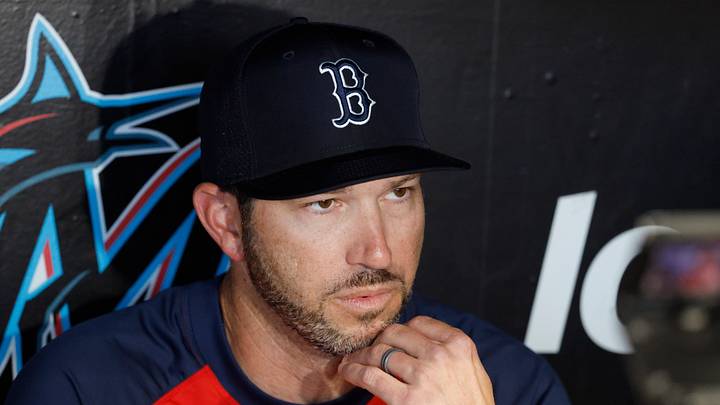
Rarely have we seen an organization potentially have buyer’s remorse only weeks after giving its interim manager the full-time position, as the Boston Red Sox did with Chad Tracy nearly two weeks ago.
But when multiple controversial decisions help result in a first-round playoff exit at the hands of the rival New York Yankees, that’s when the conversation quickly changes.
Between taking Sonny Gray out of the game in the fifth inning and allowing outfielder Roman Anthony to sit because he felt “uncomfortable” amid a hand injury, Tracy became a despised social media target on Tuesday night. Boston’s thrilling comeback season concluded with a 9-2 loss at Yankee Stadium, continuing a five-year streak of failing to reach the ALDS.
Gray, who has said he’s open to retiring this winter, openly criticized Tracy during a postgame media session. Upon replacing Gray, reliever Erik Miller immediately gave up an RBI single to Yankees left fielder Cody Bellinger in a lefty-on-lefty matchup.
“I think I’m the best pitcher in the American League going through the order the third time. I think that’s a fact,” Gray told reporters. “I would have liked to live or die with me in that moment, but that’s the competitor I am, and yeah, I think you can probably ask the guys, and they felt the same way. So I felt strong, I felt confident, I felt convicted.”
Indeed, Gray held opponents to a .180 batting average when he faced them for a third time.
Sonny Gray and Boston Red Sox players openly disrespected Chad Tracy on Wednesday night

To be clear, Tracy earned the full-time job after going 77-58 following Alex Cora’s dismissal. This wasn’t an instance of a team playing “good enough” and ownership wanting to maintain the status quo for another year.
The issues start with three players: Gray, Anthony, and first baseman Willson Contreras, all of whom disrespected Tracy or the Red Sox in some form on Tuesday night. We’ll start with Anthony, whose situation has far more to do with actions than words. At no point should a 22-year-old outfielder need to miss an elimination game because of a sore hand; he could easily have DH’d if he felt he couldn’t provide adequate defense.
Gray wasn’t alone in offering unfiltered opinions on the Red Sox’s strategies, with Contreras calling out leadership for what he believes is an overreliance on analytics. Tracy’s decision to pull Gray aligns with managers avoiding pitchers facing the order a third time.
“It’s not enough when you have talent, or you have data, or you have computers telling you what to do, because this is baseball,” Contreras said. “The data is here to help us, but at the end of the day, you’re going to need experience and veteran guys to win games.”
Should the Boston Red Sox regret naming Chad Tracy the full-time manager?

The end of a season breeds overreactions, and we understand Red Sox fans’ outrage at Tracy and lead baseball executive Craig Breslow. The best-case scenario is that management learns from what went wrong and changes its approach for next season, though that’s not quite rewarding to hear now.
Much like the fears surrounding artificial intelligence, teams have seemingly accepted that they can’t live or play without trusting the data… except, of course, when the data works in a player’s favor the way it did with Gray. It should have been all hands on deck in an elimination game, and Tracy instead managed it like a midweek May road game.
So should there be buyer’s remorse? Perhaps, but not necessarily toward Tracy. Blame a systemic baseball culture where managers are ordered — or voluntarily choose — to explicitly follow what the computers tell them. It’s certainly worked out for the Athletics, who never even reached the World Series during the “Moneyball” years, and any hopes the Red Sox had of a championship ended when Gray walked off the mound on Tuesday night.
Remember, folks: The computer is always right, except when it can’t wear a uniform.
 Add us as a preferred source on Google