
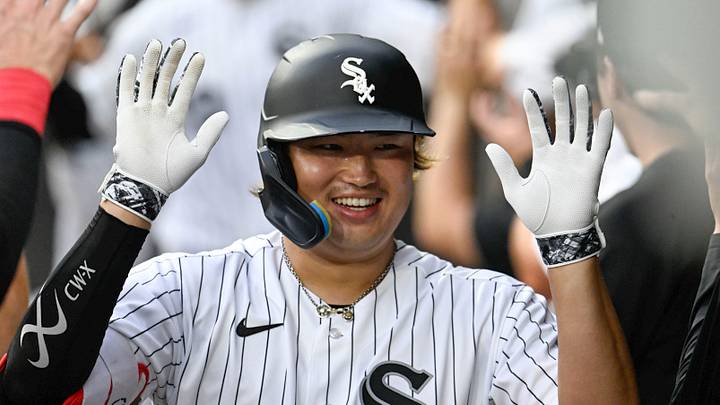
In most successful rebuilds, there's a season everyone looks back on as a sign that said everything is a go — this team is ready to make some noise. And then there's the Chicago White Sox, a team that lost a modern-day record 121 games in 2024. Two years later, they are leading the AL Central, without much of any progress in between.
Which begs the question: How? Where exactly did this come from? How does a team go from being a complete also-ran to cruising toward a division title? And is this Cinderella story actually built to last?
How the White Sox rebuild skipped a step
Nobody drew up a rebuild that moves this fast, and the strangest part is how little the season has actually felt like validation along the way.
Take August. Chicago went 14-14 but held its lead the entire month. They finished with a negative run differential for the first time all year, a swing from plus-18 in July. Manager Will Venable spent large chunks of the month scrambling for innings from names that weren't supposed to matter this much, and the few trade deadline additions brought in haven't provided the boost anyone expected. Joey Bart broke a finger two games into his tenure. Huascar Brazobán got hit around in six of ten outings. Luis Castillo has been more liability than asset. This is a team that keeps winning anyway, which just fulfills the prophecy of a strange season.
Will Venable's fingerprints are all over White Sox turnaround

Any division lead that has sustained more than a few games, especially in September, is not an accident. The fingerprints on this one belong to the manager as much as anyone in the lineup. Venable's own tendencies shifted hard between his first year and his second. In 2025, his stolen base attempt rate was 25 percent below league average. In 2026, it's dead even, nearly double the relative aggression over a single offseason. His pinch-hitting rate jumped from barely above average to 34 percent above it, the clearest sign that he's leaning on his bench far more than he did a year ago. He was already an outlier on intentional walks and sacrifice bunts, both well above league norms in year one, and both have stayed there this season.
This is a manager who got noticeably more willing to push his chips in once the roster gave him a reason to. It shows up in the numbers and not just in the standings column. And like his team, Venable’s own season trajectory hasn't been clean. His mound-visit mixup against Cleveland in August, forcing Noah Schultz out of a start after a third of an inning, was the kind of mistake that gets magnified precisely because the team is good enough now for it to matter.
White Sox were built, not bought, and playoff-bound

The roster underneath Venable's tendencies is what's actually kept the lead intact. Chicago's walk rate climbed from 8.3 percent to 9.5, its strikeout rate ticked up slightly and its isolated power jumped from .141 to .171, the kind of year-over-year swing that shows up as a real identity shift rather than noise. Team runs created went from solidly below average to a wRC+ of 104.2, assuredly above average.
The pitching staff's improvement has been more modest and more spread out. The bullpen chipped away at an ERA that was sitting at 4.58 to a more respectable sub-4 mark as the playoff push becomes more profound. That's a meaningfully different shape than the last worst-to-first turn Venable had a hand in.
Venable was Bruce Bochy's bench coach for the 2023 Rangers, who rode a transformed rotation to a title while their bullpen actually got worse. Chicago's path toward October has been built from the ground up rather than bought in free agency, which might be the least strange and most encouraging part of the whole thing.
None of it adds up to a finished product. It adds up to a team playing playoff-race baseball two years after playing the worst baseball anyone had seen in decades, doing it with a slumping middle-of-the-order bat and a bullpen that's quietly become the backbone. Strange doesn't mean fragile. It just means nobody, including the people running it, expected the ride to look like this. Would the ring have a pope hat in it? Time will tell.
White Sox magic number comes with a cold bat attached

It seems we are always looking for a magic number this time of year. The White Sox have one, and for the first time, in a long time, it is about a division championship: 15, to be precise, with a three-game cushion on Cleveland and a 7,5-game lead over Minnesota. This isn't a club playing out the string, it's one counting down. That's what makes Munetaka Murakami's month so jarring.
Murakami’s return from injury was supposed to be the story that made a division-leading White Sox team make sense. He is a slugger coming back to power a countdown down the stretch. Unfortunately, he was a drag on the club in August, hitting .147 with a strikeout rate north of 37 percent and just one multi-hit game the entire month. He'll finish the year with 30 home runs and a batting average barely above .210, the kind of season that reads as boom or bust depending on which stat line you're staring at. The White Sox are leading their division, have a magic number that matters, with their most talked-about bat in a genuine slump. That alone should tell you this isn't unfolding the way anyone scripted it.
 Add us as a preferred source on Google