
Key Points
Bullet point summary by AI
- Hunter Goodman is on a prolific home run tear for the Colorado Rockies this June, sparking debates over whether his massive power surge is truly sustainable.
- He has 21 homers, with 14 coming on the road rather than at Coors Field. While his strikeout rate is high, his contact quality has been improving sharply.
- His hot streak could land him an All-Star nod or prompt the rebuilding Rockies to trade him now to maximize his high development and trade market value.
If I had a nickel for every time a catcher with an extreme pull-air approach hit an unsustainable number of home runs, I’d have two nickels, which isn’t a lot, but it’s weird that it happened twice.
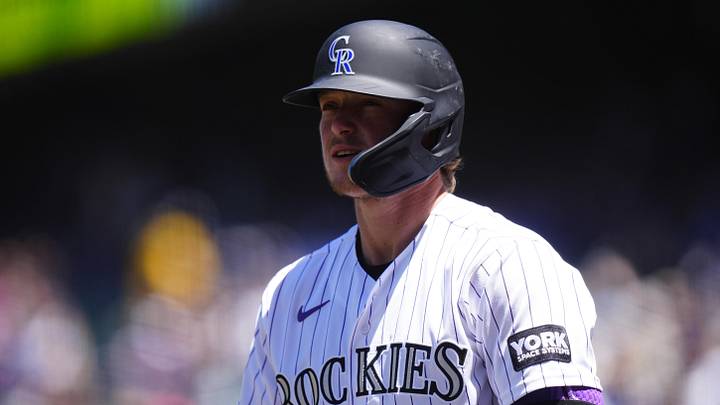
Hunter Goodman is hitting a lot of home runs right now, 21 to be exact, and eight in the first 18 days of June alone. The ball is absolutely soaring through the Coors Field air for him, and it’s all setting up for a 50+ home run chase for the second catcher in two years, after Cal Raleigh smashed 60 last season for the Mariners. So is Goodman just 2026 National League Cal Raleigh? Well, no, not exactly.
Is Hunter Goodman really this good?

Goodman has serious power in his bat, that’s not breaking any news. He hit 31 home runs in a breakout, Silver Slugger campaign last year, and while he’s currently projected to hit 38 this year by both FanGraphs Depth Charts and ZiPS, he’s actually on pace for 45 after a slow start. Any number in that range would well exceed his preseason projections, and with the Coors Field wind at his back? We could be looking at another 40+ bomb catcher, something that has only happened five times in MLB history.
But I’m not necessarily sold. Goodman isn’t exactly producing the quality contact required to keep this up, and his expected home runs are all out of whack. So we’re going to pick through some data to figure out if Goodman is the next elite home-run-hitting catcher, or if he’s a (I’m gonna say it) Coors Field merchant.
Goodman's expected home runs are low, but they also don't make sense
First, we need to talk about expected home runs, a stat I’m going to plainly admit I do not fully understand. Statcast tracks how many ballparks your home run would have been a home run at and analyzes trajectory to see who is getting lucky with stupid park walls and who is legitimately sending balls to the stratosphere. Goodman has the largest positive gap in MLB between his actual and expected home runs when adjusted for park factors, which would suggest he’s simply the aforementioned Coors Field merchant.
But here’s what I don’t understand: when you sort by “standard” instead of “adjusted” Goodman is middle of the road with a paltry one extra home run. And while Baseball Savant claims “adjusted” means the trajectory is “altered to acknowledge the environmental context of the venue where it was hit.” Okay … so every year the largest gaps in expected versus actual should be a bunch of Rockies, right? But it’s not, and I can’t imagine that the number doesn’t correct for Goodman being required to play half of his games in the mile high air. Meanwhile, Goodman has only his seven home runs at Coors and 14 on the road, so that’s not even … what are we even talking about here?
Basically, expected home runs are either damning or a non-issue for Goodman depending on a variable I do not have access to. So we’re just going to ignore them and instead look at contact quality, which again, does not necessarily suggest that Goodman should be hitting as many home runs as he is. In fact, he’s barely above average in the kind of contact he’s producing but way above average in home run hitting.
Contact quality and home runs are a strongly correlated stat, and Hunter Goodman's contact quality does not really suggest he should be hitting this many home runs. Yordan Alvarez, meanwhile should probably have quite a lot more pic.twitter.com/l9LGxpCqdJ
— Oliver Fox (@oliversfox) June 18, 2026
It’s a simple correlation, but it does suggest Goodman is slugging at least a little bit over his head at the moment. His other hitting stats aren’t particularly impressive; he strikes out a ton with a really high whiff rate and doesn’t really walk at all for a power hitter, which limits his impact. But it’s also true that Goodman has been improving his contact quality in a real way, and the above plot doesn’t tell the full story.
However, Goodman's contact quality has been increasing sharply pic.twitter.com/TXjBIT73zU
— Oliver Fox (@oliversfox) June 18, 2026
Goodman is, as the kids say, on a hot streak right now. I expect the rest of his season will fall somewhere in between, as wild swings in output like that aren’t ever sustainable. Whether or not he makes his second All-Star team will depend on if his home run hitting can capture voters’ imagination. Not much else about the Colorado Rockies is likely to do that, and Mickey Moniak is probably your single All-Star if the game was right now.
But I don’t think it’s fair to call Goodman a Coors Field merchant, and the power in his bat, while unsustainable, shouldn’t be chalked up to his home park, where only a third of his homers have been hit. The Rockies could also look to trade Goodman and capitalize on this hot streak, which wouldn’t be an indefensible choice. He’s a good hitter, and being able to pull the ball at a young age projects well for his development. But he isn’t National League Cal Raleigh—not quite.
More MLB news and analysis:
 Add us as a preferred source on Google