
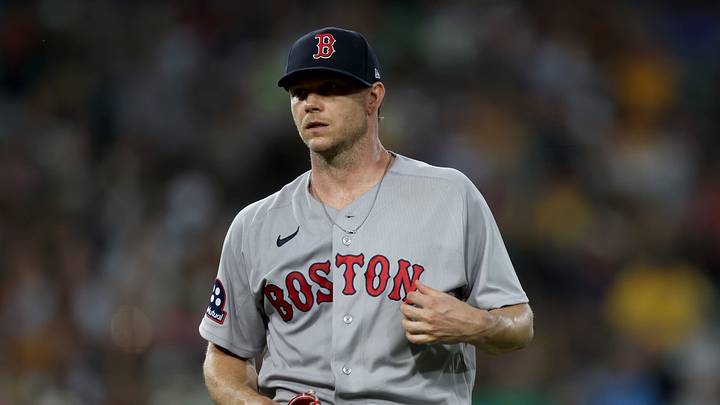
While Sonny Gray briefly flirted with retirement after the Boston Red Sox were eliminated in the AL Wild Card Round, the soon to be 37-year-old will indeed pitch again in 2027, per The Boston Globe. His contract includes a $30 million mutual option for next season, which probably will not convey. That would mean Gray hits free agency.
While Gray is reportedly open to re-signing in Boston, a sour ending complicates any potential reunion. Gray was yanked after 4.2 innings in the Red Sox' Game 2 loss to the Yankees; New York promptly teed off on the Boston bullpen. Gray openly expressed his frustrations to the media postgame. Should he decide to take his talents elsewhere, let's rank a few realistic (non-Red Sox) landing spots.
6. Chicago White Sox

The Chicago White Sox rode youthful exuberance all the way to a 2-0 series lead in the ALDS, before it all came crashing down. Pitching was not the cause of Chicago's demise, in the end; their lineup went AWOL. Pitching was, however, a huge stressor for White Sox fans all season. The South Siders posted a collective 4.12 ERA, ranked 15th in MLB. That does not do the problem justice, however, as Chicago only had one remotely trustworthy starter (Sean Burke) once the playoffs began.
Next season should yield some internal improvement, with rookie southpaws Hagen Smith and Noah Schultz in prime position to break out. The White Sox need a workhorse starter they can really lean on, however. Gray would move the needle significantly, bringing valuable experience to a young clubhouse. Age and durability are valid concerns, and Chicago seldom spends at the level necessary to lure Gray, but this team is built to take that next step — with the right offseason investments. Gray would certainly qualify as a massive upgrade.
5. Houston Astros

If the White Sox pitching situation was dire, the Houston Astros' was somehow dramatically worse (ranked 24th in MLB with a 4.45 team ERA). Beyond Hunter Brown, the Astros rotation basically fell to pieces. Brown himself even fell to pieces in Houston's loss to the aforementioned Sox in the Wild Card Round. The Astros can pray for better luck on the injury front next year, but this team needs bodies and bullets on the mound. Gray would serve quite well as a short-term investment.
Houston's front office has gone cheap in recent years, but this is a veteran roster faced with a rapidly closing title window. We can't rule out one last Astros run, but it will take immense fortune and bold offseason moves to reposition the worst playoff team of all time (81-81, at regular season's end) for a World Series push. Gray provides a potential stabilizing force, assuming he can get through his age-37 season in one piece.
4. San Diego Padres

The San Diego Padres thoroughly outclassed the Cubs in the Wild Card round, spurred by seven innings of dominant, one-hit baseball from Michael King in the postseason opener. Unfortunately, the Padres were overmatched in the NLDS against a deeper Brewers team. Injuries were the primary culprit, but all the same, San Diego struggled to string together the necessary arms. By the end of their season-ending Game 4 loss, even that vaunted bullpen was held together by Elmer's glue and thumbtacks.
Now comes the free agency deluge: King, Casey Mize and Robbie Ray are all hitting the free market. A healthy and spry Joe Musgrove can help, but San Diego needs to revamp its pitching staff, even if King does ultimately re-sign. In a perfect world, the Padres manage to keep King and add another high-profile, Game 1-type starter, someone like Gray. He should appeal to the always-aggressive A.J. Preller as a proven veteran looking for a short-term contract, which saves San Diego from longer-term downside.
3. Baltimore Orioles

The Baltimore Orioles once again missed the playoffs, despite operating with uncommon aggressiveness in last winter's free agency. The O's actually went out and dropped $150 million on Pete Alonso, not to mention the Shane Baz trade. In the end, it was not enough for a team riddled with injuries and short on viable pitching depth. Both the rotation and the bullpen faced major setbacks all year. It won't get any easier in 2027.
Trevor Rogers is now a free agent. Baz and Kyle Bradish are both very talented, but since Bradish's breakthrough campaign in 2023, neither has put together a complete and dominant season. Baltimore will not find the necessary pitching in their farm system, so another free agency splurge is necessary. Not entirely unlike the Corbin Burnes rental a couple years ago, Mike Elias could look to Gray for veteran leadership and quality starts, even if he's only around for a year or two.
2. Atlanta Braves

The Atlanta Braves understand the toll injuries can take on a rotation better than most teams. Chris Sale still offers electric stuff in his late 30s, but otherwise Atlanta is short on starting pitchers it can fully trust in a postseason environment (Tyler Mahle, their standout deadline addition, is set to become a free agent). The Braves aren't necessarily wanting for depth, as A.J. Smith-Shawver, J.R. Ritchie and Owen Murphy are all up-and-comers with potentially bright futures in Atlanta. That said, until Spencer Strider and Spencer Schwellenbach can string together 30 quality starts again, this team will sorely lack that stellar second punch behind Sale.
GM Alex Anthopoulos is not known to pay sticker price in free agency, especially when it comes to pitchers. He would prefer to develop talent in-house and pounce on overlooked trade opportunities. That said, signing up Gray as Sale insurance — and a potentially elite No. 2 starter in the playoffs — might save Atlanta from facing more tough questions next winter.
1. Chicago Cubs

The Chicago Cubs couldn't put a lid on the Padres' offense in the Wild Card round, which was all too predictable (their own offense not showing up, however, was less easily anticipated). Chicago attempted to address its rotation last offseason, acquiring Edward Cabrera in a blockbuster trade. When that move went belly up, Chicago pivoted to several in-season additions: David Peterson, Kevin Gausman, Clay Holmes and Braxton Garrett. Ultimately, 'twas not enough. The Cubs rotation couldn't stay healthy, nor trust those that did stay healthy.
Chicago hopes to get Cade Horton, Justin Steele and Ben Brown back to full strength next season, potentially with a healthier and more stable Cabrera, to boot. On the other hand, Gausman, Holmes, Peterson and All-Star Shōta Imanaga are all free agents. The Cubs need to restock and this front office has never faced more pressure to put a winning roster together. Not only do the Brewers continue to dominate the NL Central, but Pete Crow-Armstrong won't reach MVP heights forever. The clock is always ticking. Gray can add serious depth and viability to Chicago's rotation as the North Siders attempt to (finally) break through.
 Add us as a preferred source on Google