
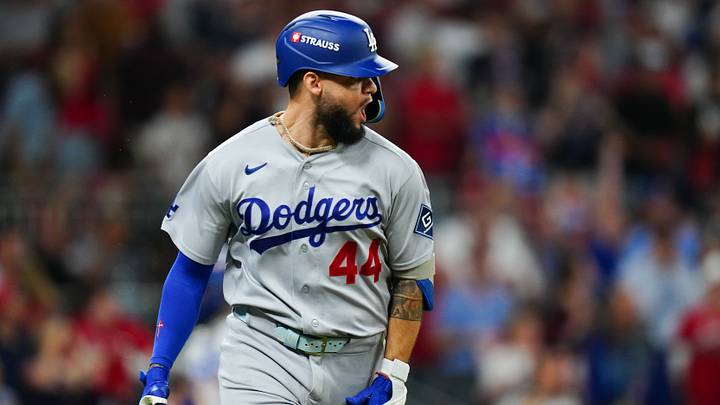
The LCS matchups are now set in both the National League and American League. The Los Angeles Dodgers and Milwaukee Brewers, last year's NLCS matchup, will rematch each other, while the Tampa Bay Rays will play the Cleveland Guardians in the ALCS.
With MLB down to the last four teams standing, we're going to take a look at what went right for these clubs and what went wrong for the others who were eliminated. We will also analyze what the other postseason teams can learn from MLB's final four. FanSided spoke with MLB scouts regarding these topics.
What went right for the last 4 teams

As one scout pointed out, there's a common denominator when it comes to MLB's final four teams left in the dance: They all have great plate discipline. Three out of the four teams left were in the top seven in the league in chase percentage. The Dodgers and Brewers don't swing-and-miss and they don't chase. While the Rays are more middle of the pack in chase percentage, they're the best team in baseball when it comes to whiff percentage and contact rate, which makes up for their chase rate.
On the pitching side, the Brewers and Rays are second and third in zone percentage, respectively. The Dodgers and Rays are first and second in chase rate. The Dodgers, Brewers and Guardians are in the top four in whiff percentage. Minus the Rays, the best teams draw a lot of swing-and-miss, but Tampa Bay gets opposing hitters to chase out of the zone. The Rays throw a ton of strikes and rely on soft contact. The Dodgers and Guardians are also among the top eight in weak contact rate.
The other significant aspect for the pitching staffs of these teams is that they give up more balls to the opposite field than anyone else. The Brewers are the top team in this regard, Cleveland is No. 2 and the Dodgers are No. 4. The Rays and Guardians aren't afraid to give up a barrel because it typically will go to the opposite field, which they game plan for.
What went wrong for the other 8 teams

Starting with the Yankees, the scout said it boils down to their defense and their lack of offense in the ALDS against the Rays. The Yankees' pitching staff was fifth in ground ball percentage, but their shaky infield defense contradicts this strength. Another scout said the Yankees believe they are up to speed with the rest of the league in analytics, but are actually far behind.
Down the stretch of the season, the Boston Red Sox had "one of the worst offenses I have ever seen" said one scout. Boston also struggled against pitches with velocity of 94 mph+ and pitches in the top of the strike zone. They also were overly reliant on analytics in their pitching decisions, which came back to bite them in the Wild Card round. Using Erik Miller over Aroldis Chapman in high leverage was a head-scratcher.
The Chicago Cubs had elite defense and hitting, but ultimately did not have enough pitching to avoid getting swept by the San Diego Padres in the NL Wild Card round. Their offense was also a no-show in the playoffs, scoring one run in two games.
The Padres' lack of pitching depth saw them get exposed in the NLDS against the Brewers. Milwaukee also put a ton of pressure on San Diego. The Brewers made the Padres chase out of the zone and played good defense behind their pitchers.
The Atlanta Braves, who lost 3-1 to the Dodgers in the NLDS, just ran into an opponent that was better than them, per another scout. The scout believes the Braves could've given the Brewers a tougher matchup, they just got beat by the Dodgers.
The Philadelphia Phillies were knocked out in the NL Wild Card round by the Braves. The same scout was shocked that Phillies closer Jhoan Duran threw a 0-0 fastball to Austin Riley that resulted in the go-ahead home run that decided Game 1. That's because Duran's splitter is the best in the game. The scout also thinks the series was lost in the third game when the Phillies decided to have J.T. Realmuto catch Aaron Nola, as opposed to Garrett Stubbs. When Stubbs, who is the better pitch caller, caught Nola this season, hitters had a .364 slugging percentage and Nola had a 3.67 FIP. With Realmuto behind the dish, batters had a .545 slugging percentage and Nola had a 5.84 FIP.
Regarding the Houston Astros, they were just not a very good team this year, as one scout put it. They were the worst team in MLB history to make the playoffs and win their division with a record of 81-81.
Last but not least, we have the Chicago White Sox, who were eliminated by the Guardians in Game 5 of the ALDS on Saturday night. The White Sox didn't have enough pitching in the end. And on offense, they don't chase, but they were second-worst in baseball in whiff percentage. The White Sox set a postseason record with 21 strikeouts against the Guardians in Game 5, breaking their previous record of 19 set in Game 3 of the ALDS.
What the other 8 teams can learn from the final four teams

According to a scout, the last four remaining teams use analytics, but are still kind of old school. The teams that are caught in between, their analytics are so far behind because they are chasing the wrong things. The Brewers, Guardians, Rays and Dodgers have four of the best analytical departments in baseball. For that, it should be seen as no coincidence that these are the last four teams left standing in MLB.
The other eight teams can focus more on plate discipline, plus drawing swing-and-miss and increasing their chase percentage on the pitching side. Building out pitching depth is another area where some of these teams that came up short can look to improve. Timely hitting on the biggest stage also doesn't hurt.
 Add us as a preferred source on Google