
Key Points
Bullet point summary by AI
- Atlanta entered the MLB Trade Deadline as a prime contender but emerged with only minor additions.
- Fans argue the front office missed chances to address critical rotation needs while division rivals made impactful moves.
- The decision to rely on depth over star power could haunt the Braves in their pursuit of the NL East and postseason success.
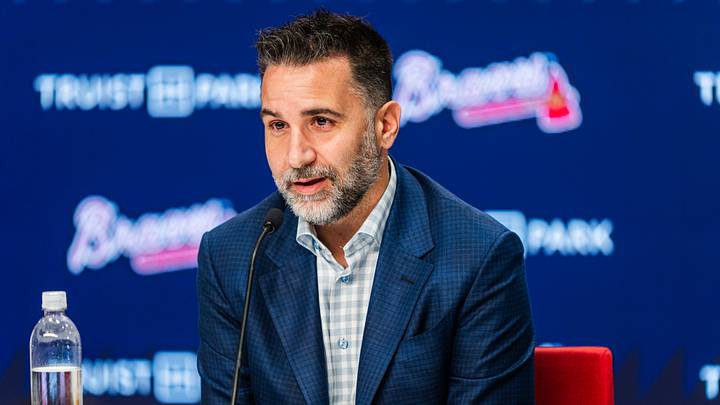
For weeks, the Atlanta Braves were forecasted to be one of the busiest teams before Monday's MLB Trade Deadline. With a clear need for starting pitching and the potential to compete for an NL pennant with the Los Angeles Dodgers, the opportunity for Alex Anthopoulos and Co. to make big splashes was there, and thus, that was the expectation. Instead, the Braves mired around the bargain bin with only low-level trades to speak of once the deadline passed.
Braves fans are rightly upset with how the trade deadline turned out in Atlanta. Being relatively inactive is one thing, but to do so given this team's situation this season and with the market on the trade deadline — especially with reports and rumors about how things transpired — is nothing short of infuriating.
All of the Atlanta Braves' trades before the deadline

- Braves acquired OF Lane Thomas and LHP Bailey Falter from the Royals (For: RHP Lucas Braun, LHP Carter Holton)
- Braves acquired RHP Tyler Mahle from the Giants (For: RHP Anthony Molina)
- Braves aquired LHP Brent Suter from the Angels (For: SS Nacho Alvarez Jr.)
- Braves acquired RHP Duncan Davitt (minors) from the White Sox (For: C Joey Bart)
- Braves acquired RHP Tyler Uberstine (minors) from the Red Sox (For: UTL Eli White)
It's not that the Braves didn't add to their major league roster, or that those additions weren't at positions of need. Outfield depth in Lane Thomas makes perfect sense, especially as someone who can potentially platoon with Mike Yastrzemski, and Bailey Falter gives Atlanta some left-handed depth with bullpen and starter versatility.
Furthermore, Tyler Mahle gives the Braves another veteran arm for their injury-riddled rotation and Brent Suter is a much-needed left-handed option out of the bullpen. It's also not bad process for Atlanta and Anthopoulos to trade from depth on the big-league roster with Joey Bart and Eli White on the move in order to increase the organizational pitching depth that the club traded from in these deals.
While that's all true, however, the impact of what the Braves did at the trade deadline is still marginal. And therein lies the problem — which is also why fans are deservedly upset at the process.
The Braves failed to meaningfully improve their roster at the trade deadline

Even if you remove the Tarik Skubal part of the equation given that it seems like he was always bound for the Dodgers given how those negotiations transpired, the Braves simply needed to do more than they did. When you look at a division rival in the Philadelphia Phillies landing Luis Arraez and quality bullpen help, they could go on another run at any moment and be knocking at the NL East leaders' door. And in the National League at large, the Chicago Cubs, equally in need of starting pitching help, executed exactly how Braves fans would've liked to, adding Kevin Gausman, Braxton Garrett and Clay Holmes.
This isn't to say that Anthopoulos didn't wake up and never attempted anything impactful. Most notably, reports indicate they were trying heavily to land Jacob deGrom from the Texas Rangers, but that the former Cy Young winner wouldn't waive his no-trade clause for Atlanta.
That's still not an excuse, however. And as FanSided MLB insider Robert Murray puts it, the lack of a meaningful pivot when there were plenty of opportunities to do so, especially with their NL rivals making noise, is ultimately concerning for the Braves:
"The lack of Braves movement had folks around the game really surprised. Many anticipated Atlanta adding a frontline starter and while they checked on Jacob deGrom and Tarik Skubal, swung and missed and added depth starters. Alex Anthopoulos is optimistic that about the moves, believing Tyler Mahle is a player who can impact their rotation now and in the postseason. In fact, Mahle is a player of previous interest to Atlanta as they pursued him in free agency a couple years ago before he signed with the Rangers. But this deadline needed a splash, and watching the Phillies narrow the gap more by adding Luis Arraez and a couple relievers is going to make this a division race to watch very closely."
To Murray's point, Mahle is solid and Anthopoulos believes in him. But he needed to be part of the puzzle, not the main piece. Holmes was available. Casey Mize was available. Hell, it seemed like everyone on the Rangers was open for negotiations, so even if it wasn't deGrom, they could've sniffed around Nathan Eovaldi, Mackenzie Gore or Jacob Latz.
Instead, the Braves added Mahle and Falter. Those aren't needle-movers. At best, they're probably bandaids that can eat innings. But for a division leader in the National League trying to keep up with the Dodgers and stave off the likes of the Phillies, that's simply not good enough.
Alex Anthopoulos' direction of the Braves is worth questioning

Unfortunately, underwhelming trade deadline moves are becoming a norm for Anthopoulos in his tenure with the Braves. And the reported heavy interest in deGrom only to be rebuffed by the right-hander and the Rangers is indicative of what seems like the biggest problem plaguing the Atlanta front office at the trade deadline.
Put simply, it feels as if Anthopoulos is in a terrible habit of getting tunnel vision. He locks in on the proverbial best move for the Braves, but then doesn't have a Plan B if that plan doesn't work to fruition. Again, there were options available for the Braves to upgrade their depleted rotation in the manner that's necessary to compete for a World Series. Atlanta didn't add any of those players.
What's even more damning in that capacity is the cost of pivoting wasn't exceptional. Casey Mize cost the Padres their No. 2 prospect in a weak farm system and a 27-year-old in Triple-A. That's easily an offer that the Braves could've gone after, and that's arguably near the top of the secondary pitching targets after Skubal and Freddy Peralta (and, to some degree, Clay Holmes, who the Mets were unlikely to move within the division).
The fact that Anthopoulos and the Braves were content to go all-or-nothing at this trade deadline is bad process on the part of the front office. Obviously, that's easy to say when Atlanta ended up on the "nothing" side of that equation, but it's how they operated that's more concerning, especially without meaningful upgrades being added.
Atlanta may still go on to win the NL East. They've dominated the division thus far without reinforcements. And, to Anthopoulos' credit, these mid-level and below deals have been home runs in the past for his club. At the same time, if the Braves fall short in the NL East race or even in the playoffs, we'll look back at the trade deadline as the potentially deciding factor in why that transpired.
 Add us as a preferred source on Google