
Key Points
Bullet point summary by AI
- The Cleveland Cavaliers have committed heavily to their core with long-term contracts that limit roster flexibility.
- Current NBA financial structures and recent championship trends highlight the risks of overloading on star salaries.
- The next logical step may involve difficult decisions to rebuild around Donovan Mitchell before the current strategy becomes untenable.
Opportunity cost is, in my view, the most under-discussed part of roster building in the NBA. Every trade, contract extension or free-agent signing comes with a shadow of the moves that the team didn’t make, and ignoring this opportunity cost often makes risky moves look better than they actually are. See: the Donovan Mitchell extension.
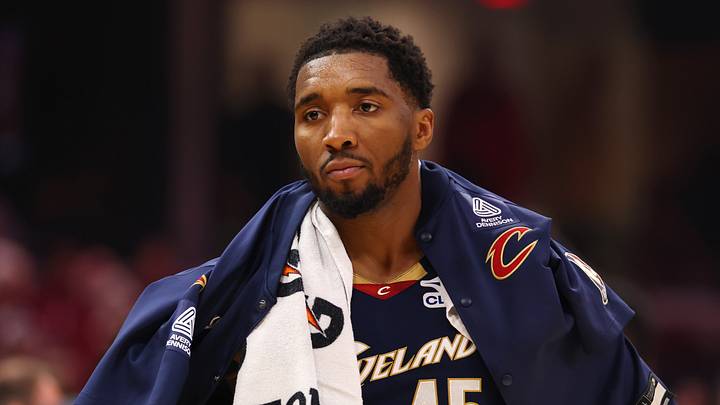
On Tuesday, Mitchell signed a max contract with the Cleveland Cavaliers that will keep him there through at least 2030, with a player option in 2031. It is a bold statement about the future of their team, their confidence in their star and their analysis of what went wrong in the playoffs. On one hand, they made the Eastern Conference Finals; on the other, they got swept and finished the playoffs with a losing record.
Donovan Mitchell is a max player, but the Cavs might regret their approach

This contract, along with the expected James Harden two-or-three year deal, means that Cleveland has pushed all its chips to the center of the table with four guys: Mitchell, Harden, Jarrett Allen and Evan Mobley, all locked up and expensive through 2029. And while the Mitchell deal is perfectly defensible, the rest of this team-building theory reeks of a disaster waiting to happen. Those four moves have cost the Cavaliers plenty of money, but will continue to cost them the opportunity to improve. The Mitchell deal locks it in.
Mitchell himself is not the problem. Comparisons to Jaylen Brown and his supermax contract blow-up with the Boston Celtics are unfounded; Mitchell is a highly effective offensive player, much closer to Jayson Tatum than Brown. He’s a franchise cornerstone, and without Mitchell the Cavaliers would go from having a mediocre plan to having no plan at all. I do not fault them for securing his future.
Evan Mobley may not fit this new Mitchell framework

But the rest of the strategy is far too passive. There is lots of evidence that Mobley, Allen and Mitchell work as a lineup — a solid +12.6 net-rating as a three man group. But Mitchell and Allen together without Mobley has actually been better than all three. Among Cleveland’s three-man lineup combinations last season, Mitchell and Allen were both in the each of the top three … with Dean Wade, Jaylon Tyson and Jackson Merrill. Mobley’s five-year, $269 million contract might become the real problem.
The issue with tying up all this money in a few players is it affords almost no flexibility short of a total tear-down. The Cavaliers may find themselves in an ultra-uncomfortable situation sooner than they realize if they do not soon achieve wildly superior results to what we’ve seen from this group so far.
(King Theoden from the Lord of the Rings Voice) What would you have me do? It’s bad business to refuse to pay star players in the NBA, as even if you know they aren’t worth what you’re paying. There are so few difference makers in the NBA; haggling about percentage points of the cap is a great way to lose someone for nothing. Mobley may be the odd man out, but he’s also the youngest of the group. Are they really going to trade a 25-year-old Defensive Player of the Year?
Proactive and aggressive roster changes are the order of the day
Three years ago, I would have been more sympathetic to this view. But this is a brave new world, one with “contract inflation” that makes max deals riskier than they’ve ever been; this is because revenue is tied to the cap, and the downfall of local TV money has slowed cap growth beyond initial projections when they were signed. Teams sign contracts with cap projections in mind, but flattening of salary cap growth makes unworthy max players more detrimental than they’ve ever been. That is why the last four NBA champions — Knicks, Thunder, Celtics and Nuggets — all arguably succeeded because of their depth rather than their stars.
Compound this with the brutal new second apron, which forced the New York Knicks to not re-sign Mitchell Robinson despite his status as a beloved local sports hero, and we have a major issue on our hands. The Cavaliers feel like the next team that will discover this problem.
In short, I would start thinking about the post-Mobley world. It really might be worth it to cash in, get some flexibility and build the team differently for this last-last-last (last) Donovan Mitchell run. It’s not how teams used to be run, but this isn’t your grandma’s NBA. If the league doesn’t adopt some countermeasures to recent second apron reforms, this will get far more awkward before it gets simpler.
More Cleveland Cavaliers news and analysis:
 Add us as a preferred source on Google