
Ten years ago, the likes of Hassan Whiteside, Chandler Parsons and Harrison Barnes all received max contracts. This summer, not even Kawhi Leonard, Trae Young and Austin Reaves have gotten full max deals, and Stephen Curry might be next in that regard.
That's because the NBA's second apron has forced a long-overdue reckoning when it comes to max contracts.
A max deal has long been seen as a status symbol. Not only does it guarantee a player generational wealth, but it sends a signal about their place in the league. At least, it was supposed to.
However, that often put teams in no-win situations when it came to negotiating with their own players. For every non-star who received a max deal, other soon-to-be free agents could point to that player as an example of why they deserved a max as well. If their teams didn't oblige, they could use the threat of free agency as legitimate leverage.
The pendulum has now swung violently in the opposite direction. But there's still a happy medium to be found for both players and teams thanks to the NBA's continuously rising salary cap.
Are max contracts going extinct?

Cleveland Cavaliers guard Donovan Mitchell signed a four-year, $276 million max extension in early July. He's the only player across the entire NBA to get the full amount of money he was eligible to receive in a new deal this offseason.
San Antonio Spurs center Victor Wembanyama, the first unanimous Defensive Player of the Year in NBA history, signed a five-year max extension that will start at 25 percent of the salary cap in 2027-28. However, he could have gotten a deal starting at 30 percent of the cap if he won MVP or DPOY or was named to an All-NBA team this coming season. (If he plays the required 65 games, that's a virtual lock.)
According to ESPN's Michael C. Wright, the Spurs offered Wembanyama the 30 percent supermax contract, but he "ultimately chose a contract sacrifice rooted in giving him and the organization increased ability to build a sustained title contender around him."
That notion of sacrifice popped up across the NBA this offseason.
Reaves took $5 million less than his max to help give the Lakers "more future flexibility," according to Lakers reporter Jovan Buha. Young took a four-year, $212.8 million max deal, which was equivalent to the most he could have received from another team but was nearly $9 million less than he could have gotten from the Wizards. Leonard took $11 million less than his max because the "sides discussed flexibility for the Raptors' rising salary books," according to ESPN's Shams Charania.
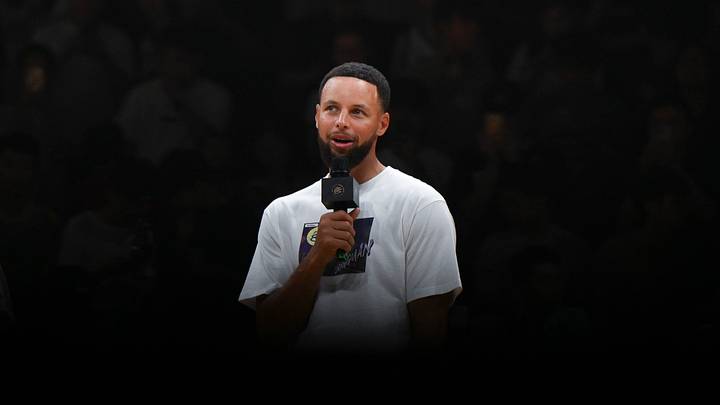
Curry, who has been eligible to sign an extension since late August, has yet to put pen to paper on a new deal. On Wednesday, he told ESPN's Anthony Slater that his "absolute desperation to win" could cause him to follow in the footsteps of Leonard, Young and Reaves and eschew a full max contract as well.
"We're in a very interesting situation," Curry said. "All the different salary cap conditions of whether I sign for a max or less or whatever it is, I want to be on a competitive team. I want to have an opportunity to have some flexibility because we haven't had that in years past, the recent past.
"... This team should have flexibility to make necessary moves if things happen. Those are always just the considerations."
Curry stressed that he has zero interest in leaving the Warriors. His waiting to sign an extension has nothing to do with him wanting to test free agency. It's all about helping the Warriors maintain financial flexibility to see what else they can pull off next summer.
To be clear, no one should be crying poor for any of these NBA stars. Reaves is still earning $180 million over the next four years. Leonard got a two-year, $115 million extension. That's more than Michael Jordan earned across his entire NBA career, at least when it comes to on-court earnings.
The introduction of the second apron — and the punitive roster-building restrictions for any team that dares to cross it — has forced teams to reevaluate their spending habits. It's become exponentially more difficult to build around two or three players on max or near-max deals. Teams are therefore more reticent to hand those contracts out except to MVP candidates like Wembanyama, Nikola Jokić and Shai Gilgeous-Alexander.
In recent years, players such as Young, Zach LaVine, Ja Morant and Domantas Sabonis have become neutral- or negative-value trade assets solely because of their bloated contracts. A few years ago, it would have been genuinely unfathomable to imagine Young and Morant being moved for the trade packages that ultimately landed them in Washington and Portland, respectively. The new CBA submarined their trade value, though.
Whereas max contracts were once a status symbol, they're now a potential trap for teams. The Orlando Magic are staring down a potential roster overhaul after this season in part because they handed out full max deals both to Paolo Banchero and Franz Wagner. Conversely, the Houston Rockets have been far more aggressive than the Magic when it comes to negotiating with their players coming off rookie-scale deals, which could help them extend their contention window.
The NBA has effectively created a financial environment where players need to choose between maximizing their earning potential and maximizing their championship chances. Those two things are becoming increasingly mutually exclusive.
The New York Knicks wouldn't have snapped their 53-year championship drought had Jalen Brunson not taken a well-below-max extension back in 2024. His contractual sacrifice was the key to them being able to squeeze in all of Karl-Anthony Towns, Mikal Bridges, OG Anunoby, Josh Hart and Mitchell Robinson while staying just below the second apron. Other teams will now point to Brunson as the example of why their stars should also be willing to take below-max deals.
Granted, these stars are still landing nine-figure contracts. That's still generational wealth, even if it doesn't come with the max-contract distinction. The second apron just helped restore balance to the concept of a max-contract player.
It might have gone too far in that regard. The National Basketball Players Association certainly seems to think so, which figures to be a sticking point in the next round of CBA negotiations. But is this system worse than teams feeling pressure to max out non-stars like Whiteside, Parsons and Barnes?
That may be in the eye of the beholder.
 Add us as a preferred source on Google