
Key Points
Bullet point summary by AI
- The NBA's second-apron rules are forcing stars into a stark choice between maximizing earnings and maximizing championship chances.
- Recent extensions for top talents show teams are already securing below-market deals — like the one Jalen Brunson sighed with the Knicks.
- This new leverage could reshape roster-building strategies and potentially revive the era of Big Threes around the league.
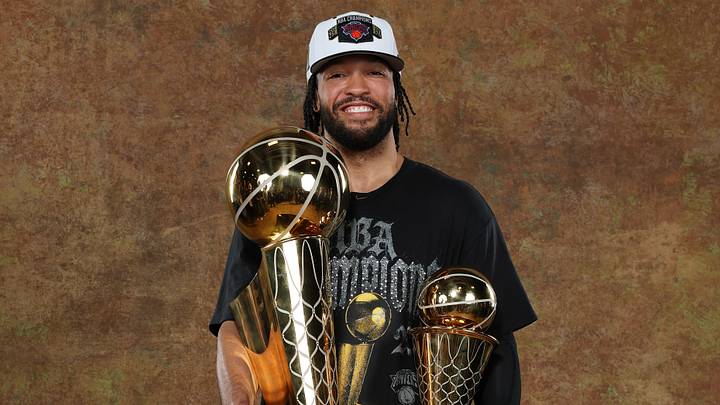
In case you haven't been reminded every waking hour since Saturday night, the New York Knicks just snapped their 53-year championship drought. Led by Finals MVP Jalen Brunson, they won 16 of their final 17 playoff games. (Their lone loss was attended by … never mind.)
The Knicks began their championship ascent by signing Brunson to a four-year, $104 million contract as a free agent in 2022. Two years later, they signed him to a four-year, $156 million extension, which was the most they could offer at the time but roughly $113 million less than he could have earned as a free agent the following year.
Brunson signed the deal anyway. Four years later, he's an NBA champion.
Owners around the league have reportedly taken note.
Jay Williams:
— NBA Base (@TheNBABase) June 16, 2026
“I've talked to a couple of different players that could be Supermax this year or next year — they're starting to feel a little pressure from team owners by saying, 'Yo, Jalen Brunson left 113 million dollars on the table. What are you going to do?'” pic.twitter.com/YtEQNysKqA
The second-apron era is effectively forcing stars into a binary choice: Maximize their earnings or maximize their chances at a championship. Owners seem eager to exploit Brunson's contractual sacrifice in negotiations with their own stars.
That could shape how the rest of this decade plays out in the NBA.
'He understands what winning is about'

The Knicks finished less than $250,000 below the second apron in each of the past two seasons. Had they gone over the second apron in either season, they would not have been able to aggregate contracts in trades, which means they couldn't have acquired Mikal Bridges and Karl-Anthony Towns in the way that they did.
Had Brunson waited to become a free agent in 2025 and signed a five-year, $269 million max contract, the Knicks would have blown past the second apron in each of the past two seasons. His contractual sacrifice was the key to fortifying the starting lineup and the bench around him.
After the Knicks clinched the title, head coach Mike Brown praised Brunson for that.
"You know, he understands what winning is about," Brown told reporters. "You know, he comes and he probably takes a pay cut that I wouldn't have taken. Every time they would've thrown that number in front of me, I would have said no, and I feel like I'm a good guy. He set the bar before he even stepped on the floor. Every time it came to renegotiate a deal with him. That set the standard.
"Now when you take his play into account, it's off the charts, man. He's—I love Pat [Ewing]. Pat's up there. I hope Pat doesn't kill me. He's bigger than me. We're both old and slow, but because he's a longer reach, he might be able to kill me. But Brunson, he is him, man. When it comes to New York basketball, he is freaking him."
It would be unreasonable for owners around the league to expect stars to take $100-plus million less than their maximum contract amounts. But the second-apron era is forcing them to play hardball far more frequently than they had in the past, when teams handed out max contracts like Halloween candy to trick-or-treaters.
The squeeze has already begun

In October 2024, the Houston Rockets had to negotiate extensions for No. 2 overall pick Jalen Green and No. 16 overall pick Alperen Şengün before the rookie-scale deadline at the start of the season.
Şengün was fresh off a season averaging a career-high 21.1 points, 9.3 rebounds and 5.0 assists in only 32.5 minutes per game. The Rockets got him to take a five-year, $185 million extension, which was roughly $40 million less than what he was eligible for.
Meanwhile, Green signed a three-year, $105.3 million extension with a third-year player option. ESPN's Shams Charania reported that he's the "first NBA player ever to successfully negotiate a 2-plus-1 rookie extension on a nine-figure deal," which is agent spin for "he didn't get paid as much as a usual high overall draft pick."
Even Kevin Durant, who got traded to the Rockets last summer, didn't take the most he was eligible for. His two-year, $90 million extension was roughly $30 million less than his max.
Durant's former teammates, James Harden and Kyrie Irving, have routinely taken below-max contracts in recent years as well. Extenuating circumstances contributed to that, but it's been a roster-building gift to their respective squads as every team becomes more budget-conscious.
That specter is even hanging over LeBron James heading into this offseason. The Los Angeles Lakers could create upward of $50 million in cap space, but that would require renouncing their rights to LeBron, Rui Hachimura and the rest of their free agents. Re-signing LeBron alone could wipe out a majority of that spending power.
The Chicago Bulls and Brooklyn Nets are the only other teams with enough financial flexibility to offer LeBron anywhere near a max contract in free agency. A sign-and-trade could widen his options, although he still might struggle to get north of $30 million outside of L.A.
Cleveland Cavaliers guard Donovan Mitchell could be another test case of this new paradigm. Mitchell will become eligible for a four-year max extension worth a projected $272 million this offseason, but he could receive a five-year, $350-plus million deal from the Cavaliers as a free agent in 2027. Either way, he'd be earning 35% of the salary cap in 2027-28, which projects to be more than $60 million.
With Evan Mobley signed to a max deal and Jarrett Allen just beginning his three-year, $90.7 million deal, the Cavs have to ask themselves whether they can build a legitimate championship contender around Mitchell if he's earning 35% of the salary cap moving forward. He made the All-NBA second team this past season while finishing seventh in the MVP race, but he's also a smaller guard who's turning 30 in September.
This new paradigm won't apply to all stars. Luka Dončić and Nikola Jokić figure to keep getting max contracts. But the number of no-brainer max players is already declining, and Brunson's contractual sacrifice paying off in a championship only gives owners and front offices more leverage over players in negotiations.
Some players may choose to keep prioritizing their earnings and take the most money they're eligible to receive. But they might be actively hurting their chances of winning a championship by doing so.
If enough stars begin taking discounts, Big Threes may become en vogue around the league again. Until then, teams with stars on below-max deals will have an enormous roster-building advantage over those with stars on full max contracts, as Brunson and the Knicks just demonstrated.
More NBA news and analysis:
 Add us as a preferred source on Google