
Key Points
Bullet point summary by AI
- A recent court decision has challenged one of the most fundamental rules in American sports.
- The ruling suggests that athletes could potentially bet on their own teams without facing immediate bans.
- The outcome could dismantle decades of precedent and force a reckoning over who truly governs college athletics.
Gambling on your own team was the seventh seal. We have systematically removed, outpaced, destroyed or simply ignored hundreds of once-sacred features of American sports, from the pitch clock in baseball to NBA free agency to NIL compensation. And while there has been and will continue to be plenty of confusion as to how to treat those developments, gambling on your own team was crystal clear: it was the third rail. If you did it, you were done.
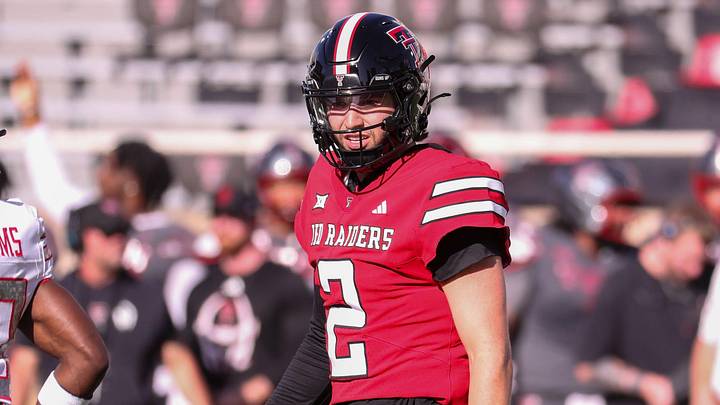
But apparently not anymore. A Lubbock Country court ruled Monday to grant an injunction to Texas Tech quarterback Brendan Sorsby, who is under investigation for the over 2,900 bets he placed while a backup quarterback at Indiana — including several on his own team. The injunction would allow Sorsby to serve a two-game suspension before participating in the rest of the 2026 season, claiming that he would “suffer a probable, imminent, and irreparable injury” if he was not allowed to rejoin the Red Raiders.
Allowing Brendan Sorsby to play in 2026 is an unprecedented disaster
This ruling is an apocalypse, for college sports but also well beyond. Whether or not Sorsby actually suits up in 2026, this court suggests that a player can now place bets on his own team and continue to play for them, upending decades of precedent and cross-sport agreement. It exposes the NCAA as not only a toothless and worthlessly decentralized governing body, but one that probably no longer has a right to exist.

The details of this case are nuanced, intricate, granular, complex, convoluted and legally sophisticated. They are also irrelevant when faced with the fundamental truth that Brendan Sorsby playing college football in 2026 cannot possibly be allowed. There are no exceptions that explain away gambling on your own team, neither mental health challenges nor the fact that he did not actually play in the games themselves.
I commend Sorsby for seeking treatment for his diagnosed gambling addiction and anxiety disorders, two very real conditions that millions suffer from worldwide — but they do not excuse his actions. To allow a plea of insanity in this instance is to question whether betting on your own team is that serious an offense; it is, in fact, arguably the most serious offense a player can commit this side of physical violence.
Gambling on your own games is among the most serious infractions in sports
American sports, college football included, is the world’s most valuable entertainment industry, one predicated on a clean, competitive ecosystem. Billions of dollars are spent pursuing trophies that hundreds of millions of Americans care about, money which allows these teams and leagues to make yet more billions in TV contracts, ticket sales and merchandise. To allow a player who has sullied that competitive ecosystem to remain a part of it is to loose a velociraptor in a rabbit sanctuary.
By far the highest-profile player ever to be reprimanded for betting on his own games was Pete Rose, MLB’s all-time hits leader who has, most notably, thus far been barred from the National Baseball Hall of Fame. And despite my public detestation of the prudish, score-settling nature of Cooperstown, I do not have any real problem with Rose’s exclusion. You simply cannot be allowed to bet on games you are involved in, as a player, coach, backup or any other competitive role. It tears the fabric that holds American sports together and then sets it on fire.
The ramifications of this ruling will be seismic

If Sorsby indeed plays in 2026, the Lubbock County court has opened Pandora’s Box, within which was a can of worms that contained a bag that a cat was just let out of. For one, players across college sports who are sufficiently important to their teams can now bet as much as they’d like and request similar injunctions for a variety of reasons backed by powerful lawyers. For another, it is the final death knell for the NCAA, whose pretext of authority over college sports continues to be exposed as nominal to nonexistent by constant legal challenges. Their inability to prevent a player who gambled on his own games from continuing to play in “their league” really makes you wonder whose league it actually is these days.
The last and most compelling evidence of how apocalyptic this ruling is: It’s not even funny. Sports is a wonderful world to write about because the most interesting stories are generally not a matter of life and death. It is a creative, enjoyable and humorous space to engage with topics that that may be too severe to have any fun with outside of this weird little microcosm. Much of the recent chaos in college sports has been, at least to some, appropriately hysterical. But gambling on your own games? Brendan Sorsby playing in 2026? I’m not even remotely amused.
 Add us as a preferred source on Google