
While every NFL fan would love every NFL trade to be a blockbuster deal, history has told us that can yield inconclusive results. For every Herschel Walker trade for the Dallas Cowboys, there is a Minnesota Vikings team on the other side. And though it might not be as big as that one, every NFL team has at least one trade — though it's many more for multiple franchise — that they would ultimately like to have back.
So whether it was a blockbuster deal, a trade that simply worked out horribly, a trade that was second-guessed at the time, or something else, this is the worst trade for every NFL team of all time.
Arizona Cardinals: The Kevin Kolb trade (2011)

In the wake of Kurt Warner's retirement, the Arizona Cardinals were looking for a new quarterback. Meanwhile in Philly, Michael Vick had Wally Pipped former second-round pick Kevin Kolb. So the trade was formed as the Cardinals traded cornerback Dominique Rodgers-Cromartie and a future second-round pick for Kolb before then signing him to a five-year, $63.5 million deal.
He played just two injury-riddled seasons with the Cardinals, going 6-8 as a starter with 17 touchdowns and 11 interceptions before being released just two years into his contract. It was a complete misfire on Arizona's part and put them back on the QB search not even halfway through the extension they handed Kolb.
Atlanta Falcons: The Brett Favre trade (1992)
Then-Atlanta Falcons head coach Jerry Glanville basically butted heads with Brett Favre immediately after the team drafted the Southern Miss quarterback with the 33rd overall pick in 1991. The pair were oil and water, and Favre was a loose cannon at the time with immaturity abound. So that led to the Falcons selling on him immediately, trading him to the Green Bay Packers for a first-round pick in 1992, one year after drafting him.
All Favre did thereafter was lead the Packers to a Super Bowl, become a 11-time Pro Bowler and thre-time First Team All-Pro and, oh yeah, a three-time MVP winner. Meanwhile, the Falcons searched for a franchise quarterback for several more years and drafted running back Tony Smith (after some other trades) with the pick sent to them by Green Bay. He notched 87 carries as a rookie, never had another with the Falcons and was out of the league after the 1994 season.
Baltimore Ravens: The Kyle Boller trade (2003)

Even with Trent Dilfer winning a Super Bowl, the Baltimore Ravens had been cycling through quarterbacks since their inception in 1996. They decided to try and fix that in the 2003 NFL Draft. However, after they missed out trying to trade up for Byron Leftwich, they felt the pull of desperation and traded up to the 19th overall pick with the New England Patriots, sending the Pats a second-round pick and a 2004 first-round pick. They then selected Kyle Boller out of Cal.
Boller started 25 games over his first two seasons, throwing 20 touchdowns to 20 interceptions. Thanks to the defense, they still went 14-11 in those games, but the QB lasted just five years with the Ravens before they drafted Joe Flacco. As for the Patriots, that first-round pick became Vince Wilfork, who helped continue the Patriots dynasty under Bill Belichick and Tom Brady.
Buffalo Bills: Trading away Marshawn Lynch (2010)
Let's be clear, there were justifications for the Buffalo Bills trading Marshawn Lynch. He was suspended during the 2009 season after a misdemeanor gun charge, and the Bills had Fred Jackson as well as C.J. Spiller in the mix. Having said that, it's hard to justify that the Bills moved Lynch to the Seattle Seahawks midseason in 2019 and received only a 2011 fourth-round pick and a conditional 2012 sixth-round pick.
Beast Mode reached his peak in Seattle after the trade. Not only did he become a Seahawks icon, but he was a four-time Pro Bowler with the Seahawks alone (he earned one nod in Buffalo) and helped the team to a Super Bowl victory. The Bills clearly sold entirely too low and deservedly have been criticized for this trade since.
Carolina Panthers: The Bryce Young trade (2023)

If you're about to get angry, just slow down a bit. Bryce Young has started to show signs that he can be a long-term option for the Carolina Panthers at quarterback. It was an ugly start and he looked like an undeniable bust early on, especially after being benched. However, he's turned it around and has looked a lot more like the Alabama quarterback that went No. 1 overall. Even with all that, though, what the Panthers gave up to take Young with the first pick is hauntingly bad.
Chicago received wide receiver DJ Moore, first-round picks in 2023 and 2024, and second-round picks in 2023 and 2025. Those picks became Darnell Wright, Tyrique Stevenson, Caleb Williams and now Luther Burden III, all four of whom are critical components for a Super Bowl-contending Bears team. And that's without mentioning the particulars that the second of the first-round picks ended up being a franchise quarterback, Williams, because of Young's slow start. The fact that the Panthers are a playoff threat after such a disastrous trade is nothing short of remarkable.
Chicago Bears: The Mitchell Trubisky trade (2017)
While the Chicago Bears may have fleeced the Panthers and ultimately ended up with Caleb Williams, they aren't immune from the disastrous draft trade. Trading up from the No. 3 overall pick to No. 2 to draft Mitchell Trubisky was truly terrible. Not only did Trubisky almost immediately prove that he wasn't the guy in Chicago, but the Bears sent the No. 3 pick, a third- and fourth-round pick in the same draft and a third-round pick the following year as well.
That's bad in itself, but what makes it worse is that it seems like the Bears gave up that haul by battling against themselves. In the years since, the 49ers front office has admitted they were surprised that the Bears drafted Trubisky after trading up because San Francisco was planning to take Solomon Thomas at No. 2, and happily just did so with the No. 3 pick. When you factor in the miscalculation of the market, Chicago comes out of this one looking even worse.
Cincinnati Bengals: The Charlie Joiner trade (1976)

After a solid start to his career in Houston, wide receiver Charlie Joiner ended up on the Bengals in 1972 with high hopes. However, across four seasons, he was disappointing to the franchise overall, even with a career-high 726 receiving yards in 1975. That led to Cincinnati ultimately exploring a trade for Joiner and finding a partner with the San Diego Chargers, who sent defensive end Coy Bacon and a first-round pick that became William Brooks to the Bengals.
Bacon had a monster year in 1976, but at 34 years old, had some uncertain future ahead. He was out of Cincinnati after the 1977 season, while Brooks only spent four middling seasons with the Bengals. As for Joiner, he went on to post the first of four 1,000-yard seasons in the Air Croyell offense in 1976 and eventually spent 11 seasons with the Chargers that bolstered his career enough to punch his ticket to Canton as a Pro Football Hall of Famer. And the Bengals traded him away largely because they weren't using him properly. Talk about a tough beat.
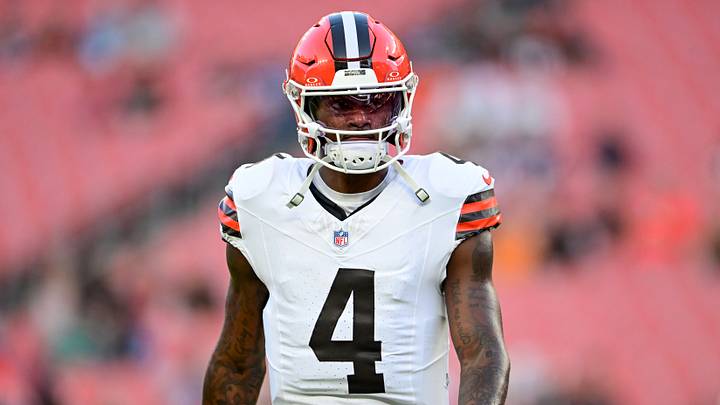
Cleveland Browns: The Deshaun Watson trade (2022)
You absolutely shouldn't remove the notion that the Cleveland Browns traded for a quarterback facing severe sexual misconduct allegations in Deshaun Watson from the equation, because that makes the deal disgusting alone. However, even if you were to remove that, the Browns' decision with this trade is still one of the worst in NFL history.
Cleveland got Watson and a 2024 sixth-round pick from the Texans for three first-round picks in 2022, 2023 and 2024, a 2022 and 2024 fourth-round pick and a 2023 third-round pick. Oh, and the Browns immediately signed Watson to a five-year, $230 million fully guaranteed contract. Furthering how bad the trade was, Watson was suspended for 11 games in the 2022 season for his misconduct and has played only 27 games across five seasons due to injuries on top of that — not to mention, he's been nothing akin to the player he was in Houston when he has been on the field. It doesn't get much worse than this.
Dallas Cowboys: The Joey Galloway trade (2000)

Jerry Jones' track record with trades throughout his Dallas Cowboys tenure is a true rollercoaster, but on the low side of that, it has to be the Joey Galloway trade. Yearning for an upgrade at receiver, the Cowboys traded two first-round picks to the Seahawks for the former first-round pick who had three 1,000-yard seasons with Seattle in his first five years. Unfortunately, he was not able to replicate that with Dallas.
Not only did it get off to a brutal start as Galloway tore his ACL in his first game with the Cowboys in the 2000 season, but he never recaptured his top-tier form with Dallas. In the the three subsequent seasons, he had 699, 908 and 672 receiving yards, respectively, with just 11 total touchdowns before he was then traded for Keyshawn Johnson in 2004. Seattle, on the other hand, used the draft capital to select Shaun Alexander, who became a franchise cornerstone for Seattle.
Denver Broncos: The Russell Wilson trade (2022)
It's still baffling to see how immediately poorly the Broncos trading for Russell WIlson aged. Seattle, despite having Super Bowl pedigree with Wilson, sent the quarterback to Denver as the Broncos hoped he'd reignite their offense, for Drew Lock, Noah Fant, Shelby Harris, 2022 and 2023 first-round picks, second-rounders in 2022 and 2023 and a fifth-round pick in 2022 that went Seattle's way.
Wilson was an abject disaster, performing so poorly with the Broncos that Denver, after just two seasons, was willing to take on an NFL-record $85 million dead cap hit in order to cut him after the 2023 season. Meanwhile, the trade allowed the Seahawks to move in a new direction and help establish part of the core that just helped them win the Super Bowl as a few of those draft picks netted Charles Cross, Devon Witherspoon and Boye Mafe, among others.
Detroit Lions: Trading Bobby Layne to the Steelers (1958)

We're digging way back in Detroit Lions history fo this one, but it makes complete sense as to why. The Lions were just coming off of winning the 1957 NFL Championship (pre-merger, obviously) and had won an NFL Championship in 1952 with Layne at quarterback (and another in 1953). However, it was backup Tobin Rote who led the team to the title in '57 after Layne suffered a broken leg, leading Detroit to question his long-term viability and health moving forward. That then led to an early-season trade in 1958 with the Pittsburgh Steelers as the Lions got QB Earl Morrall and two draft picks for Layne.
Not only did Layne still have something left in the tank, finishing third in MVP voting in 1958 for the Steelers and making another Pro Bowl in 1959, but it was a trade bad enough that it sparked a longstanding curse rumor — that Layne had cursed the Lions after the trade. The Curse of Bobby Layne has been a proverbial urban legend in Detroit as the franchise hasn't won even a conference championship since trading Layne.
Green Bay Packers: The John Hadl trade (1974)
Even back in the 1970s, we saw NFL teams make panic trades that immediately came back to bite them. For the Green Bay Packers, that's what the John Hadl trade boils down to. Then-head coach and general manager (which has almost never worked out for any team) Dan Devine tried to execute a trade for Archie Manning and came up empty. His subsequent response to try and give the Packers offense a shot in the arm was to trade for 34-year-old John Hadl from the Rams.
The trade package at the time was something the NFL had never seen before, with the Packers sending first- and second-round picks in 1975 and 1976, as well as an additional third-rounder in 1975, to Los Angeles. Hadl then came to Green Bay and was subpar, to put it kindly, to the point that he only last 1.5 seasons before being traded to Houston. That set the Packers back for years because of the loss of draft capital, and ultimately cost Devine his job as well.
Houston Texans: Trading DeAndre Hopkins to the Cardinals (2020)

Contract disputes in the NFL always have a chance to get messy, but it's even worse when a team like the Houston Texans compounds that by making a bad trade. DeAndre Hopkins is the epitome of that, as he was seeking a new deal, but then-coach and GM Bill O'Brien wasn't willing to pay him market value. So instead, he shipped Hopkins to Arizona with a 2020 fourth-round pick. In return, all Houston received was aging running back David Johnson, a 2020 second-round pick, and a 2021 fourth-round pick.
Johnson had already shown signs he was at the end of the road in the NFL and, while he had six touchdowns in 2020 in 12 games, he lasted only one more year with the Texans and two more years in the NFL as a whole, and was not truly an impact player. What's worse is that Hopkins was immediately worth it for the Cardinals, posting a 1,407-yard and six-touchdown season in 2020 as a Por Bowler and delivering big moments for Arizona. But it's not even about how he became a Cardinals legend, because that'd be stretching the truth. It is, however, about Houston getting next to nothing in return and setting the franchise back by trading one of the best receivers in the NFL at the time.
Indianapolis Colts: The Sauce Gardner trade (2025)
This isn't recency bias. The Sauce Gardner trade for the Colts is akin to the Russell Wilson trade for the Broncos in regard to how immediately terribly it aged. After a surprising 7-2 start to the season behind Daniel Jones, now-fired general manager Chris Ballard went all-in on the 2025 season by trading the team's 2026 and 2027 first-round picks, along with receiver AD Mitchell to the Jets for cornerback Sauce Gardner.
Not only was Gardner not good for the Colts right away, but Indianapolis' season went down the tube as well with injuries to Jones and others as they failed to make the playoffs. Now, the Colts are seemingly ready to tear the roster down to the studs, including potentially trading Gardner, but will have to do a rebuild without a first-round pick in the 2026 draft and the 2027 draft as well. As for the Jets, they're using those picks to execute a strong and quick-developing rebuild that has them with a far brighter future than Indy already.
Jacksonville Jaguars: Trading up for Derrick Harvey (2008)

There were several candidates for the Jacksonville Jaguars' worst trade in their relatively young franchise history, but trading up for Derrick Harvey in the 2008 draft sticks out like a sore thumb. Looking for reinforcements on the defensive line, the Jaguars got aggressive to move up 18 spots in the first round, trading the No. 26 pick, two third-round picks and a fourth-round pick to move up to the Ravens' No. 8 pick in order to select the Florida Gators standout.
For the Jaguars' part, Harvey ended up being a massive bust. He appeared in all 16 games over the first two years of his career, but managed a paltry 5.5 sacks over that time, even with 25 games as a starter in the 32 he played. His role diminished by his third year in the league, which led to him landing with Denver where he played his final NFL season at just 25 years old in 2011. The Ravens, meanwhile, maneuvered with that draft capital to take Joe Flacco, while the Texans, who eventually ended up with the 26th pick, took a stalwart tackle in Duane Brown, who became a 16-year veteran in the league.
Kansas City Chiefs: The Tony Gonzalez trade (2009)
Any time that you see one of the greatest players of all time at his position and the word "trade" next to it, there's a good chance that deal didn't look to favorably upon the team that traded him. Such was life for the Kansas City Chiefs trading tight end Tony Gonzalez to the Atlanta Falcons. Sure, the fact that the Chiefs were able to get a second-round pick in 2010 for a tight end seems like it could be good business for Kansas City, but the juice wasn't worth the squeeze.
The Chiefs traded one of their faces of the franchise who was coming off of back-to-back 1,000-yard seasons. And Gonzalez was far from washed up, averaging 837.4 yards and seven touchdowns per year over the five seasons he eventually spent with Atlanta. Kansas City, on the other hand, had one pop year in 2010 but had losing seasons in three of the four years after trading Gonzalez, while the pick acquired was used to take defensive back Javier Arenas, who lasted only three seasons with the Chiefs.
Las Vegas Raiders: The Khalil Mack trade (2018)

Another trade that was the result of a contract dispute, I don't know if I'd ever get over the Khalil Mack trade if I were a Las Vegas Raiders fan. Mack had been unbelievable immediately for then-Oakland, notching two First-Team All-Pro nods and a Defensive Player of the Year win in his first three seasons. But with the Raiders struggling a bit, new head coach Jon Gruden and the Raiders front office didn't want to pay Mack a new contract that would've made him the highest-paid edge rusher in the NFL, so they shipped him to Chicago.
Now, at the time, you could've argued that the Raiders were making a mistake by simply trading away Mack. However, they did get plenty of draft capital in return, as they sent a 2020 second- and fifth-round pick with Mack while the Bears sent back first-round picks in 2019 and 2020, as well as a 2019 sixth-rounder and 2020 third-rounder. But what solidifies this as one of the worst trades ever and certainly the Raiders' worst is that the only meaningful piece they ended up with as a result of the deal was running back Josh Jacobs, who did win a rushing title, but also didn't lead to success. The Silver and Black have one playoff appearance since the Mack trade.
Los Angeles Chargers: The Ryan Leaf trade (1998)
We all know by now that Ryan Leaf is considered one of the worst NFL Draft busts in league history. The No. 2 overall pick in 1998 was horrendous as a rookie, throwing 15 interceptions with only two touchdowns in 10 games (nine starts) as a rookie. He then missed the 1999 season with an injury, went 1-8 as a starter in 2000, was moved to Dallas in 2001 and then never played in the NFL again. However, the Chargers look even worse for the Leaf selection because they traded up to take him.
Then-San Diego held the No. 3 pick and orchestrated a trade to move up for Leaf. They sent Arizona the No. 3 and 33 picks, their first-round pick in 1999, wide receiver Eric Metcalf and Patrick Sapp for the No. 2 pick. Sending that much capital alone for one of the most infamous draft busts in NFL history is bad enough, but it stings even more as the Cardinals netted Pro Bowl safety Corey Chavous and All-Pro receiver David Boston as a result of the picks acquired in the trade.
Los Angeles Rams: The Jerome Bettis trade (1996)

If you're anything like me, you probably forgot that Jerome Bettis was drafted in the first round by the Los Angeles Rams before becoming a Pittsburgh Steelers legend. The latter part happened, however, because of what became an infamously bad trade for then-St. Louis. With the Rams eyeing a more pass-heavy approach moving forward and not seeing a role for Bettis, they elected to trade the 24-year-old packaged with a third-round pick for a second-round pick in 1996 and a fourth-round pick in 1997.
Bettis, who had won Offensive Rookie of the Year with the Rams, continued a historically dominant career that led to his Hall of Fame induction as a Steeler, rushing for over 10,000 yards with Pittsburgh in his career. While the Rams did soon become the Greatest Show on Turf thereafter, it was not because of the Bettis trade but, rather, in spite of it, as the picks they received ultimately amounted to nothing. You could say they got off The Bus too soon.
Miami Dolphins: The Daunte Culpepper trade (2006)
For the Miami Dolphins, this really came down to a debate between sending Wes Welker to the rival Patriots or the Daunte Culpepper trade. But the results of the latter give the clear edge to the Culpepper trade because of the entire situation around it. Then-head coach Nick Saban was aggressively looking for a quarterback, and it ultimately came down to a decision about whether or not to sign Drew Brees. Because of concerns about injuries, though, Saban pivoted the Dolphins to trading a second-round pick for Culpepper from the Vikings, despite him coming off a devastating knee injury in his own right.
Culpepper ended up only playing four games for the Dolphins before he was released amid injuries and locker room unrest. And then, well, Brees went on to become one of the most productive passers in NFL history for the New Orleans Saints and now has a bust in Canton. The Culpepper trade in itself wasn't good, as Miami lost a second-round pick for basically nothing. But it's made worse by the fact that they chose that direction instead of signing a Hall of Famer.
Minnesota Vikings: The Herschel Walker trade (1989)

The coup de grace of bad trades and one of the most massive deals in history. The Vikings traded four players, first-round picks in 1990, 1991 and 1992, second-round picks in 1990, 1991 and 1992, a sixth-round pick in 1990 and a third-round pick in 1992. Minnesota received Herschel Walker, a 1990 third- and 10th-round pick and a 1991 third-round pick (as well as a fifth-rounder from San Diego, who is a forgotten footnote in the deal.
Walker wasn't the impact player he was supposed to be, playing a total of 2.5 seasons with Minnesota. While he did produce decently well for the Vikings, they failed to make the playoffs in all of those years. However, this goes down in history because it's the trade that essentially fanned the flames of the Cowboys' dynasty in the 1990s as the picks received landed them cornerstones like Emmitt Smith, Darren Woodson and Russell Maryland, among others.
New England Patriots: The Mohamed Sanu trade (2019)
I was covering the NFL back in 2019 and still remember the bewilderment over the Mohamed Sanu trade for the Patriots. It was the first time I'd truly wondered if we were watching Bill Belichick and, thus, the New England dynasty, lose his fastball. The Pats traded a second-round pick to the Falcons for the veteran receiver as they dealt with injuries midseason (and the ill-fated Antonio Brown addition).
Even at the time, it felt like a massive overpay for a player who had just 313 yards for Atlanta through seven games and a career-high of 838 yards in a season. But that was even more so the case as he barely impacted the Patriots, catching just 26 passes for 207 yards and one touchdown in eight games for New England. To make it worse, he then was released before the following season, meaning the Patriots gave up a second-round pick for almost nothing. It's not the biggest name, but it's a deal that should live in some sort of infamy for how truly bad it was.
New Orleans Saints: The Ricky Williams trade (1999)

Ricky Williams was the cat's pajamas coming out of Texas in the 1999 NFL Draft and deservedly so. But what the New Orleans Saints did under Mike Ditka to move up to the No. 5 overall pick in a trade with Washington simply boggles the mind. The Saints traded quite literally all eight of their draft picks in the 1999 draft, which included the 12th overall pick, to Washington, in addition to their first- and third-round picks in the 2000 draft.
It can be argued how well Washington used the picks they got in return, even with using one to select Champ Bailey and another on Jon Jansen. However, it's made even worse for the Saints because Williams simply didn't have an elevating impact. He was good for New Orleans for three seasons, but the team struggled, Ditka was fired, and the Saints eventually traded him to the Miami Dolphins after that three-year stint, meaning they traded an entire draft class and two more Top 100 picks for three years of Williams that resulted in one playoff appearance (they lost in the Divisional Round).
New York Giants: The Craig Morton trade (1974)
Entering the mid-1970s, the New York Giants were getting desperate at quarterback as they were mired in the cellar of the NFL. So they reached out to the rival Dallas Cowboys and traded a first- and second-round pick for veteran quarterback Craig Morton. On one hand, it made some sense. Morton was a first-round pick in 1965 and had led the Cowboys to a 10-4 record in 1972, but was behind Roger Staubach again in 1973 and 1974.
But he was a disaster for the Giants in his 2.5 seasons. He reeled off a brutal 8-25 record as a starter while throwing for 29 touchdowns with 49 interceptions over that span before being flipped for pennies to the Denver Broncos in 1977. To add salt to the wound, he recaptured his form in Denver and led the Broncos to a Super Bowl appearance. To pour even more salt, the first-round pick the Giants sent Dallas became Hall of Famer Randy White, the Manster himself.
New York Jets: The Tim Tebow trade (2012)

There are many arguments to be made for the worst Jets trade of all time, but I simply can't look past the Tim Tebow trade because of just how unnecessary it was. After the Broncos traded for Peyton Manning, they were looking to move Tebow following middling performances in Denver. They found a suitor in New York, who acquired Tebow and a seventh-round pick in exchange for a fourth- and sixth-round pick.
That's not a ton of draft capital, but they brought Tebow into a locker room that was already a bit of a circus to be a backup to Mark Sanchez. Tebow was barely used in New York, playing just 75 offensive snaps before he was released in the subsequent offseason while the Jets ended up riding their misguided season to a dismal 6-10 record that one year. It wasn't catastrophic, of course, but the name-brand recognition of Tebow and how unnecessary of a distraction it was for a Jets team just two years removed from an AFC Championship Game appearance stands out.
Philadelphia Eagles: Trading up for Mike Mamula (1995)
If you don't remember Mike Mamula, don't feel bad. He was forgettable in his five seasons played for the Philadelphia Eagles. He wasn't bad, certainly, registering 31.5 sacks across his career, which ended after the 2000 season, but the fact that Philly traded up from the No. 12 pick to the No. 7 pick with the Buccaneers, sending Tampa the No. 12, 43 and 63 picks, receiving a third-round pick as well. The hope was that the Boston College product would be a replacement for Reggie White. He was fine, but he certainly wasn't that.
However, this goes down as the worst trade in Eagles history because of what the picks they gave up ended up being for the Buccaneers. Tampa used the 12th pick to take future Hall of Famer Warren Sapp. But it didn't stop there, because the Bucs then used the 63rd pick sent to them in the Mamula trade to trade back into the first round and select another future Hall of Famer, Derrick Brooks, with the 28th overall pick. Don't think the move up for Mamula was worth it if that was on the table for Philly...
Pittsburgh Steelers: The Frank Lewis trade (1978)

Following the 1977 season, the Pittsburgh Steelers seemingly believed that Frank Lewis, who had been ostensibly a role player in the offense, was someone that they could shuffle the deck with as they had receivers ahead of him on the depth chart. Thus, they worked out a trade with the Buffalo Bills that was a player-for-player swap, netting the Steelers tight end Paul Seyomour. They were wrong about Lewis, who played six seasons with the Bills, including two 1,000-yard campaigns and a Pro Bowl nod.
That's not what makes this trade so bad, though. When the dust settled, the Steelers actually ended up trading Lewis for literally nothing. Seymour failed his physical in Pittsburgh, which sent him back to Buffalo. However, in the trade negotiations, the Steelers had never worked out any replacement compensation. So the Bills were able to keep Lewis and Seymour as the trade and Pittsburgh was left empty-handed. I don't think it gets much worse than trading a 1,000-yard receiver for nothing.
San Francisco 49ers: Trading up for Trey Lance (2021)
We honestly don't talk enough about how badly the San Francisco 49ers botched the 2021 NFL Draft as they traded up for Trey Lance out of North Dakota State. For starters, they aggressively went after a quarterback in the draft who had legitimately fewer than 700 pass attempts between his high school and college careers. Frankly, they would've been better off doing anything other than drafting a quarterback. But to move up from the No. 12 pick to No. 3 with the Dolphins, the 49ers traded No. 12, two more first-round picks in 2022 and 2023, and a 2022 third-rounder as well, a massive haul.
Lance went on to only play in eight games with four starts for the 49ers over the next two years and was traded before the 2023 season. It's truly one of the biggest draft trade whiffs we've ever seen. However, the 49ers falling into Brock Purdy, Mr. Irrelevant in the 2022 draft, ultimately saved them from their mistake as they still ended up with a franchise quarterback. That masks just how bad of a deal the Niners made to go and get Lance and how little he actually mattered to the franchise thereafter.
Seattle Seahawks: The Jamal Adams trade (2020)

Jamal Adams came out of the gate hot after being a first-round pick from LSU by the Jets, earning Second-Team All-Pro honors in his second season and a First-Team nod the following year in 2019. But the Jets were rebuilding and chose to cut bait in a trade, which brought the Seattle Seahawks calling. And they gave up a king's ransom to get Jamal Adams. Seattle got Adams and a 2022 fourth-rounder for first-round picks in 2021 and 2022, a 2021 third-round pick and Bradley McDougald.
Immediately, it looked like it might be worth it for Seattle as Adams set an NFL record with 9.5 sacks as a defensive back in the 2020 season. However, injuries completely derailed his career soon after that. Not only did he struggle to stay healthy, but the ailments also ultimately robbed him of his elite athleticism and rendered him entirely ineffective as an option to play at safety, eventually leading to his release before the 2024 season. As for the first-round picks, the Jets turned them into Alijah Vera-Tucker and Garrett Wilson.
Tampa Bay Buccaneers: The Steve Young trade (1987)
It took a few years for the Buccaneers to recognize how big of a mistake that they'd made when they traded quarterback Steve Young to the San Francisco 49ers, but that doesn't lessen how big of a blunder it was. Young was the first overall pick in the Supplemental Draft by Tampa Bay and became their starter in 1985. However, he amassed just a 3-16 record across his 19 starts with 11 touchdowns and 21 interceptions. The Bucs then drafted Vinny Testaverde and traded Young to the Niners for a mediocre return of a second- and fourth-round pick.
Testaverde turned out to be a whiff in its own right as a No. 1 overall pick who became a storied but largely ineffective NFL journeyman. But while Young served as the primary backup for Joe Montana for his first four seasons in San Francisco, he took over in the 1991 season and became a seven-time Pro Bowler, three-time First-Team All-Pro selection, a Super Bowl-winning quarterback in 1994, and led the 49ers to four NFC Championship Game appearances as the starter.
Tennessee Titans: The A.J. Brown trade (2022)

It seemed like a bad idea at the time and most definitely turned out to be that way for the Tennessee Titans. A.J. Brown had emerged as a star receiver for the Titans, but was due for a new contract. Talks and negotiations, however, eventually broke down and led Tennessee to decide that they would trade their standout pass-catcher, eventually sending him to the Eagles during the NFL Draft for the 18th overall pick and the 101st pick as well.
Tennessee attempted to immediately replace Brown by drafting Treylon Burks at No. 18, but that worked out dismally, Meanwhile, Brown invigorated the Eagles offense as one of the league's best wide receivers, helping Philadelphia capture another Super Bowl with him as a focal point for the offense. And to make it worse, you could argue that trading Brown signaled the prolonged downturn that the Titans have been mired in for several years now.
Washington Commanders: The RG3 trade (2012)
We're wrapping this up with a doozy, one that pretty much has a nickname as "The RG3 trade", which any NFL fan will know what you're talking about. After Robert Griffin III won the Heisman Trophy at Baylor, the franchise needed a quarterback but had the No. 6 overall pick. They traded that pick, as well as first-round selections in 2013 and 2014 and a 2012 second-round pick, to the Rams for the opportunity to draft Griffin.
The draft trade backfired spectacularly, though. It's not even that the Rams built a dynasty with the picks, though they did draft some solid players like Michael Brockers and Janoris Jenkins. It is, however, the fact that Washington watched RG3 win Offensive Rookie of the Year and lead the team to the playoffs as division champs that season, only to keep playing him despite having an LCL and ACL sprain suffered at the end of the season and eventually causing a torn ACL, LCL and meniscus that Griffin never recovered from. It was malpractice on Washington's part and they paid dearly for it.
 Add us as a preferred source on Google