
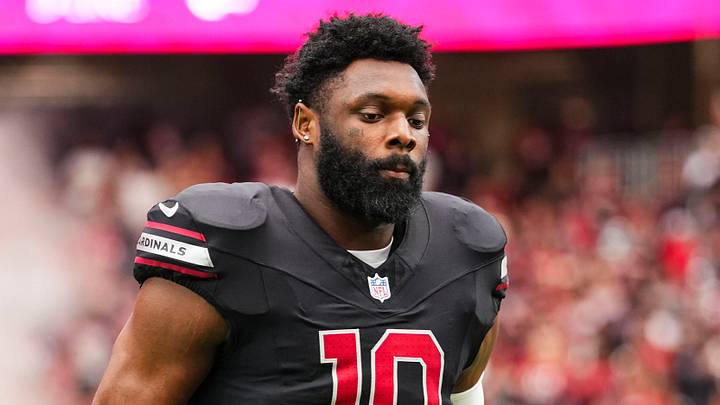
On one hand, the Chicago Bears could still stand to upgrade their pass rush heading into an expectation-laden 2026 season. Montez Sweat continues to be a stud in that capacity, but the rest of the edge rusher rotation has largely been pieced together. And that's where the Arizona Cardinals and Josh Sweat could come into play. There have been reports in Arizona that Sweat is unhappy and, while the Cards have pushed back on the notion that they'll trade him, the right offer for a rebuilding franchise could end up changing minds.
Sweat has been one of the more underrated edge rushers in the NFL over the past four seasons, registering 37.5 sacks, 44 tackles for loss and seven force fumbles over that span. However, the veteran might be more valuable to Arizona as a trade asset given the state of their roster, while the Bears need the upgrade to their defense to stay in the Super Bowl conversation. Hence, a trade should be on the table, especially if Chicago is willing to get a bit aggressive.
What a Bears-Cardinals trade for Josh Sweat would look like
Sweat isn't going to land Arizona a Myles Garrett type of trade package simply because he's not that type of player. However, the Cardinals could very well get a Top 100 pick in exchange for the pass rusher, especially the closer we get to Week 1 and if a team like the Bears hasn't been able to fully address its pass rush situation.
The value does become a bit more complicated given Sweat's contract. On paper, he's on the books through the 2028 season with a cap hit of $23.6 million in both the 2027 and 2028 seasons. However, the bulk of his guarantees expire after the 2026 season and there is an out with just $16.515 million in dead cap after this season. That should allow the Cardinals to negotiate up to something like a third-round pick with the potential for the Bears to not have to commit so substantially in terms of the finances.
Why the Chicago Bears make the trade

There's a reason that we've consistently seen the Bears mentioned in connection to players like Sweat, Maxx Crosby, Kayvon Thibodeaux and so on throughout the offseason: They need to upgrade the pass rush in a noticeable way.
Chicago was just 22nd in the NFL in pressure rate last season, highlighting the inconsistency in their ability to get after opposing quarterbacks. In the NFC North especially, those are the types of margins that you can't allow to fall through the cracks. Yes, you can expect Caleb Williams and this Bears offense to continue to take steps forward with another year in Ben Johnson's offense, which is enticing. However, that's not enough for what the Bears are hoping for.
Even with the tandem out west in the Rams and Seahawks looking like the clear NFC favorites, the Bears are still one of the leading contenders in the conference. They have legitimate aspirations of at least making it to the Super Bowl. However, they're also in a tier of teams that are seemingly relatively evenly matched with one another, which makes any improvements that can be made pivotal.
Subsequently, the Bears landing someone like Sweat is them making a move to try and maximize their current window, particularly while Williams is still on his rookie contract as a franchise quarterback. And if that weren't enough, considering that the Packers are another likely suitor for Josh Sweat, it'd be a huge UNO reverse card on a massive division rival to not only keep Sweat away from Green Bay, but add him to the Bears' cause.
Why the Arizona Cardinals make the trade

What is the outlook, really, for the Arizona Cardinals this season? Anyone who thinks Carson Beck is the answer is going against the eye test and logic at this point. The same applies to both Gardner Minshew and Jacoby Brissett. The offensive line still doesn't appear to be a fully formed product, and the defense is still littered with holes.
If you're looking a realistic timeline for the Cardinals, it's likely one where they use a premium pick to draft a hopeful franchise quarterback near the top of the first round, then will keep building the rest of the roster around the young signal-caller and Jeremiyah Love for the next few seasons. All that to say, though, this team is probably a year away from being a year way in terms of meaningfully competing.
While Sweat is a great player and piece on the offense, the point that he's more valuable as a trade asset still stands. He's 29 years old, which will put him in his early 30s by the time his contract comes up and by the time the Cardinals are ready to start truly leveling up. On their current timeline, getting a Top 100 pick and the subsequent prospect better fits where this team is heading.
Even better for Arizona is the simple fact that they don't have to deal Sweat. They can hang onto him and negotiate for the right deal that puts them in the best position. But they should absolutely be looking for that deal, because it best fits the direction that the franchise is currently heading.
More NFL Offseason news and analysis
 Add us as a preferred source on Google