
Key Points
Bullet point summary by AI
- A major international tournament has successfully used natural grass at U.S. stadiums that normally feature artificial surfaces.
- Players and officials are already expressing frustration over the temporary nature of the switch and its implications for the future.
- The debate now centers on whether a global sports organization can push an entire league toward a permanent change in playing conditions.
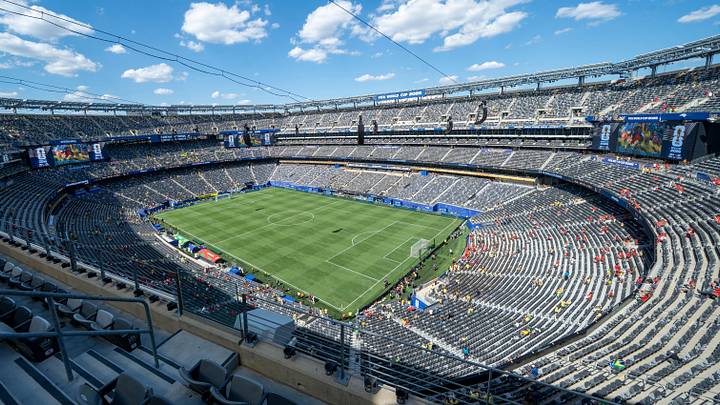
FIFA should be in charge of all outdoor stadium competition surfaces worldwide. The success of its (forcibly implemented) natural grass installation at all 2026 World Cup venues in the U.S. — venues that typically use artificial turf — has gone exceptionally well, and it should put the NFL to shame.
After just four days of competition, it's been obvious that playing on the real thing is better than turf. So far, no significant injuries have emerged, and FIFA's demand for grass can at least partially be credited. NFL players must be drooling at what soccer players are enjoying out there and already lamenting the fact it won't stick around for the fall.
"Guys are going to be frustrated," JC Tretter, NFL Players Association president, told ESPN in a feature on the turf debate being reignited as a result of the World Cup. "That will be a frustrating moment a few months from now where they see how quickly they roll back out the turf field in place of it."
"I would hope that one day, maybe in the near future, that they can do it for us," Los Angeles Rams safety Quentin Lake said ahead of the tournament.
NFL must stop dragging its feet on ending turf fields

The excuse that owners of teams playing in turf stadiums and NFL commissioner Roger Goodell keep using is that it's going to take too long to make the change to league-wide grass, and that there are other things to focus on that are more important than the playing surface. Really, though, they're just stalling over expenses — and won't admit that the investment in artificial turf was a colossal failure.
"The turf, actually like many things, improves the economics of being able to play this game and our players are the biggest benefactor of all," Dallas Cowboys owner Jerry Jones said in an attempt to explain it away at March's owners meetings. "I'm very comfortable putting some grass down for soccer under regulations and proud to be able to do it but quickly get that turf back out there to go about the other business of the stadium and the team."
According to ESPN's Jordan Raanan, FIFA's grass installation took close to a year to complete. It required 6-8 months to grow the sod at external farms across the U.S. At places like SoFi Stadium in Los Angeles and MetLife Stadium in New Jersey, the grass sits on top of multiple layers of sand, cloth and then the original artificial turf that will be uncovered for the upcoming NFL season.
Sure, that's a lengthy process, but taking the time to ensure a high-quality playing surface is worth it. To be fair, there is no direct crossover for the World Cup surfaces to the NFL, which is why they cannot remain after the tournament. Soccer cleats are much different than football cleats, and we simply don't know how the latter will impact the surface integrity.
How the NFL can phase out turf for real grass
The investment must be made, though, as players will eventually reach a breaking point if serious non-contact injuries continue to pile up on turf fields. It's not like the NFL has to reinvent the wheel; granted the challenge will be finding the right grass for each environment, as stadiums in Pittsburgh and Landover, Maryland, infamously struggle with field quality.
The league should use the new connections it's likely made through FIFA and consult with state-of-the art facilities in Europe like the new Santiago Bernabeu in Madrid, Spain. The home of Real Madrid incredibly has multiple subterranean levels of grass it can rotate for matches.
❗️| Grass is being added in the Santiago Bernabeu. pic.twitter.com/Y4QVafULZ0
— Madrid Xtra (@MadridXtra) September 2, 2021
It would be impractical for the NFL to ask already-built stadiums like SoFi and MetLife to rip up the ground and install that kind of technology, but nothing is stopping the league from doing so for new stadiums still in the planning stages. The Chicago Bears and Cleveland Browns haven't yet begun long-term construction on their new homes but could explore the possibility of sustainable grass technology.
If the NFL can harness the power of innovation (and the finances) necessary to get the ball rolling, it's only going to benefit the game in the long run. Rallying the key figures to get on board will be the biggest challenge going forward.
 Add us as a preferred source on Google