
With the LeBron James and the Cleveland Cavaliers once again thoroughly owning the Toronto Raptors in the playoffs, it sure seems like all of the remaining intrigue in the Eastern Conference is about which team will win the right to take on the Cavs in the Conference Finals. The Celtics have staked themselves to a 2-0 lead, but now the series is heading to Philadelphia, where things could be quite a bit different. Ahead of Game 3, let’s take stock of how we got here and some things that are important to watch out for moving forward.
The offense is getting all the attention because of Ben Simmons’ brutal Game 2, but the defense has been a way bigger issue for the Sixers. Boston scored 115.4 points per 100 possessions across the first two games of the series — 10.2 points better than their regular-season mark.
Much of that success stems from likely-unsustainable shooting from deep, but the Sixers are also just not forcing the Celtics into low-value shot attempts. An incredible 71 percent of the Celtics’ shots have been attempted either in the restricted area or beyond the 3-point line, compared to just 29 percent in the back half of the paint or mid-range. During the regular season, there was not a single team that allowed its opponents to attempt over 70 percent of their shots from the restricted area and 3-point territory. (The Bulls were last in the league at 69.3 percent.) Sixers opponents actually attempted the third-lowest rate of shots from those two areas, at 61.6 percent.
Read More:
Donovan Mitchell, LeBron James, Nikola Mirotic’s clean shave, and other unstoppable forces
Boston has had great success putting Joel Embiid in pick-and-rolls, betting that he can’t change directions three times in quick succession in order to corral a ball-hander, close out on Al Horford, then prevent Horford from driving to the rim. So far, they’ve been right. Horford even got the game-clinching layup on exactly that sequence in Game 2.
It might be wise for the Sixers to try stashing Embiid on Marcus Smart and allowing him to roam, then switching Horford’s screens. That would help them present Terry Rozier and Shane Larkin with more size on the perimeter, while also not allowing Horford to puncture the defense. It might yield some post-up opportunities for Horford, but with Embiid guarding Smart, he’d be available to help at the rim. If the Celtics are going to beat you with Smart knocking down 3s, you were probably never going to win anyway.
The Sixers also have to figure out a way to get out in transition more often. Only 13 percent of their offensive possessions came on the break in Game 1, and that number dropped to around 11 percent in Game 2, per Cleaning the Glass. (Their half-court offense has also been dreadful: 89.4 points per 100 possessions in Game 1 and 92.8 in Game 2.) A lot of this has to do with the Celtics hustling back on defense, but Philly has also been uncharacteristically reluctant to push the ball on occasion.
You usually see these Sixers sprint the ball back down the floor even after made baskets, and we have not seen a lot of that just yet. Much of the Simmons criticism surrounding his Game 3 performance has been focusing on the fact that he scored just one point, but not getting the Sixers into their early offense in order to get opportunities before Boston’s defense got set was even more damaging than his not being able to find his own offense.
For the Celtics, can they figure out a way to win a game that’s not played in TD Garden? They’re 6-0 at home in the playoffs now, but they went 0-3 in Milwaukee in the first round, and they did not play well at all there. Look at Terry Rozier’s home-road splits in the playoffs, for example. (He’s not the only one with an extreme split, either.
| LOCATION | PTS | REB | AST | TOV | FG% | 3PT% |
| HOME | 22.8 | 5.2 | 6.7 | 1.0 | 50.5% | 54.3% |
| ROAD | 11.7 | 4.7 | 7.3 | 2.3 | 27.8% | 24.9% |
Other assorted thoughts:
Through two games, Dario Saric is STRUGGLING. He’s 9-of-24 from the field and 2-10 from 3, and the Sixers have been out-scored by 32 points in his 67 minutes. A few of those shots from deep have barely come close to going through the net and he’s having a tough time defensively, as well. The Sixers need him to be that third floor-spacer alongside J.J. Redick and Robert Covington (who is also struggling from the field), or else their offense gets a bit bogged down in the half-court.
The biggest minutes of the series so far might have come from Greg Monroe, who came in during the second quarter of Game 2, got deep position for a couple post-ups, hit the glass, and settled things down for Boston. He wasn’t out there for the big run to slice the lead to six points at halftime but he stopped the bleeding and kept the Celtics in it when it looked like things were spinning off the rails. I don’t expect to see much of him in the remainder of this series but if Brad Stevens can steal some minutes for him when the Sixers go to something like an Ersan Ilyasova at center and T.J. McConnell at point guard look, he might do it.
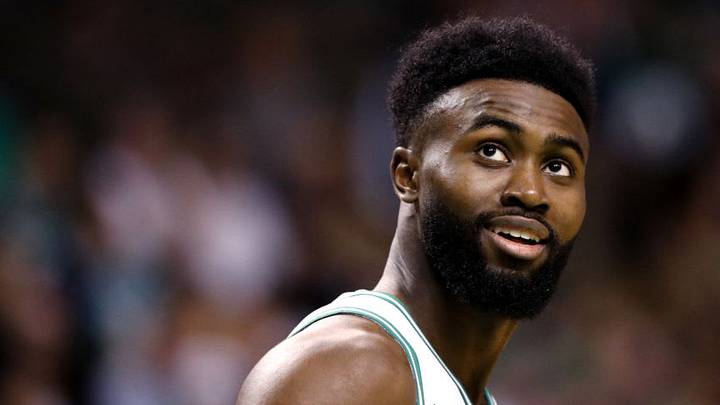
Let’s see if Jaylen Brown looks any healthier as the series moves along. He was pretty clearly gimpy in Game 2, limping around several times after taking off for acrobatic finishes. He said after the game that he went against his doctors’ advice by playing in the game, and while that’s admirable, it could come back to bite Boston at a later date if he doesn’t get himself fully right at some point.
Aron Baynes had an excellent first two games of the series, battling Joel Embiid in the post and knocking down as many 3s (three) as he did during the entire regular season. His willingness to let fly from the outside is also playing a role in the Sixers’ struggles to keep Boston drivers out of the paint.
Next: LeBron James cares not for your culture reset, Toronto
Speaking of driving… the Sixers have gotten absolutely zero offense via the drive-and-kick in this series. During the regular season, Philly averaged 39.8 drives per game and 3.8 assists per game off the drive, per Second Spectrum data on NBA.com. In Games 1 and 2, the Sixers averaged just 26.5 drives per game and just two assists per game off the drive. That’s not going to cut it. They need to figure out a way to get somebody (read: Simmons) moving toward the basket so the defense collapses and other guys get open shots. Failing that, sticking Simmons in the post and letting him either pick out cutters and shooters or run snug pick-and-rolls seems like the best option. At least he’d be close to the basket, and it would prevent the Celtics from sagging so far off him and neutering the offense.
 Add us as a preferred source on Google