
Key Points
Bullet point summary by AI
- The 2026 Special Olympics USA Games will gather 3,000 athletes in Minnesota from June 20 to June 26.
- Over 10,000 volunteers and 75,000 fans will support athletes across 16 sports, including new additions pickleball and cornhole.
- The event will provide over 15,000 free health screenings and expand youth programs for children aged 2 to 7.
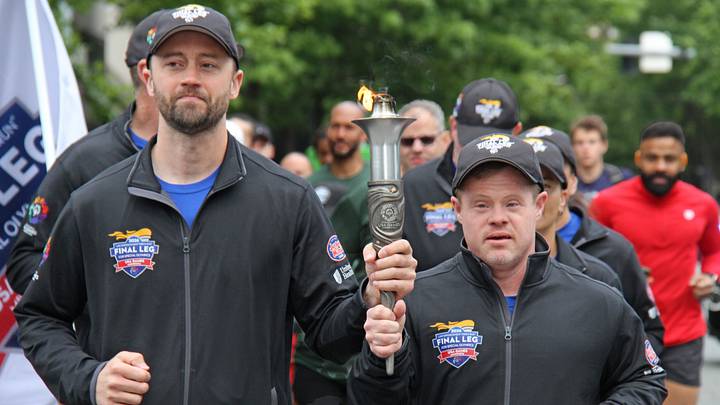
Get ready, because one of the most remarkable events in all of sports is officially touching down in Minnesota.
Behind the intense training and the competitive drive on the field lies a massive logistical operation. This June, Minnesota's Twin Cities are hosting the 2026 Special Olympics USA Games from June 20 to June 26, 2026. This week-long national event is a masterclass in coordination, bringing together thousands of people to celebrate inclusion through sport.
When you dig into the actual numbers behind it all, the sheer size of this event will blow your mind.
The headcount on the field and in the stands
Running an event of this magnitude requires a massive community network.
For the 2026 games, 3,000 athletes are traveling to Minnesota to compete. Supporting them on the sidelines and benches are 1,500 certified coaches. Managing the logistics, venues, and daily events are 10,000 volunteers, alongside an estimated 75,000 fans packing the stands to witness it all.
A massive list of sports gets even bigger
Athletes will test their mettle across 16 Olympic-style sports spread across multiple regional hubs like the University of Minnesota and the National Sports Center in Blaine, MN. This year's lineup introduces two (really awesome and addicting) new sports to the competition schedule. Both pickleball and cornhole are making their debut in the history of the USA Games.
Here is the complete list of all sports scheduled:
- Track and Field (Athletics)
- Basketball
- Bocce
- Bowling
- Competitive Cheer
- Flag Football
- Golf
- Gymnastics
- Powerlifting
- Soccer
- Softball
- Swimming
- Tennis
- Volleyball
- Cornhole (Making its debut)
- Pickleball (Making its debut)
A multi-generational event
One of the coolest parts of the event is the competition field proves passion doesn't come with an expiration date. You'd be surprised at how wide the age gap among the competitors spans -- I'm talking generations, with the youngest qualified athlete coming in at 14 years old and the eldest participant competing at 78 years old.
Beyond the field: Healthcare and youth foundations
The impact of the week extends far past the fields, through two monumental initiatives spotlighted in the official media guides:
- 15,000-plus Screenings: The Healthy Athletes program sets up specialized stations at the University of Minnesota’s Health Sciences Education Center. Volunteer medical professionals provide over 15,000 free screenings across seven critical disciplines -- including vision, audiology, dentistry, nutrition, emotional health, physical therapy, and podiatry -- to close the healthcare access gap for people with intellectual disabilities.
- The Early Childhood Foundation: The Young Athletes program focuses heavily on children of all abilities aged 2 to 7. This play-based curriculum uses fundamental motor and social skills to introduce younger children to healthy habits and inclusive play well before they meet the tournament age minimums.
Mapping out a fully packed national map
The competition brings the entire country together under a single banner of community unlike any other. Roster delegations are arriving from all 50 states, as well as the District of Columbia and U.S. territories.
Tracking the timeline of the games
While the broader global Special Olympics movement dates back to 1968, the official USA Games are a newer tradition. These games happen just once every four years, and the 2026 gathering in Minnesota marks the sixth iteration of the games.
Checking the passport of previous host locations
The USA Games travel to a new region every four years to build a national footprint of acceptance. To date, no single city (or state) has hosted the event more than once:
- 2006 (1st Games): Ames, Iowa
- 2010 (2nd Games): Lincoln, Nebraska
- 2014 (3rd Games): Lawrenceville, New Jersey
- 2018 (4th Games): Seattle, Washington
- 2022 (5th Games): Orlando, Florida
- 2026 (6th Games): Minnesota's Twin Cities
Passing the torch to the next host city
The momentum going on in the Twin Cities will eventually move a few states east. Special Olympics North America has announced that Cleveland, Ohio will host the next tournament during the summer of 2030.
Once the final medals are handed out in Land of 10,000 Lakes, the clock officially starts ticking toward the shores of Lake Erie. Cleveland is already getting ready to welcome the country with open arms, and it's bound to be another unforgettable week.
I hope to see you all out in the stands, cheering your faces off in Northeast Ohio when 2030 rolls around!
Why We Play features stories about the power of sports to bring us together, overcome obstacles, make positive change and reach everyone. Read more here.
 Add us as a preferred source on Google