
One of the big reasons that MLB appears careening towards a work stoppage, at least from the league's perspective, is the Los Angeles Dodgers having a massive payroll advantage over everyone else. The Dodgers carry a ridiculous luxury tax payroll and tend to find a way to get whoever they want in the offseason thanks to a seemingly endless pit of money to draw from.
That largesse has helped the Dodgers land a slew of stars over the years, including Shohei Ohtani, Freddie Freeman, Teoscar Hernandez and Yoshinobu Yamamoto among others. The big additions for the Dodgers this offseason were outfielder Kyle Tucker and Edwin Diaz, who received contracts worth a combined $309 million over the course of seven seasons.
Los Angeles entered the offseason with two big needs, an outfielder and a closer, and simply flexed their financial muscle to get the best options at each position on the open market. They may have some buyers remorse after both players have underwhelmed in their initial seasons as Dodgers.
Kyle Tucker and Edwin Diaz's struggles have left the Dodgers quite vulnerable

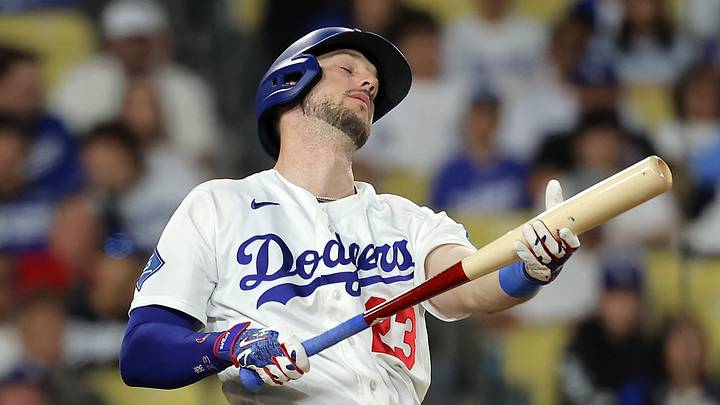
We haven't seen the Dodgers make an outright mistake in free agency in a while, but it appears they now have two bad deals from the same offseason. The bigger splash came for Tucker, who is getting paid an average of $60 million per season to be a complimentary piece in the lineup, and he hasn't even lived up to those meager expectations.
Tucker has been quite average so far, entering Sunday's game against the Milwaukee Brewers batting just .234 with 11 home runs, 54 RBI and a .705 OPS in 116 games. That production has been worth 0.3 Wins Above Replacement, a steep drop-off from the typical 4.5+ WAR performance Tucker has provided in each of the past five years.
Manager Dave Roberts actually benched Tucker on Saturday after noting that he appears to be struggling to hit at home, which is not what you want to see from the highest-paid player in terms of AAV in the sport. Those splits are rather stark, as Tucker is far more productive away from Dodger Stadium (.275/9/37 with an .840 OPS) than in it (.192/2/17 with a .566 OPS).
The other area of concern comes from Diaz, who looked like the most dominant closer in the sport during his past few years with the Mets. An elbow scope cost Diaz several months of the season and he has been lost since coming back, blowing multiple saves as his ERA (10.66) and WHIP (2.45) are unseemly right now.
Roberts has vowed to stick by Diaz for now and give him time to work through his struggles, but it is important to remember that Diaz has had several stints in the past where he goes through prolonged slumps if he loses his command. If the Dodgers don't see Diaz figure things out before October, they may opt to turn to either Tanner Scott or Roki Sasaki as a closing option in the postseason.
$309 million should buy you a lot of peace of mind at trouble spots, but the Dodgers got more of a mess instead with some of the worst moves of the offseason. Los Angeles has had some key slippage from contributors like Hernandez and Mookie Betts this season, so adding in two underperforming stars to the mix has threatened their chances of securing the first-ever three-peat from an NL team.
 Add us as a preferred source on Google