
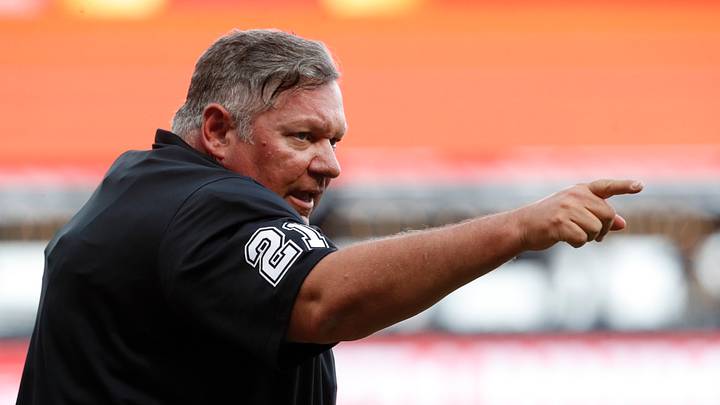
Hunter Wendelstedt has been around Major League Baseball long enough to know that umpires almost exclusively make the news for the wrong reasons.
Wendelstedt, who has been on the job since 1998, called Yankees outfielder Trent Grisham out on strikes last Saturday. That in itself isn’t a problem, except for the fact that Grisham now had a 1-2 count. To his credit, Wendelstedt immediately recognized the mistake, and fans were able to laugh it off and make him the butt of the joke on social media.
Umpire Hunter Wendelstedt (ranked 81st of 91 umpires this season) called the worst game of the day and the 16th worst this season.
— Umpire Auditor (@UmpireAuditor) August 17, 2026
He missed 20 calls in the Yankees Blue Jays game and had 9 calls overturned.
Only 4 games this season had 9+ calls overturned and Wendelstedt was… pic.twitter.com/fkoWfdANnX
But the Rogers Centre incident was only the latest strike (pun not intended) against the 55-year-old Wendelstedt, who is seemingly getting worse with age.
Hunter Wendelstedt ranks among Major League Baseball’s worst umpires
According to UmpScorecards, Wendelstedt’s 92.48 percent accuracy is third-worst among umpires who have called at least 20 games, trailing only Sean Barber (92.15) and Bruce Dreckman (92.32) through Aug. 17.
The implementation of the automated ball-strike system only makes Wendelstedt’s atrocious performances far more glaring — and while that might sound harsh, there is no room left for acceptable subjectivity. In other words, the league finally decided what a strike zone is, so every umpire should be incredibly close to 100 percent on a nightly basis. Human error is exactly why ABS exists.
But this is also exactly why we’ll continue arguing that the league should simply use ABS to call every pitch. The lack of unlimited challenges means that umpires like Wendelstedt and Barber can still get away with blowing easy calls without fear of legitimate punishment or discipline.

For that reason alone, it’s almost easy to feel bad for Wendelstedt. The league has put umpires in a difficult situation by introducing ABS with limited challenges. Regardless of “tradition” or critics, Major League Baseball should have introduced ABS as the only way to call balls and strikes. Objectively speaking, though, Wendelstedt should not be behind the plate unless or until the league switches to a full-time ABS system.
For all of his struggles, though, it’s nonetheless been good to see Wendelstedt back in uniform. He missed almost all of last season after taking a line drive to the head while working first base. There have been no reported setbacks or lingering issues, and there is no indication that he intends to retire following the season. For his sake, let’s collectively hope that the machines are the ones determining balls and strikes next year.
 Add us as a preferred source on Google