
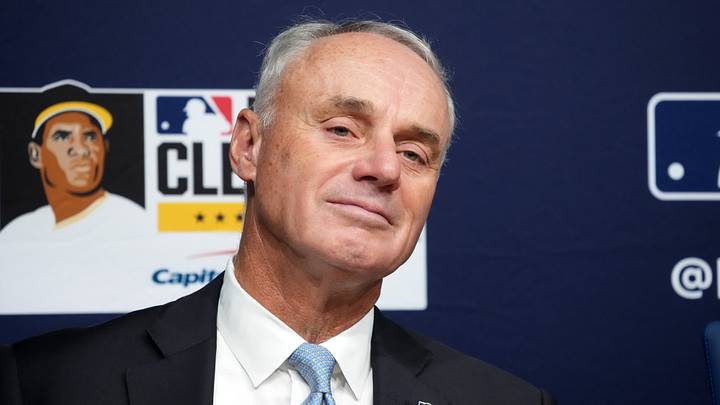
In his own way, Baltimore Orioles owner David Rubenstein is a throwback to a bygone era, when owners viewed their teams as far more than a part of their investment portfolio.
The 77-year-old Rubenstein grew up an Orioles fan, though he may be on the verge of losing that group for good. Roughly six weeks remain until a potential work stoppage begins, and neither the owners nor players have budged on the salary cap discussion. We’ve spent nearly two years preparing for the very real possibility that the 2027 season could be delayed or even outright canceled.
On a Zoom call with other Washington metro-based team owners this past week, Rubenstein turned heads — and not necessarily for the right reasons — when he explained why he bought the Orioles in 2024.
“A lot of my friends were buying teams, and I realized they’re making money,” Rubenstein said. “They’re making more money than I’m making in private equity. I thought I should look at it as a financial thing, but ultimately I bought the Orioles for a philanthropic purpose."
Wait. What did he just say?
“A lot of my friends were buying teams, and I realized they’re making money. They’re making more money than I’m making in private equity.”
Hold on a second. If teams are making money, yet they’re crying poor and demanding a salary cap in the name of competitive balance …
Baltimore Orioles owner David Rubenstein just exposed the flaws in MLB’s salary cap argument

On the one hand, we’re tempted to commend Rubenstein for saying the quiet part out loud. But we’re holding off on our applause because he vouched for a salary cap in January 2025. That said, 21 months is plenty of time for someone to change their opinion or, at the very least, reconsider their public stance.
Let’s call it what it is: Owners are in this solely for the almighty dollar. The Yankees and Dodgers had no problem putting advertisements on their uniforms, and the latter even sold the naming rights to Dodger Stadium. Didn’t you know Uniqlo Field at Dodger Stadium hosted part of the NLCS?
We’ve said it before, and we’ll keep saying it: A salary cap wouldn’t motivate owners to spend in free agency if they’ve embraced having low payrolls. How and why would a salary cap motivate the Guardians or Rays to offer a mid-tier free agent a four-year, $60 million contract?
Frankly, the only financial aspect that fans and players likely agree on involves local broadcasting rights. The collapse of FanDuel Sports Network (previously Fox Sports Network, then Bally Sports) created major problems for teams without a full-time television network like the Orioles, Yankees, Mets or Dodgers.

Every Major League Baseball team is valued at over $1 billion, and Rubenstein spent roughly $1.7 billion to buy the Orioles. He had no problem increasing payroll by signing Pete Alonso, and we’d have fully expected him to remain aggressive this offseason if not for the likely lockout.
But Rubenstein and the Orioles just had significant layoffs, including their mascot. Forget having it both ways — Rubenstein wants to win while making money, yet despite executing recent layoffs, he still views his team as serving a “philanthropic purpose.”
More and more, we’re convinced Rob Manfred and the MLB owners are content not holding a 2027 season. Nothing they’re saying or doing makes any sense, especially at this point in the calendar.
But remember: MLB owners earn more running their teams than they do in the private equity business, so all is well!
 Add us as a preferred source on Google