
Time was that, in the event of a tie in the standings, the two teams involved would simply settle things on the field in Game 163. But the league (understandably) decided that was an awfully inconvenient way of doing things, so now all 12 seeds are determined via cold, hard math.
That math figures be extra relevant this year, given just how much is still up in the air as we approach the final day of the regular season on Sunday, Sept. 27. Just what tiebreaker process does MLB use, and how could that shake out for your team in its push for a postseason spot? Let's dive in.
How MLB's playoff tiebreakers work
The primary, and by far most common, tiebreaker is good, old-fashioned head-to-head record: If you won the season series against the team you wind up even with in the standings, you have nothing to worry about. Divisional races will always be decided that way, as each team plays each intradivision opponent an odd number of times.
But what about Wild Card spots and overall seeding? Sometimes head-to-head record isn't enough — in which case MLB goes down its list of five tiebreakers until one of them determines a winner. Here's the full tiebreaker order:
- Head-to-head record
- Intradivision record
- Intraleague record
- Records in intraleague games after the All-Star break
- Record in intraleague games after the All-Star break plus one (i.e., if each team's second-half intraleague record is the same, the previous intraleague game on the schedule is used until the tie is broken)
If two teams competing for the same spot split their season series, the next tiebreaker is their record in games within their division. If that's also even, we go to record in games within their league (NL team vs. NL teams, AL team vs. AL teams). If somehow we're still tied, then things get weird: The team with the better record in games within its league since the All-Star break gets the nod. If that still doesn't give us a winner, we take the previous interleague game on the schedule (i.e., the last intraleague game of the first half), and keep working backward from there until the matter is settled.
The process is basically identical for three-way ties. If one team has the head-to-head edge against both of the other two, then the first team advances. But if head-to-head record doesn't produce a winner, we again go to intradivision record, then intraleague record, then record in intraleague games after the All-Star break.
What does that mean for this year's playoff bracket? Here's how MLB's tiebreaker process impacts each active race.
Each tiebreaker that could reshape the MLB playoff bracket
American League Central

- Tiebreaker edge: White Sox
The red-hot Guardians have stormed into first place in the AL Central, one game ahead of the White Sox entering play on Wednesday. But the good news for Chicago is that they won the season series, seven games to six, meaning they just need to finish in a tie with Cleveland in order to claim the division.
American League West
- Tiebreaker edge: Astros
The Astros and Rangers have traded the AL West lead for weeks. The two teams enter play on Wednesday dead even at 78-79, but Houston has the leg up by virtue of dominating the season series against its in-state rival. The Astros took nine of 13 games against the Rangers this year, meaning they just need to finish at least tied in order to clinch the No. 3 seed. With a game left against Seattle and then four against the lowly A's, that should be more than doable.
American League Wild Card

The Yankees and Red Sox have already clinched the top two AL Wild Card spots, meaning the No. 6 seed will come down to whichever teams lose out in the AL Central and AL West races. Entering play on Wednesday, the White Sox hold a three-game lead over the Rangers, and Chicago also won the season series against Texas four games to two.
If the Rangers win the West, though, the White Sox will want to take care of their own business, as they'd lose the head-to-head tiebreaker against the Astros. Cleveland, meanwhile, lost the season series against both Texas and Houston, though they'd need to completely collapse for it to be relevant with a four-game lead over both with just five games left to play.
National League top seed
- Tiebreaker edge: Brewers
Things are a bit more settled in the National League, where the Brewers, Dodgers and Braves have all had their divisions locked down for a while. But there's still the matter of home-field to be decided, with Milwaukee and Los Angeles battling it out for the top overall seed. The Brewers hold a one-game edge entering play on Wednesday, and they also won the season series, meaning they just need to finish in a tie with the Dodgers to ensure that the NL playoffs run through American Family Field.
National League Wild Card

Now we've got chaos. All three of the Cubs, Phillies and Padres are a good bet to make the playoffs, four games clear of the seventh-seeded Diamondbacks with five games to play. But as all three enter play on Wednesday with identical 87-70 records, there's a good chance tiebreakers will play a part in determining who plays who in the Wild Card Round.
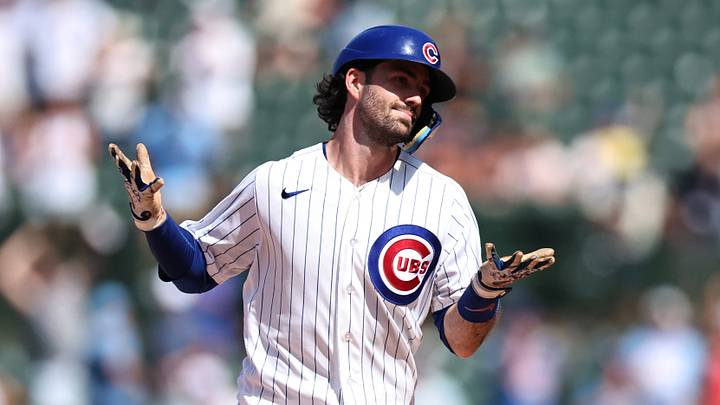
Chicago is sitting pretty here, having taken the season series from both Philly and San Diego. In a case of a three-way tie, the Cubs would earn the No. 4 seed and host a Wild Card series at Wrigley. That would leave us with one more tie between the Phillies and Padres which would go Philadelphia's way by virtue of sweeping the season series.
 Add us as a preferred source on Google