
Key Points
Bullet point summary by AI
- The MLB trade deadline approaches with teams sorting into clear tiers based on current standings.
- Contenders in the top tier face pressure to act aggressively while middle-tier teams weigh short-term gains against future costs.
- Several teams appear ready to sell, with decisions looming on high-value assets and long-term rebuilding strategies.
The All-Star break is mere days away, and the Aug. 3 trade deadline will be here in less than a month. Translation: There's very little time left for teams around the league to make their case as buyers rather than sellers, and every win or loss could make the difference.
So, what can the current MLB standings tell us about how the deadline might play out? Which front offices are in position to get aggressive, and which would be better off hitting the eject button? This has been as wide-open a season as any in recent memory, but looking at the landscape of the league entering the final week of the first half, three distinct tiers of trade deadline strategy become clear. Where does your team fall? Read on to find out.
MLB standings entering play on Tuesday, July 7
Tier 1: Buy, buy, buy

- Los Angeles Dodgers (60-32, 1st NL West)
- Milwaukee Brewers (56-33, 1st NL Central)
- Atlanta Braves (52-37, 1st NL East)
- Tampa Bay Rays (52-36, 1st AL East)
- New York Yankees (50-40, 2nd AL East)
- Chicago Cubs (50-40, 2nd NL Central)
- Philadelphia Phillies (50-41, 2nd NL East)
- Seattle Mariners (47-44, 1st AL West)
- Cleveland Guardians (47-44, 2nd AL Central)
There are currently seven teams at or above the 50-win mark, and all seven of them find themselves in this tier pretty comfortably. The Dodgers, Brewers and Braves have been the class of the National League pretty much all year long, and all of them will be as aggressive as possible at the deadline. The Rays, just as everyone predicted before Opening Day, have the best record in the AL. The Yankees occupy in the No. 2 seed and are, well, the Yankees.
The Cubs and Phillies have an uphill climb in their respective divisions, and it hasn't always been smooth sailing this season, but they're trending in the right direction at the moment and have veteran cores that warrant a serious pennant push. The Mariners have been one of the real disappointments of the first half, as Seattle got within one game of the World Series last fall and brought back a roster that appeared stacked on paper but have struggled to stay above .500 for large stretches so far. Still, they lead an eminently winnable division, and all that talent and potential remains.
If there's one surprise here, it's Cleveland, which doesn't even lead the AL Central at the moment and has fallen back into looking like the same old Guardians after a hot start. Still: If not now, when? The American League will never be as wide-open as it is right now, and while things haven't been great lately, this team has the pitching staff in place to take off once Jose Ramirez returns from the IL. It's finally time to give him some help and make a real run at this.
Tier 2: Buy, but don't go crazy

- Miami Marlins (49-42, 3rd NL East)
- St. Louis Cardinals (47-41, 3rd NL Central)
- Chicago White Sox (47-42, 1st AL Central)
- Washington Nationals (47-45, 4th NL East)
- Pittsburgh Pirates (46-45, 4th NL Central)
- Texas Rangers (45-45, 2nd AL West)
- Houston Astros (45-48, 3rd AL West)
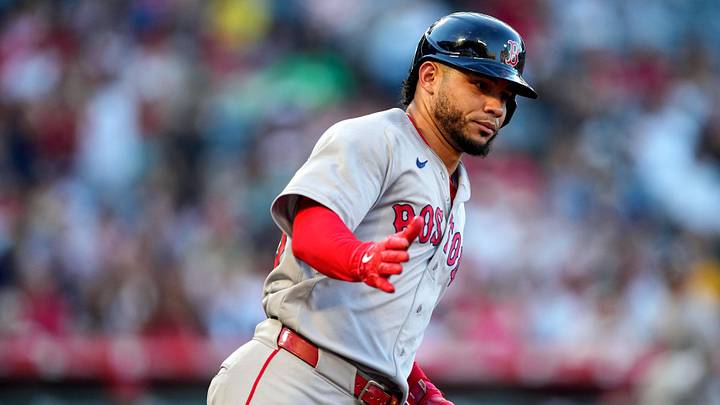
- Boston Red Sox (40-48, 5th AL East)
You can pretty cleanly divide this tier into two groups: pleasant surprises that are a bit ahead of schedule, and disappointments that are nonetheless trying to salvage something from this season.
Miami, St. Louis, Chicago and Washington all fall into the former, as not much was expected of them entering 2026. All four of them have been good enough to put themselves squarely in the playoff picture, but none of the four figure to have the stomach to sacrifice the future in service of a present that, while promising, doesn't seem likely to end in a deep playoff run. Getting your feet wet in October can be helpful for a young team, and all of them should add depth on the margins. Giving up real value for 2027 and beyond doesn't make much sense, though, not with the inner-circle contenders appearing to be a cut above.
That brings us to the bottom half of this tier, with the Pirates, Rangers, Astros and Red Sox all entering the year as would-be contenders. Pittsburgh is starved for postseason baseball and has Paul Skenes' timeline to consider. Texas is somehow second in the AL West, without any pieces who would fetch a serious return even if they did decide to sell. And while Houston and Boston were left for dead earlier in the year, they've both been among the better teams in the American League of late, with a talented core still plenty capable of making a run. It's hard to go all-in when your team is at or below .500, but none of them seem likely to sell either.
Tier 3: Time to sell

- Arizona Diamondbacks (45-45, 2nd NL West)
- San Diego Padres (44-46, 3rd NL West)
- Cincinnati Reds (41-48, 5th NL Central)
- Toronto Blue Jays (42-49, 3rd AL East)
- Baltimore Orioles (42-49, 3rd AL East)
- Athletics (41-49, 4th AL West)
- Detroit Tigers (40-50, 4th AL Central)
- San Francisco Giants (38-52, 4th NL West)
- New York Mets (38-53, 5th NL East)
- Kansas City Royals (37-54, 5th AL Central)
- Colorado Rockies (37-55, 5th NL West)
- Los Angeles Angels (36-55, 5th AL West)
For all the talk of how this is going to be a sellers' market ... are we really sure? To my eyes, more than one-third of the league should consider pulling the plug on this season, and while not all of them will — good luck trying to tell AJ Preller that he can't buy — I do think there could be more players available than we think.
We can get the easy ones out of the way first: The Giants, Mets, Royals, Rockies and Angels are the five teams yet to reach 40 wins this season, and all of them have essentially admitted at this point that they'll be sellers come early August. You can lump the Reds in this group, too, as they're buried in last place in the most competitive division in baseball and haven't looked like a viable contender for months now. Ditto the A's, a team that looks for any reason to not add MLB payroll and has been given it as they slowly slide toward the AL West cellar.
Now we get to the more controversial cases. The D-backs and Padres are still hovering at or near .500, and both are within 4.5 games of a playoff spot. But both of them also have ugly run differentials that suggest these really aren't anything like contenders, and is it really worth giving up prospects and cost-controlled talent in service of an ultimately futile pennant push? Considering all that would have to go right to make something significant of this season, it would seem like the better path would be to try and load up for 2027 (or, in San Diego's case, get out from under some bloated contracts).
Which, last but not least, brings us to the three AL disappointments, as the Blue Jays, O's and Tigers have all fallen well short of preseason expectations. Detroit has the most high-stakes decision to make, given that Tarik Skubal is set to hit free agency in just a few months' time. Obviously Scott Harris doesn't want to go down as the executive who traded the two-time reigning AL Cy Young winner, but at a certain point, that's better than losing him for nothing. And at no point this season has Detroit looked like a real contender. Nor have Baltimore or Toronto, and no amount of deadline acquisitions are going to change that. Much better to turn your eye toward next year, when both should be able to reload.
 Add us as a preferred source on Google