
The MLB offseason is a time for hope to spring eternal — whatever the prior year's disappointments, the slate has been wiped clean, and all that's standing between your favorite team and glory next season is a big winter. Just sign that star and make that trade, how hard could it be?
And then the offseason actually begins, and that hope runs smack into cold, hard reality. All those best-laid plans? Well, they require money, and unfortunately there's always less of it available than you'd like. (That is, unless you're a fan of the Los Angeles Dodgers, of course.) Just about every team in the league has at least one anchor of a contract that might make the difference between a transformative offseason and simply spinning your wheels.
Arizona Diamondbacks: RHP Corbin Burnes

- Remaining money: Four years, $140 million
The Arizona Diamondbacks gave Corbin Burnes a massive contract after the 2024 season, hoping he’d fill a void at the front of their rotation. Burnes got off to a pretty good start to his D-Backs career but wound up needing Tommy John surgery just 11 starts into his season, keeping him out for the remainder of that year and all but three starts in 2026. Not only is it hard to trust Burnes to stay healthy, but the former Cy Young winner looked rusty in his return from the IL in September (as most do coming off Tommy John). Burnes opted into the remainder of his contract, and there’s nothing the D-Backs can do other than hope he gives them ace production. It’s unlikely they’ll pay for a better option.
Athletics: RHP Luis Severino
- Remaining money: One year, $22.3 million
The A's were desperate for somebody to take their money, and Severino was desperate to cash in after finally staying healthy and posting a shiny ERA (that looked decidedly less so under the hood) with the New York Mets in 2024. But from pretty much the moment Sevy arrived in Sacramento, this match felt cursed; the righty understandably hates pitching in a Minor League park, with ugly home/road splits, while the A's have yet to come even close to building a functional rotation around him. Now they're stuck with one more year of $20 million-plus for a below-average starter.
Atlanta Braves: C Sean Murphy
- Remaining money: Four years, $60 million
Austin Riley has an argument given the fact that he’s the highest-paid player in Atlanta Braves history and is coming off such a rough season, but what about Sean Murphy? He isn’t making as much as Riley, but $15 million annually for the next three years is not nothing, especially when considering what he’s given the team. After a strong first season in Atlanta, Murphy has been limited to a total of 199 games in the past three seasons (an average of roughly 66 games per year) and he’s hit .194 with a .656 OPS in those games. $15 million for a backup catcher is already a ton, but $15 million for an unproductive, injury-prone backup catcher is a whole other story. I’m not sure the Braves can even dump this contract without attaching something to it.
Baltimore Orioles: OF Tyler O'Neill

- Remaining money: One year, $16.5 million
The O's got aggressive in making O'Neill a priority after his breakout 2024 season in Boston ... only for him to go right back to whiffing too much and struggling to stay on the field. You know, just as he had over his entire career up to that point. O'Neill struggles mightily against righty pitching and has only played 100-plus games in a season twice over nine years. That money sure would be better spent on helping Mike Elias finally build a credible rotation.
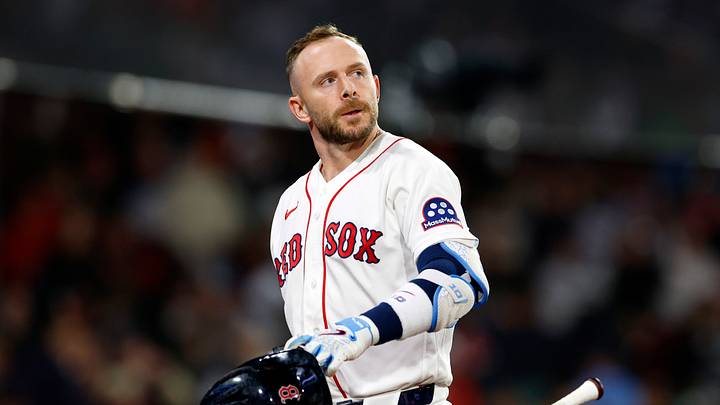
Boston Red Sox: SS Trevor Story
- Remaining money: One year, $23.3 million
Red Sox fans have been awaiting the end of Story's deal from pretty much the moment it was signed: He hit just .203 while appearing in just 43 games in his first season in Boston, and things haven't gotten much better since. Despite the fact that they're still on the hook for more than $23 million in salary for 2027, the Red Sox are still actively looking for a new shortstop — imagine if they didn't have to worry about burning a roster spot on a player they actively didn't want around?
Chicago Cubs: SS Dansby Swanson
- Remaining money: Three years, $81 million
On a Chicago Cubs team that has Pete Crow-Armstrong, Alex Bregman and Nico Hoerner locked in on long-term deals, Dansby Swanson is still the highest-paid player in terms of AAV. He has been arguably the best defensive shortstop in the league since signing his massive deal ahead of the 2023 season, but he had one of the worst offensive years of his career in 2026 and has been average at best with the bat since arriving in the Windy City. Swanson’s defense makes him a valuable player, but his contract requires more than just a slick glove. There’s probably a good chance the Cubs, a team with many holes, choose not to re-sign Seiya Suzuki or do enough with their starting rotation because Swanson, a good but flawed player, is paid elite money.
Chicago White Sox: RHP Luis Castillo

- Remaining money: Two years, $49.15 million
It felt like the White Sox had to do something to bolster their rotation at this year's trade deadline, but frankly, Chris Getz may have been better off doing nothing than acquiring Luis Castillo and what's left of his underwater contract. The righty is set to make north of $24 million in 2027, and if somehow he pitches 180 innings next year, a vesting option puts Chicago on the hook for $25 million in 2028. Of course, both Castillo's own declining performance and the White Sox' self-interest will probably conspire to make sure he falls short of that mark, but it's still a costly whiff for a team with a cheap owner that needs all the pitching help it can get.
Cincinnati Reds: 3B Ke’Bryan Hayes
- Remaining money: Three years, $23 million
Ke’Bryan Hayes is owed $7 million in 2027 and a little more than $7 million in terms of AAV combined over the three following years. That doesn’t sound like a ton, but not only is Hayes one of the highest-paid players on the Cincinnati Reds right now, he provides almost no value. Yes, his defense at third base is absurdly good, which is why the Pirates extended him to begin with, but his offense has not developed one bit. Hayes hit .141 with a .419 OPS in 94 games in 2026, and has hit .179 with a .518 OPS with the Reds despite Cincinnati playing its home games at one of the league’s most hitter-friendly parks. Hayes is going to be handed the third base job because of his defense, and for a Reds team in dire need of offense, they sure wish his money were off the books.
Cleveland Guardians: RHP Tanner Bibee
- Remaining money: Three years, $39.2 million
Admittedly, this says more about the state of Cleveland's ownership than anything else. Bibee has regressed significantly since bursting onto the scene as a rookie in 2023, but his floor is still a perfectly servicable back-end starter — and he's still just 27 years old, with time left to find that old upside. That said, he's been a liability more often than not over the last couple of years, and for a Guardians team that needs every dollar it can get, tying up long-term funds in a player who didn't pan out hurts.
Colorado Rockies: OF Kris Bryant

- Remaining money: Two years, $54 million
This one is easy. The Colorado Rockies, for whatever reason, decided to give Kris Bryant one of the biggest contracts in franchise history ahead of the 2022 season soon after trading Nolan Arenado, and they’ve gotten virtually no return on their investment. Bryant has a .695 OPS with the Rockies and has played in just 170 games total in five years. He missed all of 2026 with a back injury, and given how things have gone, who knows if he can play at all in 2027 — or how productive he does? This is one of the worst contracts in MLB.
Detroit Tigers: LHP Framber Valdez
- Remaining money: Two years, $77.8 million (player option for 2028)
Detroit swooping in to poach Valdez after lingering in free agency for months seemed like a shrewd move at the time, putting a solid No. 2 behind Tarik Skubal. But it turns out he was lingering for a reason: Not only did Valdez regress badly on the mound, but he continued to cause drama off of it, making the Tigers' life more difficult in just about every conceivable way. He's due big money next year, and if things continue to go south, he can opt in to 2028 as well. Yikes.
Houston Astros: INF Carlos Correa
- Remaining money: Six years, $110.5 million (vesting options from 2029-2032)
Correa's deal is only fully guaranteed for two more years, with 2029-2032 only vesting if he continues to make a certain number of plate appearances each season. But Correa is determined to play as much as possible, which means Houston could be on the hook here for a long time. That's a huge concern, as his production — particularly defensively — has fallen off a cliff as he's entered his 30s and injuries have taken their toll. For an Astros team that is in desperate need of getting younger, more flexible and less right-handed, Correa's contract is a massive albatross.
Kansas City Royals: RHP Seth Lugo

- Remaining money: One year, $21.5 million
The extension Kansas City threw at Lugo after his breakout 2024 campaign seemed ill-advised at the time, and sure enough, he's been in a tailspin ever since. That's what happens when you bet big on players entering their late 30s (Lugo will turn 37 in November) who never had overpowering stuff. The Royals have questions to answer all over the roster as they attempt to build a winner around Bobby Witt Jr. and Jac Caglianone, and that only gets harder with Lugo taking up over $20 million for middling results.
Los Angeles Angels: OF/DH Mike Trout
- Remaining money: Four year, $148.46 million
Look, the Angels wouldn't be going anywhere any time soon even if they could snap their fingers and take Trout's money off the books, so it's hard to get too worked up about this. But paying an already injury-prone player over $35 million a year until they're 39 years old is just asking for trouble; there's a reason Los Angeles would have to attach value just to convince another team to take Trout on at this point.
Los Angeles Dodgers: OF Kyle Tucker
- Remaining money: Three years, $207 million (player options in 2028, 2029)
A down year for Kyle Tucker did admittedly finish on a high note (he was their best hitter in the playoffs), and there’s every reason to believe he’ll have a better year in 2027. With that being said, this guy was given an AAV of $60 million on a four-year deal and is set to earn over $81 million (!) in 2027. That is absurd money, even for the Dodgers, and with a salary cap looming, Tucker’s contract will make it tougher for them to re-sign Tarik Skubal and/or upgrade their lineup.
Miami Marlins: LHP Andrew Nardi

- Remaining money: $1.1 million estimated arbitration for 2027
The only contract the Miami Marlins have on their books is Sandy Alcantara, and that was only after they picked up his club option worth $21 million for 2027. Obviously, that one-year deal isn’t holding the Marlins back. Andrew Nardi’s contract likely won’t either, but while he’s projected to make $1.1 million in arbitration for the 2027 season, he's also expected to miss most, if not all, of that season due to elbow surgery. That $1.1 million isn’t much, but for a Marlins team that’s as reluctant as any team to spend, that’s not nothing.
Milwaukee Brewers: DH Christian Yelich
- Remaining money: Two years, $52 million (mutual option for 2029)
Now, even with his declining play, Christian Yelich is clearly worth every penny that the Milwaukee Brewers pay him given the impact he has on that world champion clubhouse. With that being said, $26 million this season (and next) is a ton of money for a player who, at this point, is a platoon DH. That’s a lot of money for any team, and even more so for the small-market, penny-pinching Brewers.
Minnesota Twins: RHP Dean Kremer
- Remaining money: $6.5 million estimated arbitration for 2027
Kremer delivered decent results for the Twins after coming over at last year's trade deadline in a truly baffling trade. But he's on the wrong side of 30 now, and he was downright awful in Batlimore before being sent to Minnesota. It feels difficult to rely on him as even a league-average starter in 2027, and while $6.5 million in arbitration is far from debilitating, it's a lot for a cheap Twins ownership group to spend on a pitcher who probably won't help all that much. Really, though, the upshot here is that the Pohlads have no excuse not to start spending soon.
New York Mets: 2B Marcus Semien

- Remaining money: Two years, $46 million
The New York Mets’ Marcus Semien gamble couldn’t have played out any worse in 2026. Not only did his bat continue to decline (he hit .215 with a .620 OPS), but his defense, which was good enough to win a Gold Glove award in 2025, was subpar as well. Semien did nothing well, and there’s a good chance he’ll be relegated to part-time duties in 2027 as a result. Bo Bichette might be very overpaid, but at least he’s still a pretty productive player. Semien is likely going to make $26 million in 2027 to be on the bench most nights.
New York Yankees: 3B Ryan McMahon
- Remaining money: One year, $16 million
How bad is this contract? So bad that the Yankees may well pay McMahon to simply go away and not take up a roster spot. It was bad enough when he was simply a dreadful hitter, with even the pull-side power he showed with the Rockies more or less evaporating in New York. Now that he's aged into a fine defender at third base rather than an elite one, though, there's very little in the way of redeeming qualities here. The Yankees need a new plan at the hot corner badly.
Philadelphia Phillies: SS Trea Turner
- Remaining money: Seven years, $190.9 million
Aaron Nola is making a lot of money to be a mediocre at best back-end starter, but Trea Turner is making even more money to perform like one of the worst shortstops in the sport. I mean, Turner’s defense was so bad that Dave Dombrowski said he might need to switch positions if it doesn’t improve, and his 81 OPS+ was a career-worst by a wide margin. A bounce-back year can’t be ruled out (he was fantastic in 2025), but Turner being paid more than $27 million over the next seven years is a tough pill to swallow right now.
Pittsburgh Pirates: RHP Mitch Keller

- Remaining money: Two years, $38.8 million
Mitch Keller established himself as a valuable mid-rotation innings eater for the Pittsburgh Pirates, throwing at least 159 innings from 2022 through 2025. But not only was he limited to 115.2 innings in 2026 due to a shoulder injury, but he also had a 5.29 ERA in those starts. There’s a good chance the Pirates will let Brandon Lowe, their most productive slugger from this past season, walk because they owe Keller over $18 million this season and over $20 million in 2028 to be a No. 4 starter at best, and not even one they can fully trust. That is a shame.
San Diego Padres: SS Xander Bogaerts
- Remaining money: Seven years, $178.1 million
On a San Diego Padres team full of bad contracts, Xander Bogaerts’ sticks out as the worst. To his credit, Bogaerts’ defense at shortstop has aged better than I expected it to, but he hit .231 with a .676 OPS in 2026, good for one of the worst offensive years of his career. Bogaerts has not been good offensively for most of his Padres’ tenure, and now that he’s a 34-year-old with seven more years under contract, there’s no reason to expect things to get much better.
San Francisco Giants: SS Willy Adames
- Remaining money: Five years, $155.7 million
The San Francisco Giants have several underwater contracts, but at least Rafael Devers is still a prolific power bat and Matt Chapman is a good defender. What is Willy Adames good at nowadays? He was an average hitter in 2026, as his 100 OPS+ would indicate, and he was one of the worst defenders at shortstop in the league when healthy. He has some power, but that’s about all he offers at this point. With another five years to go on his deal, Adames’ contract looks rough.
Seattle Mariners: 1B Josh Naylor

- Remaining money: Four years, $81.2 million
The Mariners couldn't wait to lock Naylor up in free agency after he played an integral role in helping the team get to within a game of their first-ever World Series back in 2025. But Naylor's already fragile offensive profile more or less cratered this season, and while he did post a second straight 30-steal season, he also slugged .350. It's really, really hard to survive that lack of production from first base, especially considering Seattle's struggle scoring runs more broadly, and a team that spends as little as the Mariners do can't afford to swing and miss like this.
St. Louis Cardinals: 3B Nolan Gorman
- Remaining money: $3.4 million estimated arbitration for 2027
Like the Marlins, the St. Louis Cardinals only have one player under contract as of this writing — and no, JJ Wetherholt isn’t holding them back. Nolan Gorman isn’t really either (there’s honestly a pretty good chance he gets non-tendered), but on the off chance that the Cardinals keep him around, is he really worth the $3.4 million he’s projected to make? Almost certainly not.
Tampa Bay Rays: LHP Steven Matz
- Remaining money: One year, $7.5 million
It goes without saying that the Rays for the most part keep their financial powder pretty dry. Even if they decide to hang on to Drew Rasmussen's $20 million option for 2027 rather than trade him before he hits free agency, that's still a pittance for one of the best pitchers in the sport. Matz is very much not that, though; he pitched to a 5.46 ERA across 36 appearances and 11 starts this past season. He also hardly appeared in Tampa's playoff run, signalling that he'd been passed up in the bullpen hiearchy. $7.5 million doesn't seem like much, but it's meaningful money for such a small-market operation.
Texas Rangers: SS Corey Seager

- Remaining money: Five years, $157.5 million
The Rangers seem all too eager to get off of the rest of Seager's contract, if only he'll waive his no-trade clause and allow it. It's not hard to figure out why: He's due more than $30 million a year through the end of the decade, and he's already having a harder and harder time staying healthy as he approaches his 33rd birthday next April. He's still a very good hitter when he is in the field, but his athleticism is in real decline, and this deal will be fully underwater before too long.
Toronto Blue Jays: OF Anthony Santander
- Remaining money: Three years, $52.1 million (opt-out after 2028)
Speaking of fully underwater! It's tough to imagine a free agent signing going any worse than Santander's time in Toronto, which has featured just 54 games played, six homers and a .565 OPS across its first two seasons. Barring a minor miracle next year, he'll almost certainly opt in for 2028 as well, meaning the Jays are on the hook for at least two more years of a player whose health is a massive question mark after shoulder issues waylaid his 2026 campaign.
Washington Nationals: RHP Jake Irvin
- Remaining money: $3.4 million estimated arbitration for 2027
Jake Irvin has made 110 starts (112 appearances) in the last four seasons for the Washington Nationals and he has a combined 5.03 ERA in that span. He had a 5.48 ERA in 22 appearances (20 starts) last season for the Nats, contributing to their team-wide pitching issues. Irvin is projected to make $3.4 million in arbitration, which isn’t bad for a depth starter, but is he even that? If the Nats are serious about winning games, can they realistically rely on him to help contribute? If Irvin isn’t non-tendered, this is a contract that a Nationals organization that’s shied away from spending in recent years will come to regret, as small as it is.
 Add us as a preferred source on Google