
The job of an MLB executive is downright brutal. Whether it be player development, scouting (both domestic and international), free agency or trades, there are so many ways owners can justify firing these fine baseball men and women. Look no further than Astros GM Dana Brown, who parted ways with the franchise on Monday at the tail end of one of the more successful stints in franchise history. Brown was only given the job in 2023, and asked to do the impossible — revive a contender clearly on the downswing. Instead, Houston's window shut, and with it Brown was shown the door.
If Brown isn't safe, then who is? Not everyone can have the job security of Brian Cashman. The best way to judge the baseball executive hot seat is to look not just at how long they've had the job, but whether their splashy decisions have paid off. That's where Buster Posey and the Giants come in.
Buster Posey, San Francisco Giants

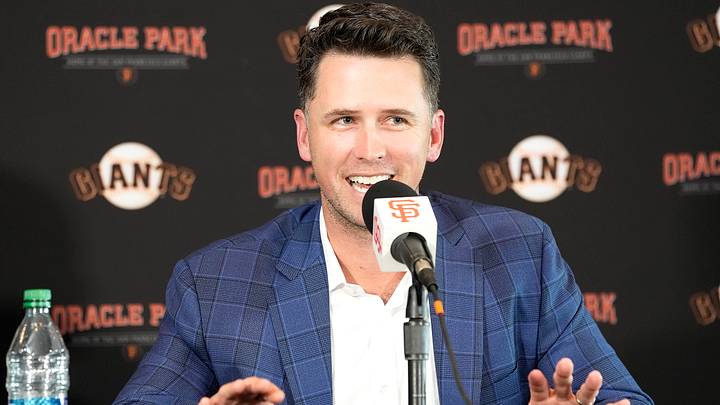
Buster Posey took the Giants job and immediately tried to revive a dynasty a decade past its prime. Rather than develop players from the ground up, Posey tried to make big splashes, whether it be trading for Rafael Devers, signing Willy Adames, or naming Tony Vitello, then of the Tennessee Vols, his next manager. While some of those decisions could eventually work out, there's no denying Posey is off the a rocky start, which is why we gave the Giants front office a D just last week.
Still, I find it hard to believe the Giants will fire a franchise legend in Posey. That's why hiring him was always such a huge risk. San Francisco will give Posey time to implement his vision. Giants fans can only hope he's learning on the fly, and not by the seat of his pants.
Nick Krall, Cincinnati Reds
The question isn't what has Nick Krall done to get fired, but rather what has he done to keep his cushy job in Cincinnati. The Reds' player development staff does deserve some credit. Elly De La Cruz, Sal Stewart, Chase Burns and even Hunter Greene (now injured) could be young building blocks for the organization. Yet, Krall also chose to do absolutely nothing at the MLB trade deadline. Rather than pick a direction and stick with it, Krall took the deadline off. He didn't improve the major-league roster, nor did he add to the farm system despite Reds players like Brady Singer playing on expiring contracts.
AJ Preller, San Diego Padres

Preller is one of the most aggressive executives in baseball. When he hits on those decisions, he's one of the best. No matter the trade deadline, it's a good bet Preller will be at the center of it all. This August, the Padres were reeling and in need of an upgrade, especially in the rotation, so Preller added Casey Mize and Robbie Ray. He opted to keep Mason Miller. Those decisions have paid off so far! The bad news for Preller is a new ownership group is taking over, headlined by private equity billionaire José E. Feliciano and his wife and business partner, Kwanza Jones. Assuming they have a good working relationship with Preller and — perhaps most importantly — are willing to approve a big budget, then there shouldn't be any problems. That's a big if.
Ben Cherington, Pittsburgh Pirates
Ben Cherington is a rebuild artist. He can draft and develop with the best of 'em. As the Pirates have found out the hard way, the challenge in a Cherington regime comes when he's asking to take that next step. The Pirates have a solid farm system and plenty of young talent. Cherington even made some important moves to upgrade the lineup this past winter. Unfortunately, he also gutted the bullpen and replaced pitching coach Oscar Martin, and the staff has taken a step backwards even since. Pittsburgh should've used the money spent on Marcell Ozuna to instead add competent relief help on the back end. There are any number of decisions I can reference.
The Pirates hired Cherington back in 2019. This season (and last) were supposed to be postseason or bust. Instead, Pittsburgh has failed, even when ownership finally gave Cherington more money to spend.
Mike Elias, Baltimore Orioles

Mike Elias embraced a full-scale rebuild when he took over the Orioles in 2019. In his first three seasons, Baltimore lost over 100 games, adding young talent through the draft and timely trades. That worked well for Elias, as the O's had one of the best farm systems in all of MLB in 2022. Baltimore then promoted that young talent and made the playoffs in 2023 and 2024. Sounds good so far, yes? The issue came, again, in taking that next step from perennial playoff contender to World Series threat. Elias hoarded his prospect cupboard when he should've been out making trades for an ace, or signing some of the top free agents on the market. The latter isn't all on him, as the O's ownership group hasn't exactly signed off on such decisions.
But Elias has had enough time to implement his vision. Many of those top prospects, including Jackson Holliday and Samuel Basallo, haven't had a smooth development. Gunnar Henderson could leave in free agency soon enough, and Elias already traded Adley Rutschman away at the deadline. What's the plan?
 Add us as a preferred source on Google