
As the Chicago White Sox fell just short moving on to the American League Championship Series, I’m reminded of a conversation with general manager Chris Getz this past offseason. We were talking about the Garrett Crochet trade and what he thought 365 days later: “I’m even higher on it now than I was at the time,” Getz said.
Internally, the White Sox viewed the December 2024 trade as a franchise-altering haul. That was the only way they’d seriously consider moving Crochet, an ace left-handed starter who was just coming into his own. In return, they received catcher Kyle Teel, outfielder Braden Montgomery, infielder Chase Meidroth and right-handed pitcher Wikelman Gonzalez, all who ranked within the top-15 of the Boston Red Sox farm system at the time of the trade.
The White Sox view Teel, 24, as their franchise catcher. Montgomery, 23, made his major-league debut this season, and people throughout the industry view him as a future star. Meidroth, 24, was sensational this season, posting a 4.5 bWAR, and slashed .276/.350/.415 with 16 home runs and 63 RBI in 154 games and produced in the AL Wild Card against the Astros, going 4-for-7 with four RBI, including a 390-foot three-run homer that sealed the game for the White Sox. Gonzalez, 24, pitched in 16 games with the White Sox last season and produced a 2.66 ERA.
That trade became the foundation of a roster built through blockbuster deals, overlooked signings and unlikely second chances, a combination rival executives now believe can keep the White Sox in contention for years.
Munetaka Murakami turned the White Sox into a team players want to join

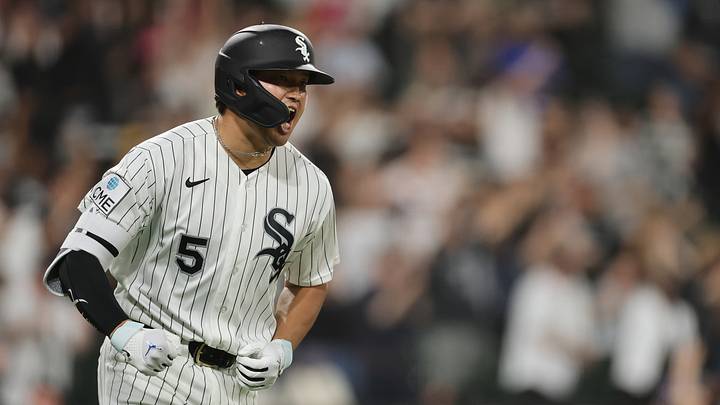
What truly brought this team together, though, and brought it to new heights, rival executives opine, was the addition of Munetaka Murakami in December 2025.
The estimates on Murakami’s eventual contract were wide-ranging. Everyone across the league was trying to figure out what he’d get, who was interested, and also attempted to raise red flags about his swing-and-miss at the plate. But Getz and the White Sox were interested in Murakami all offseason, unsure if they’d be able to land the slugger, and ultimately landed him on a two-year, $34 million contract.
The deal was widely praised by rival executives, with one saying: “That’s exactly the move the White Sox should be making.”
If it didn’t work out, it was only a two-year commitment, and they’d move on without any long-term implications. If it worked? They’d have one of baseball’s premier power hitters in the lineup on an affordable deal and have the ability to extend him before he reaches free agency. It worked out brilliantly, as Murakami hit 35 homers with 77 RBI, and has endeared himself as a national superstar with postseason homers and viral interview clips during champagne celebrations.
One aspect that a baseball executive recently broached to me: Murakami is an excellent piece for the White Sox to use to recruit free agents. Because with Murakami, the White Sox are contenders. They are a place where players want to be. You've all seen the videos of Murakami celebrating and his teammates rallying with him. Other players see that, too. And the belief is that this is a team in the first year of a sustained run of contention.
The White Sox found contributors in baseball’s unlikeliest places

It’s more than just the Crochet trade and Murakami addition though. Just look at the roster.
Miguel Vargas was acquired in a July 2024 three-team trade that sent Michael Kopech to the Dodgers. Remember that viral clip of him looking totally dejected after the trade when the White Sox were in Oakland? Vargas, 26, is now a key member of the White Sox, hitting .250/.363/.474 with 33 home runs and 93 RBI.
Sam Antonacci was a fifth round pick in the 2024 draft. He went to Heartland Community College in Normal, Ill. He played for Team Italy in the World Baseball Classic. Nationally, he received little buzz. Internally, the White Sox were adamant that they had a future big leaguer, and he debuted early this season and hit .277/.370/.396 with .766 OPS, eight home runs and 48 RBI.
The White Sox got Luisangel Acuna in an offseason trade that sent Luis Robert Jr. to the New York Mets. They got Brenton Doyle in a midseason trade with the Rockies. They added Randal Grichuk as a free agent in the middle of the season. They added Tommy Pham in the middle of the season and called him up after the veteran outfielder ran into Getz in the elevator. Tristan Peters went from the Savannah Bananas to getting the call from the White Sox. They signed Anthony Kay as a free agent after he went to Japan to reinvent himself.
Getz and the entire front office explored every avenue — the trade market, free agency, international free agency, the draft and even the Savannah Bananas — to compile this roster. They were 60-102 a year ago. This season, they reached the American League Division Series, a leap that rival executives believe reflects a foundation Chicago can keep building on.
No one thought this was possible. Not even Brewers manager Pat Murphy, who said early in the season that the White Sox were a team to watch going forward. He couldn’t have even forecasted this. And they also have Roch Cholowsky, the No. 1 overall pick in this year's draft, looming in the minors along with infielders Caleb Bonemer and Billy Carlson, who are both top-65 prospects in baseball.
Get ready to watch plenty more White Sox on your televisions going forward. Their run of success is only just beginning.
 Add us as a preferred source on Google