
This year's MLB trade deadline was far more active than expected, with tons of big names, from Tarik Skubal to Adley Rutschman to Jose Soriano, getting moved. While there are sure to be several difference-makers who changed teams, though, there's no such thing as a perfect player.
Even the best players moved at the deadline have at least one flaw that hold them back ever so slightly. Those flaws range from impactful to less so, but they're still there. Let's dive in and discuss them.
Tarik Skubal: Pitch count

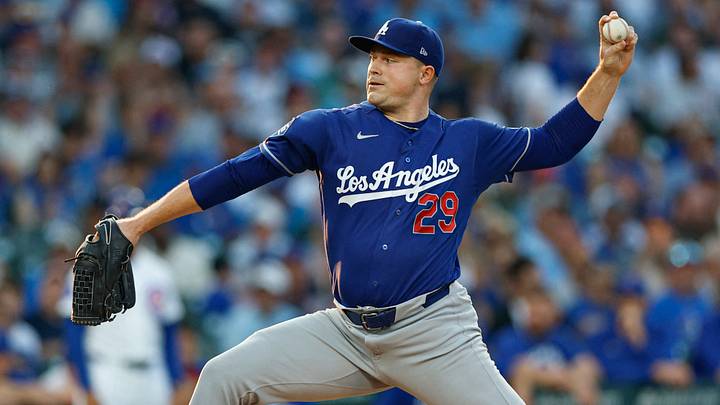
Skubal is, by virtually every measure, the best pitcher on the planet, so it's hard to pick out a flaw in his game. Something that is worth noting, though, is that his pitch count has been particularly limited this season. The lefty threw just 85 pitches in his Los Angeles Dodgers debut, and he has not thrown more than 96 pitches in any of his 17 starts this season. For reference, he did so eight times in 31 regular-season starts in 2025, and he did so in all three of his postseason starts last year as well.
To be clear, I understand why he's been somewhat limited. Not only is he a free agent after the year, eager to keep his arm healthy, but he also had an elbow injury that cost him over a month on the IL. It makes sense not to push him, and this is especially the case for a Dodgers team that has already practically won the NL West. With that being said, Skubal keeping his pitch count a bit down puts even more strain on a Dodgers bullpen that's had its share of struggles lately.
Adley Rutschman: Injuries

The biggest "flaw" Adley Rutschman has right now is one that's no fault of his own: He's not healthy. Rutschman has been out since the middle of July with a wrist injury, and while he's nearing his return, who knows how well — and for how long — he'll perform?
Rutschman has had his share of ups and downs for a couple of years now. He's had five separate trips to the Injured List with five different ailments since the start of the 2025 campaign. He remains one of the league's best defensive catchers, but the inconsistent reps he's had at the plate have presumably played a role in his offense being hot and cold. Hopefully he can come back healthy and looking like the All-Star he's capable of being. The Boston Red Sox could certainly use that from their catcher position.
Luis Arraez: Doesn't draw walks

Luis Arraez is one of the best contact hitters we've ever seen, and there's a good chance he's going to win his fourth batting title in the last five years. As impressive as that is, though, one knock on Arraez is that he's too one-dimensional. While he's greatly improved his defense, he still hits for minimal power, does not run well and does not draw walks.
Arraez has drawn a total of one walk in 29 plate appearances since being traded to the Philadelphia Phillies and has just 26 walks in 493 plate appearances this season. There's a reason that, while his .320 batting average is good for second in the Majors among qualified hitters, his .355 on-base percentage ranks 37th. A Phillies team whose .308 OBP as a team ranks 27th in baseball could certainly use a guy who can find his way on base more than Arraez can, even if his singles are sure to come in handy (particularly from the clean-up spot they have him hitting in).
Casey Mize: Allows too many fly balls

A big reason why Casey Mize has had the best season of his career thus far is that he has not been allowing home runs. He allowed just five dingers in 16 starts and 86.2 innings of work with the Tigers before heading to San Diego at the deadline. What's interesting, though, is that Mize has allowed 66.5 percent of the batted balls against him to be hit in the air, and 21.7 percent of those to be pulled in the air.
The fact that he only allowed five home runs to this point is pretty amazing given those facts, but there's reason to believe that'll change. Mize is going from starting half the time at the spacious Comerica Park, which ranks in the middle of the pack in home run park factor, to starting half the time at Petco Park, a stadium that's yielded more home runs. He's also going from starting many of his games against weaker AL Central opponents to more hitter-friendly parks and better lineups in the NL West for the San Diego Padres.
Kevin Gausman: Declining fastball velocity

Kevin Gausman is known for his splitter, and that remains an elite pitch for him, but starting pitchers need more than one dominant pitch to thrive. Gausman also relies heavily on his fastball, throwing it 51.4 percent of the time — but unfortuntely, his average velocity with that pitch is down from 94.5 mph in 2025 to 94.0 in 2026. And the results have also gone in the wrong direction.
Opponents are hitting .289 with a .275 expected batting average against Gausman's heater this season, after hitting .230 with a .259 expected batting average against that pitch in 2025. Gausman needs more than his splitter to survive, and if his fastball keeps getting hit as hard as it has been this season, he might not be as effective with the Chicago Cubs.
Luis Garcia Jr.: Doesn't hit left-handed pitchers well

Luis Garcia stars in his role. Against right-handed pitching, Garcia has done nothing but excel this season, slashing .294/.325/.589 with 21 home runs and 66 RBI. He's one of the best hitters in the sport against righties, which is very valuable. The problem, though, is that he's slashing .200/.238/.350 with three home runs against lefties — with just a .591 OPS against southpaws in his career.
The New York Yankees' first-base platoon with Garcia in the lineup against righties and Paul Goldschmidt starting against left-handers is quite good, but Garcia's ineffectiveness against lefties makes him very limited, which particularly hurts with New York so starved for offense right now. Again, he's perfect for his role, but his role doesn't overexpose his major flaw. That doesn't mean the flaw isn't there, and the Yankees are less flexible as a result.
Jose Soriano: Poor four-seam fastball

Jose Soriano averages 97.2 mph with his four-seam fastball, but the pitch doesn't play up to its velocity. Soriano has allowed a whopping eight home runs on heaters this season, despite it being his third-most-used offering. He's allowed just four home runs on every other pitch. But despite the poor results, the Los Angeles Angels had him throwing his four-seamer far more (23.1 percent usage) than he did in 2025 (8.6 percent usage).
The results were rather stark. Soriano's ground ball rate has plummeted from a league-best 66.0 percent in 2025 to a very good but not elite 52.5 percent in 2026. This makes sense, as the over-usage of his four-seamer took away from his bread and butter.
Well, in his Toronto Blue Jays debut, he leaned more heavily on his best pitches, and the results were pretty darn impressive. Soriano threw his best pitch, his knuckle curve, 38 percent of the time, well above his average of 26 percent, and generated 12 whiffs on 21 swings with that offering. He threw the four-seamer just 12 percent of the time, well below his season average. He wound up allowing just one earned run in 4.1 innings pitched in Philadelphia.
If Soriano continues to lean on his best pitches more, there's every reason to believe the results will follow.
 Add us as a preferred source on Google