
Key Points
Bullet point summary by AI
- The Nationals have reached exactly .500 through 66 games, defying expectations with a balanced offense and defense.
- Two young hitters are driving the success with elite contact quality and power.
- The most talented prospect of the rebuild has yet to make a significant impact.
For five years, watching the Washington Nationals meant watching a rebuild with no finish line. The 2019 title evaporated into a fire sale, the front office that built it was dismissed midway through last season, and the standing instruction to fans was always the same: wait. So when a team that lost 100-plus games in recent memory walked into June at 33 and 33, the easy reaction was to wave it off as a fluke and a hot stretch from a kid manager. That reaction is wrong.
The Nationals earned every bit of .500
Start with the part that kills the luck theory. Washington has scored 352 runs and allowed 348 through 66 games, or a Pythagorean record of almost exactly .500. By the most basic measure of deserved record, the Nationals are exactly as good as their record says.
The schedule agrees. In late May, Washington took two of three from the division-leading Atlanta Braves, winning 2-0 and 2-1. A competent club can grind out back-to-back one-run wins against the best team in its division.
Blake Butera did not get lucky

Butera is the youngest manager in the major leagues since 1972, and the temptation is to credit the record to some rookie-skipper magic. The honest read is that the front office under Paul Toboni handed him a young roster finally ready to be competent, and Butera has not gotten in its way.
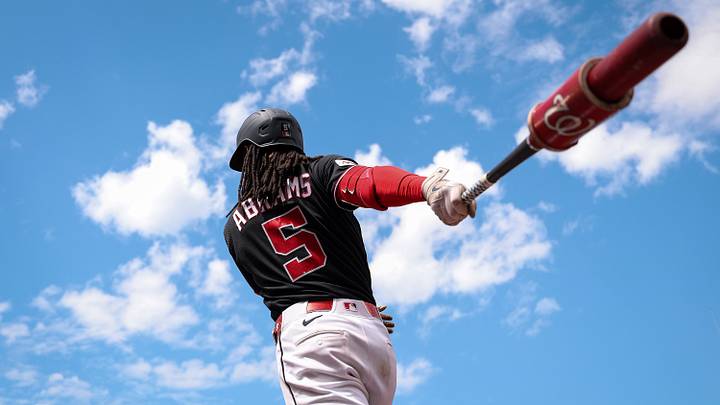
James Wood has become the kind of hitter a franchise builds around, posting a 159 wRC+ with 17 home runs and a .406 on-base percentage, and the underlying contact quality says none of it is a mirage. CJ Abrams is the engine beside him, a 153 wRC+ with a rare blend of pop and speed, already at 14 homers and nine steals while playing every day at shortstop. These are two genuine middle-of-the-order weapons, both young enough to still be getting better.
The pitching bends, but the offense keeps answering

Let's be honest about the pitching: Washington is allowing 5.27 runs a game and surrendering home runs at 1.41 per nine, with Miles Mikolas above six in ERA and Jake Irvin at above five. What keeps the Nationals competitive is that the offense scores at almost the exact same clip. They are not winning by smothering anyone. They win because they can trade haymakers and come out ahead more often than not, and for a rebuild that spent years getting punched without punching back, that is a meaningful change.
The staff does have one skill that keeps it in games: When Nationals pitchers get hitters to chase pitches off the plate, the contact that results does almost nothing, coming back with a wOBA at or near zero. Cavalli, Griffin and Irvin generate the bulk of that volume. The strikeouts are not piling up, but the chase pitch rarely gets punished, and that keeps the leaks from becoming the crooked-number innings that bury a young team before its offense can answer.
The best part of the rebuild hasn't arrived yet

There is a detail that should make the league nervous: Washington reached .500 without Dylan Crews. The former top prospect opened the year in the minors after being optioned in spring training and did not rejoin the club until the middle of May. He has 16 games back and a .197 mark.
Look underneath the average, though, and the picture flips. His hard-hit rate sits near 47 percent and his max exit velocity is north of 111 miles per hour, both elite. Plus, his expected slugging comfortably outruns his actual production. If the results catch up to the contact he is already making, this lineup adds a dimension it has not had all year.
Washington's rebuild is ahead of schedule
The point of looking past the record is to separate what is sustainable from what is borrowed, and Washington's profile is sustainable. The run differential matches the record, the offense is carried by two young hitters in their physical primes, the pitching keeps enough games close for that offense to win them, and the most talented piece of the future has not even shown up yet.
This is not a team that got lucky and will fall back to earth. It is a rebuild that arrived at competence on schedule, ahead of the moment anyone outside the organization was ready to take it seriously. Washington is not winning the East this year. But it is, for the first time since the fire sale, a team worth watching while it gets there.
 Add us as a preferred source on Google