
There are dozens of NBA players who have legacies that go far beyond their playing days. It's the reason the Basketball Hall of Fame exists. There's a market for our memories, and honoring greatness is something that means the world to us as fans.
However, there are even more players whose legacies have been lost to the cruel fate of time. Some never received national attention, while others were overshadowed by bigger stars of their era. There are far more than 50 players who deserve another look, but these names stand out.
This isn't a ranking of the best players who aren't talked about enough. We're looking at the gap between how a player is remembered today and how good he actually was at his peak. The bigger that gap, the better the case for this list.
1. Alonzo Mourning: Hornets, Heat, Nets
Let's start the list off with a biggie. Alonzo Mourning is a player most NBA fans recognize. We know he was somewhat of a star with the Miami Heat back in the 1990s. Unfortunately for him, he played in an era with Jordan. That star shone so bright, no other star could get noticed. He did make the Hall of Fame, was a two-time Defensive Player of the Year, a seven-time All-Star, and he even won a championship late in his career.
Yet, nobody talks about him, even as one of the best big men of his era. We hear so much about Shaquille O'Neal, Patrick Ewing, David Robinson, and so many others, but Mourning finds himself outside that conversation.
2. Chris Webber: Warriors, Wizards, Kings, 76ers, Pistons

The legacy of Chris Webber is insane. He was legitimately one of the best players in the NBA during the peak of the Sacramento Kings' run. Webber was a five-time All-Star, with four of those selections coming during his time in California’s capital. They were legitimately a great team that went toe-to-toe with the Los Angeles Lakers during their peak. They even have one of the most famous referee screw jobs in history: in Game 6 of the 2002 Western Conference Finals, the Lakers were given 27 free throws in the fourth quarter to keep them in the game and the series.
If Webber’s Kings won that game and went to the Finals, we’re talking about him as one of the best ever, and we’d probably forget about that timeout he called in college or his dysfunction with the Wizards and Warriors. He averaged 20.7 points and 9.8 rebounds over his career. Those are insane numbers that should have him talked about as one of the game’s best.
3. Mike Bibby: Grizzlies, Kings, Hawks, Wizards, Heat, Knicks
Might as well pair the Kings’ legacy together. Mike Bibby is a little more reliant on the Kings’ run to define his legacy, but he still has a great statistical record to showcase his impact. The former second-overall pick was the piece that put Sacramento over the top. He actually wasn’t even given a lot of props during his career, failing to make one All-Star Game. He averaged essentially a 20-5-4 in his first playoff run in 2002, and he was always a guy who stepped up when it mattered.
Bibby stuck with the Kings through 2006, keeping them relevant in the Western Conference even as other guys started to leave. He remained a great veteran point guard, even through his last year in the league with the Knicks, where he was the backup for Jeremy Lin during “Linsanity.”
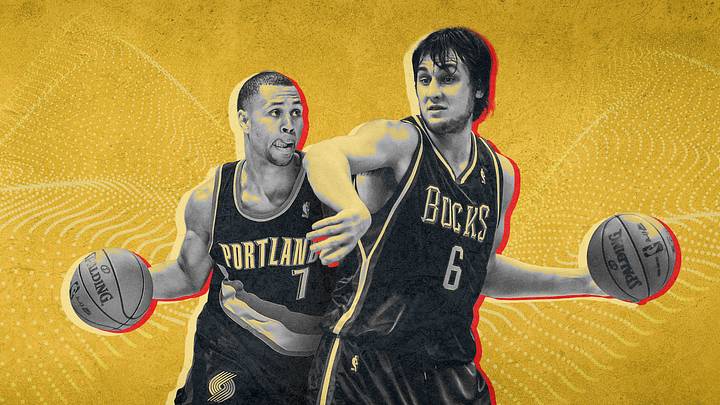
4. Brandon Roy: Trail Blazers, Timberwolves
There are going to be a few guys on this list who had injuries that shut their legacy down before it truly got off the ground. However, Brandon Roy is on a different level. The three-time All-Star was quickly becoming one of the great young stars in the league. He made an All-NBA second- and third-team in his first four seasons. He was retired one year later. Roy’s knees were failing him in 2011-12, and he decided that he could no longer go through with the rigors of basketball.
This was a guy who was averaging more than 21 points per game, and he was the future of scoring in the league. He was doing it for a Portland Trail Blazers team looking for a star, and now he was forced to step away from the game. But for those four seasons, Roy was electric.
5. Dennis Johnson: SuperSonics, Suns, Celtics
Defense might win championships, but it doesn’t win any popularity contests. Dennis Johnson averaged just 14.1 points and 5.0 rebounds during his career, which are not the type of statistics that get attention in today’s reaction economy. However, being named first-team All-Defense six times is deserving of some attention.
Johnson was not an empty-statistic guy, either. He was taking on his opponent’s best player every night. He famously neutralized Magic Johnson in the 1984 Finals and hit the game-winning shot in Game 5 of the 1987 Eastern Conference Finals. He wasn’t scoring because he was focusing so much on what the other team’s best player was doing. If he scored two points or prevented the other team from scoring two points, the outcome on the scoreboard is the same, right? He was a superstar in his own right.

6. Andre Iguodala: 76ers, Nuggets, Warriors, Heat
Looking at a player from the modern era, Andre Iguodala is someone we remember as a role player on the early Golden State Warriors’ dynasty teams. He was the veteran helping lead them to prosperity. He was teaching them “how to win,” and he did that as well as anyone. Yet, this legacy makes us forget the years on the Philadelphia 76ers. There, he was playing like a true star, scoring just under 20 points per game and putting up decent rebound and assist numbers. However, the Sixers failed to live up to expectations during this era, and the fans and media were relentless. He also started to suffer injuries. Then, Iguodala completely changed how he played the game of basketball. On the Warriors, he became a defensive specialist. He saw where he played the most important role, and it led to a career with four championships.
7. Jrue Holiday: 76ers, Pelicans, Bucks, Celtics
Jrue Holiday is a Swiss Army knife, and those types of players are very important for winning championships, but they are inherently underrated. One of the few active players on the list, Holiday has done so much in this league already, but there are a few things working against him. Number one is that he hasn’t been able to stick with a team. It’s not entirely his fault, but it’s more a matter of luck. If Jayson Tatum didn’t tear his Achilles and the Celtics weren’t desperately trying to get under the apron, he’s probably still in Boston, where he helped them win the 2024 NBA Championship.
Holiday also helped the Milwaukee Bucks win a title, and now he’s helping the Portland Trail Blazers play into their next era. In total, he’s played on five different teams, and his longest stop was with the New Orleans Pelicans. He had a knack for big plays, including a massive steal of Devin Booker in the 2021 NBA Finals that led to a Giannis alley-oop. Holiday’s game is built on winning plays. If he doesn’t get the credit he deserves, we don’t think it will bother him too much.
8. Elton Brand: Bulls, Los Clippers, 76ers, Mavericks, Hawks
Elton Brand will represent another set of players who built this list: players who went to another location as a hyped up addition who ended up being a massive bust. Elton Brand came to save the Philadelphia 76ers alongside Iguodala, but he made zero All-Star Games there and didn’t really make much of an impact. He was a superstar with the lowly Los Angeles Clippers, regularly scoring more than 20 points per game and averaging around 10 rebounds per contest.
His peak came in 2005-06 when he averaged 24.7 points per game and exactly 10 rebounds. With the Sixers, his numbers plummeted. He rarely stayed healthy, and he never averaged more than 15 points in Philly. He just looked like a different player, but we choose to remember Elton Brand in red and blue, dominating for Los Angeles's other basketball team.
9.Sidney Moncrief: Bucks, Hawks
Here is another star who was known for his defense, but Sidney Moncrief was more a two-way star who chose how he wanted to beat you. His level of intensity allowed him to play pretty much any position on the court, and he could fit into the needs of his team seamlessly. From 1982 to 1986, he averaged 21 points, 5.8 rebounds, and 4.7 assists while making five straight All-Star teams, and he won the first two Defensive Player of the Year awards ever handed out. Because the Bucks were not one of the great teams of the 1980s, he doesn’t get the recognition the rest of the league’s stars from this era get despite having numbers that were in the same conversation.

10. Detlef Schrempf: Dallas Mavericks, Indiana Pacers, Seattle SuperSonics, Portland Trail Blazers
So many of the players on this list would be considered guys who were “playing in the wrong era.” Before Luka Doncic or Nikola Jokic, there was Detlef Schrempf. He was one of the NBA’s first truly versatile European stars. Schrempf won back-to-back Sixth Man of the Year awards with the Pacers, then became a three-time All-Star and an All-NBA selection in Seattle, eventually becoming a key piece of those great SuperSonics teams alongside Gary Payton and Shawn Kemp. For some reason, he doesn’t get named alongside Payton and Kemp despite being an important cog in their contention. In 1994-95, he went on the ultimate heater, shooting 51 percent from the 3-point line. Truly, where is this man in 2026? He would be one of the top stars in the league today.
11.Mark Price: Cavaliers, Bullets, Warriors, Magic
Mark Price made one first-team All-NBA and three third-team All-NBA teams in his career. Do you know who else has four appearances on different All-NBA teams? Pau Gasol, Bernard King, Paul Pierce, and Pete Maravich. Want to know who hasn’t made four teams? Kyrie Irving (yet), Reggie Miller, Ray Allen, and Vince Carter. Price was ridiculously efficient for his era, finishing his career as a 40.2 percent 3-point shooter and a 90.4 percent free-throw shooter. He didn’t get a lot of attention because of his height, standing as one of the smallest players in the league at just 6-foot, but he did as much with his size as any other player could. He showed the immense value of the pick-and-roll offense, and he lifted the Cleveland Cavaliers to new heights (pun intended).
12. Paul Westphal: Celtics, Suns, SuperSonics, Knicks
Paul Westphal won a championship early in his career with the Boston Celtics in 1974, but it wasn’t until he joined the Phoenix Suns that he exploded, becoming a five-time All-Star and making four straight All-NBA teams, including three first-team selections. He was a perennial 20-point-per-game scorer and had one of the most unforgettable runs, taking the 1976 Suns to the NBA Finals. He should be up there with Allen Iverson for his run with the 2001 76ers, but Westphal doesn’t get that kind of recognition.
Westphal was credited as one of the smartest players on the court, always seeing the play ahead of the play. He put his teams in a great position, and it’s why he got the most out of the talent around him. He was as crafty as he was intelligent, and that was a recipe for superstardom. Apparently, it wasn’t a recipe for a long-lasting legacy.
13. Marques Johnson: Bucks, Clippers, Warriors
Tell the truth. Do you know Marques Johnson? At least most of the players on this list have some sort of name recognition. For some reason, Marques Johnson is completely lost to the hands of time. Johnson made five All-Star teams and three All-NBA teams, including first team in 1979. That year, he averaged 25.6 points and 7.6 rebounds and finished fifth in MVP voting. Again, do you remember this guy?
Unfortunately, his peak was cut short by a serious neck injury after a teammate collided with him during a game. He was never the same and was essentially out of the league by the offseason. Still, he finished his career averaging more than 20 points per game, and his number is in the rafters in Milwaukee.

14. Kevin Johnson: Cavaliers, Suns
At his peak, Kevin Johnson was an absolute blur at point guard, combining elite speed and athleticism with brilliant passing and a fearless style of play. KJ averaged 20+ points and 10+ assists for three straight seasons, a feat accomplished by only a handful of players in NBA history. He finished his career scoring just under 18 points per game. His biggest feat, literally, was when he posterized Hakeem Olajuwon in the 1994 playoffs.
Like with many of the really good players of this era, he was overshadowed by the super duper stars, and his contributions weren’t as appreciated like they would have been in different eras. Still, Johnson is one of the better players of the 1990s, and any team would have been happy to have him on the roster.
15. Rasheed Wallace: Bullets, Trail Blazers, Hawks, Pistons, Celtics, Knicks
Rasheed Wallace is known today as a mean player who had an… let’s call it an edge that rubbed some people the wrong way. He was the king of the misfits and a fighter at heart. He definitely has a legacy, and everyone knows who Rasheed Wallace is. But what’s his legacy as a basketball player? That’s harder to pin down, but it shouldn’t be. Yes, the toughness and extreme defensive practices are part of the legacy, but he was a driver who learned how to win at the next level.
He was a four-time All-Star who scored more than 16,000 points in his career. He changed his game in Detroit, focusing on rebounding and defense, but he was still a contributor. On their run to the 2004 title, Wallace averaged 13 points, 7.8 rebounds, and 2 blocks per game. However, at his peak, he was easily passing 19 points per game, and in one Portland series in 2002, he averaged 25 points and 12 rebounds per game. Wallace was one of the most famous tough guys the game has ever seen, but he was also a traditional basketball star.
16. Jermaine O'Neal: Trail Blazers, Pacers, Raptors, Heat, Celtics, Suns, Warriors
Jermaine O’Neal and Rasheed Wallace seem destined to be tied to each other forever. First, they were rivals at the peak of the Pistons-Pacers tilt in the mid-2000s. Now, they are their era’s two most underrated individuals. When O’Neal was drafted, he was just 17 years old, meaning he grew up in the game as a professional. At one point the youngest player to ever play an NBA game, O’Neal struggled at first with the Trail Blazers before he was traded to the Pacers. He quickly made a name for himself, making the All-Star team in six of his eight seasons in Indiana.
He was voted as the league’s Most Improved Player in 2002, jumping from contributor to superstar seemingly overnight. The next year, he showed he could be the star the Pacers needed to win a title, as in his one series played that year, he averaged 22.8 points, 17.5 rebounds, and 3.0 blocks against the Boston Celtics. In 2004-05, he averaged a career-high 24.3 points per game and added 10 rebounds. He was always around 20 points and 10 rebounds during his Pacers career.
17. Antawn Jamison: Warriors, Mavericks, Wizards, Cavaliers, Lakers, Clippers
Antawn Jamison spent most of his career on teams that weren’t getting much national attention, hurting his overall career legacy. He finished his career with more than 20,000 points. How he got there was this innate ability to score from anywhere on the court. It wasn’t like how we know Steph Curry could shoot the ball from anywhere on the court and score. This felt different. Like as long as Jamison had the ball in his hands, he would be dangerous. Because of the teams he played on during his career, he only has two All-Star nods. Despite this, he finished his career 56th in points scored, passing legends like Bernard King, Dwight Howard, Scottie Pippen, and Tracy McGrady.

18. Glenn Robinson: Bucks, Hawks, 76ers, Spurs
One of the rare number-one overall picks on this list, Glenn Robinson had an interesting career. Usually, a first-overall pick gets unnecessarily scrutinized and praised at the same time. One thing they are almost never is ignored. Robinson’s career with the Milwaukee Bucks hits different. Robinson was a two-time All-Star who averaged 20.7 points and 6.1 rebounds for his career. He pushed the Bucks to the 2001 Eastern Conference Finals alongside Sam Cassell (who could be on this list himself) and Ray Allen. Was he worth the number-one overall pick? The fact that Hall of Famers Jason Kidd and Grant Hill went right after him hurts his case, but he was still a great player for his day.
19. Fat Lever: Trail Blazers, Nuggets, Mavericks
Fat Lever was basically a walking triple-double before triple-doubles became a nightly obsession. He could collect rebounds like he was a forward but doled out assists like a point guard. He drew comparisons to more modern-era players like the recently retired Russell Westbrook. Lever recorded 43 triple-doubles in his regular season career, which was near unheard of in his era. From 1986 through 1989, he had 38 triple-doubles; more than Michael Jordan and second only to Magic Johnson in the entire league. The collection of statistics that made a triple-double wasn’t seen as fondly as it is today, but it was still a huge accomplishment.
20. Vin Baker: Bucks, SuperSonics, Celtics, Knicks, Rockets, Clippers
Sometimes, the valley is just more memorable than the peak. That’s the situation facing Vin Baker’s legacy. If you remember Baker, you remember him for the weight gain and drinking before practices that was the constant rumor mill surrounding him. The use of alcohol followed him through his last few stops in his career, but his time with the Bucks and his early seasons with the Seattle Supersonics made him look like a superstar. Baker was a four-time All-Star and two-time All-NBA selection, and from 1994-95 through 1997-98 he averaged roughly 20 points and 10 rebounds per game. Something happened during the 1998-99 lockout that knocked him off track in his career, and he was never able to get back the sparkle that once made him dominant.
21. Derrick Coleman: Nets, 76ers, Hornets, Pistons
Another first-overall pick for this list; not many talk about Derrick Coleman in a positive sense. It didn’t help that Hall of Famer Gary Payton went second overall, but many believe Coleman is still one of the best players in the draft and probably second-best overall. He started off strong, winning the Rookie of the Year in 1991 and making the All-NBA third team twice. He was a 20 points-10 rebounds guy from 1992 to 1995, and he was a key contributor for most of his career with New Jersey, Philadelphia, and Charlotte.

22. Paul Millsap: Jazz, Hawks, Nuggets, Nets, 76ers
Paul Millsap made four straight All-Star teams from 2014 to 2017. Millsap played for 16 seasons, which isn’t bad for a former second-round pick. He actually immediately became a hit across the league, getting himself in the Rookie of the Year conversation in 2007. He eventually made it to the All-Rookie second team. Millsap was always a really good contributor and fan favorite in his career, doing a little bit of everything from scoring and rebounding to defense and causing turnovers.
23. Peja Stojaković: Kings, Pacers, Hornets, Raptors, Mavericks
Today, we hold 3-point specialists in the highest regard. In the early 2000s, we thought of them as an interesting contributor. Peja Stojakovic was lights out from the corner. His play for the Sacramento Kings could have helped build a dynasty with all the pieces that made those teams great. He’s led the league in free-throw percentage twice and shot over 40 percent from beyond the arc eight times in his career.
He was lights out for every franchise he played for, and the three-time All-Star eventually won the NBA Championships with that famous 2011 Dallas Mavericks team. He had a surprisingly large role in his final NBA season, averaging 7.1 points per game in the playoffs and providing decent veteran minutes off the bench.
24. Jerry Stackhouse: 76ers, Pistons, Wizards, Mavericks, Bucks, Heat, Hawks, Nets
Jerry Stackhouse wasn’t flashy, but he was effective. Unfortunately for him, he played in an era that was defined by flash. Vince Carter, Tracy McGrady, Allen Iverson, and Kobe Bryant were dominant scorers, but nobody needed to ask where they were or “who took that shot?”. With Stackhouse, he was always quietly scoring and playing effective basketball, for better or for worse. One year for the Detroit Pistons, Stackhouse averaged 29.8 points per game. Unfortunately, injuries sidelined him in the second half of his career. He didn’t play more than 70 games from 2003 to 2013. When he was at his peak, he was one of the best scorers in the league.
25. Alvin Robertson: Spurs, Bucks, Pistons, Raptors
When you consider how complete Alvin Robertson’s game was on both ends of the court, his case for underrated takes a step forward. Robertson was an elite defender who could completely disrupt opposing offenses. His 1986 Defensive Player of the Year Award and four All-Star selections show that he was remembered as a great player in his time, but as the hands of the clock turn, his legacy starts to fall by the wayside.
He was one of the best players with his hands, leading the league in steals three times, but during his prime, he was great on both sides of the court. He finished his career with more than 10,000 points and 2,000 steals. He actually has the most steals all-time of anyone not in the Hall of Fame (assuming LeBron James and Chris Paul are making the Hall of Fame).

26. Antonio McDyess: Nuggets, Suns, Knicks, Pistons, Spurs
Antonio McDyess followed a path many of the men on this list followed. They were great, but the stars of their era overshadowed their accomplishments. The Mississippi native was a one-time All-Star and made the 1999 All-NBA Third Team. He has a very interesting career because it’s basically two different careers. He relied on his athleticism to become a star early in his career, but as that athleticism faded, he took on a bench role and contributed there. Major knee injuries affected his overall ability, but limiting his minutes helped extend his career. He was incredibly efficient with the Detroit Pistons, playing just 20-25 minutes per game but hitting more than 50 percent of his field goals.
27. Juwan Howard: Wizards, Mavericks, Nuggets, Magic, Rockets, Bobcats, Trail Blazers, Heat
We know who Juwan Howard is because of his pre-NBA career with the Fab Five at the University of Michigan and because of his college basketball coaching career, but in the middle was an incredible NBA career that doesn’t get the attention it deserves. Howard is only a one-time All-Star, but he kept getting NBA jobs because he could fill in the gaps of a flawed roster. He would average between 15 and 20 points per game, and between 7 and 9 rebounds per game during his peak. He moved around the league, playing for eight different franchises during his career, including two different stretches in Dallas and Denver. He finally made it to the promised land, winning a championship in his final two seasons with the Miami Heat.
28. Andrew Bogut: Bucks, Warriors, Mavericks, Cavaliers, Lakers
Another first-overall pick, Andrew Bogut has been around the league, but the big man was impactful in his own way. Overlooking the injuries allows you to see one of the smartest players on the court at all times. When Bogut joined the Golden State Warriors, it was like the final piece of the puzzle. He fit so perfectly with what that team needed. He was a player who needed no credit, played incredible defense, had quality rebounds when necessary, and could execute a pick-and-roll well enough to be a threat.
The numbers will never jump off the screen, unless its the 2015 postseason when he averaged almost two blocks per game and eight rebounds. He was never going to be a scoring machine, and one can argue he never reached the talent expected of a first-overall pick, but Bogut was an essential member at the start of a dynasty.
29. Glen Rice: Heat, Hornets, Lakers, Knicks, Rockets, Clippers
Interestingly enough, when you show people the old-school Charlotte Hornets uniform with that classic teal color, many go straight to Glen Rice. He put that team on the map, and he is remembered for that, but there’s more to Rice than just being good for the first iteration of the Hornets. His ability to knock down shots from anywhere made him a nightmare to defend. Interestingly enough, Rice was traded from the Heat to the Hornets for the top guy on this list, Alonzo Mourning. That will always be one of the biggest “what ifs” in basketball history. One guy became a Hall of Famer, and the other fell just short.
Would they have traded places if they didn’t get traded like that? Maybe, but we do know how good Rice was in his prime. In 1996-97, he led the league by shooting 47 percent from 3, leading to his 26.8 points per game. Rice was an electric shooter with style and flair. He eventually moved to the Los Angeles Lakers, where he was an underrated reason they won that 2000 championship. He wasn’t the scorer he used to be, but he gladly took a lesser role to help get a ring.

30. Calvin Murphy: San Diego/Houston Rockets
Some of the small guys get remembered as “good for being small” (more on that in a moment), but Calvin Murphy doesn’t even get that anymore. Murphy had a crazy journey to the NBA, starting at Niagara University and dominating to the tune of 33 points per game by his final season in college. He became a legend with the Rockets, starting in San Diego as a second-round pick and eventually making the move to Houston.
Murphy gave the Rockets a star to build their relocation around. In the NBA, Murphy has only one All-Star appearance, but he was one of the most efficient shooters in the league. He was always shooting north of 48 percent from the field and scored 20+ points per game across five separate seasons. He finished his career with just under 18,000 points, ahead of such greats as Magic Johnson, Earl Monroe, Grant Hill, and Chris Webber.
31. LaMarcus Aldridge: Trail Blazers, Spurs, Nets
LaMarcus Aldridge was always putting up insane numbers. He would be considered a star if fantasy basketball were as popular as fantasy football. His peak season came in 2013-14, when he averaged 23 points per game and 11 rebounds per game. Aldridge did his best to make Portland a playoff team, but they didn’t often go far. Their best season was in 2014, and Aldridge lost his mind, scoring 26.2 points with 10.6 rebounds just to get the Trail Blazers to the second round.
He eventually played for the Spurs and finished his career with the Nets, where his numbers were very different than his time with Portland. At the end of his career, he’ll be known for a guy who could put up insane statistics on any given night and dominate when his team absolutely needed it.
32. Paul Silas: Hawks, Suns, Celtics, Nuggets, SuperSonics
Paul Silas was a winner. He won three championships with two franchises, bringing the nut that fit perfectly into the bolt that needed to get a winner off the ground. He averaged a double-double for his career and led the NBA in rebounding during the 1974-75 season. He didn’t mind going toe to toe with the biggest scorers and the toughest big men. Silas did not care what was in front of him, he was going to tackle it with full force, and that’s why he originally fit perfectly with those 1970s Celtics. They needed an unselfish driver. That was Silas.
Dave Cowens doesn’t have the peak he has without Silas. When they traded him due to a contract dispute, they didn’t win another championship until the Larry Bird era started. Then, he joined the Supersonics as an enforcer and helped them win a championship.
33. Muggsy Bogues: Bullets, Hornets, Warriors, Raptors
Most people know Muggsy Bogues. He’s one of the smallest players in the history of the NBA. And he was great, as a smaller player must be to succeed. In fact, he was the smallest player to ever play in the NBA at 5-foot-3. He was the 13th pick in one of the greatest drafts of all time, which included David Robinson, Reggie Miller, Scottie Pippen, and Kevin Johnson. Bogues is yet another player on the original Hornets’ team who didn’t get all the recognition. He was taken in their original expansion draft, and he took off almost immediately. He was one of the better distributors in the NBA, and he was able to get his points up to close to 10. He was a double-double machine on his best nights, and he was must-see TV at his height.

34. Brad Miller: Hornets, Bulls, Pacers, Kings, Rockets, Timberwolves
Brad Miller is another one on those high-powered Sacramento Kings teams of the early 2000s, but he had success on a few different franchises. He was nowhere close to the traditional centers of this era. We’re still coming off the era of Patrick Ewing and David Robertson. Brad Miller was nothing like them. The former second-round pick turned himself into one of the league’s most skilled big men, earning two All-Star selections and becoming a perfect example of how a center could impact the game without dominating the paint. He was a three-point shooting big man before it was cool.
35. Eddie Jones: Lakers, Hornets, Heat, Grizzlies, Mavericks
Eddie Jones was at his best when nobody was paying enough attention. That’s when he forced the league to show him some love. His 1999-2000 season in Charlotte is the clearest example: 20.1 points, 4.8 rebounds, 4.2 assists, and a league-best 2.7 steals per game, earning him an All-Star start and a spot on the All-Defensive Second Team. This season showed what he was capable of.
Jones could be that perimeter defender at the highest level, but he could break that important 20-point-per-game threshold to announce himself as a star player. Between the steals (1.7 steals per game over his career), and his overall two-way play, Jones was never given the credit he deserved, but we believe that’s exactly how he liked it.
36. Nick Van Exel: Los Angeles Lakers, Denver Nuggets, Dallas Mavericks, Golden State Warriors, Portland Trail Blazers, San Antonio Spurs
You know when a player is considered so overrated that they become underrated? That is where we have Nick Van Exel. He was never the most polished guard, and Lakers fans were often frustrated by his play. All of this is fair criticism, but he wasn’t supposed to be that guy. He was on a Lakers team looking for direction, and they didn’t get it until Phil Jackson showed up to lead Shaquille O’Neal and a young Kobe Bryant. At that point, Van Exel was with the Denver Nuggets, still putting up decent numbers, including one season where he hit 21 points per game. He was never a superstar, but he was a quality scorer for most of his career.
37. Terry Porter: Portland Trail Blazers, Minnesota Timberwolves, Miami Heat, San Antonio Spurs
Sometimes the second banana doesn’t get the credit. For every Klay Thompson and Scottie Pippen, there’s a Terry Porter. Porter was the superstar point guard playing next to Clyde Drexler in Portland. He was a two-time All-Star who became known as a clutch scorer in his prime. That became clear in Game 6 of the 1990 Western Conference Finals. In the fourth quarter alone, Porter scored 21 points to send the Trail Blazers to the NBA Finals. He was ahead of his time as well, hitting more than 1,100 threes in his career and finishing with north of 15,000 points. Doing all this from the point guard position is rare in the 1990s, but Porter was a rare talent.

38. Shawn Marion: Suns, Heat, Raptors, Mavericks, Cavaliers
Shawn Marion was great on the Phoenix Suns before they had the seven-seconds-or-less offense, and he was great with just about every franchise he played for. He spent nine seasons with the Suns, and he quickly became a great scorer for them no matter what offense they were playing. The credit for the run-and-gun nature of the 2004-08 Suns was given to Steve Nash, Amar'e Stoudemire, and head coach Mike D'Antoni. Yet, all Marion was doing was scoring 19+ points per game and often hitting double digits on the boards.
The most important part of Marion is he was able to stay healthy during this era. Most big men had trouble keeping up. Marion had no trouble at all. Later in his career, he joined the Dallas Mavericks and moved into a different part of his career. He was only averaging 12 points and 6-7 rebounds per game at this point, but that’s exactly what the Mavs needed. Everything fell into place for the Mavs, and they won the championship, taking down LeBron James in his first season following The Decision.
39. Horace Grant: Bulls, Magic, SuperSonics, Lakers
We know the goggles. Horace Grant’s eye accessory was one of the most famous things any player wore, short of a pair of Jordans. Grant’s glasses were emulated on basketball courts around the country, but what was his style of play? A member of the original Chicago Bulls dynasty and a four-time champion (with his fourth coming as a member of the Lakers’ dynasty), Grant was a dominant center who played a traditional style of game. He was drafted at the same time as Scottie Pippen, giving the Bulls the core of their future championships. He’s overlooked because he played with Michael Jordan, but when Jordan retired the first time, Grant easily moved into the second star on that team, and the Bulls were still great.
40. Larry Nance: Suns, Cavaliers
The very first person to win the Slam Dunk Contest, beating the legendary Julius Erving in the process, somehow ends up on this list. One would think this is a legendary player, but it’s actually Larry Nance. While he didn’t get the recognition he deserved, he was still one of the most complete players in the league. He made three All-Star teams, averaged 17.1 points, 8.0 rebounds, and 2.2 blocks per game over his career. Only 22 players in the history of the league have more blocks than Nance. He got so many blocks because he was a versatile defender, getting as much value on the perimeter as he had in the paint. This is someone who was all over highlight reels back in the day, but today, he doesn’t even make it onto Twitter.

41. Keith Van Horn: Nets, 76ers, Knicks, Bucks, Mavericks
Back in the late 1990s and early 2000s, Keith Van Horn was everywhere. We’re not sure why, but he had a huge following back then. Today? Not so much. He’s another guy who was ahead of his time, hitting three-pointers despite standing 6’10. His best season came in 1998-99, when he put up 21.8 points and 8.5 rebounds per game, but the biggest name he made for himself came during New Jersey’s surprising run to the 2002 NBA Finals. Van Horn averaged 15.9 points and 7.5 rebounds throughout the playoffs and hit several big shots along the way. He was a stretch four before we knew what that was. Van Horn suffered injuries that really derailed his career momentum, which is why we only really remember him from his days with the Nets, but the peak was really fun.
42. Buck Williams: Nets, Trail Blazers, Knicks
Buck Williams had an incredible local profile, but his national profile was near nonexistent. He finished his career with 16,784 points and 13,017 rebounds. He is the only player in the top-20 all-time in rebounds who is not enshrined in Springfield. That shows the profile we’re talking about here. He is between Shaquille O’Neal and Jerry Lucas, sitting 17th all-time. He was on a Nets team that wasn’t afraid to go toe-to-toe with the dynasty Boston Celtics, and he was on the Portland team that went to the NBA Finals in 1990. In those big series, he stepped up. On those Trail Blazers teams, he had to play a very different role, making sure his team got second and third chances to get the ball back in the hands of Drexler and Porter.
43. Shareef Abdur-Rahim: Grizzlies, Hawks, Trail Blazers, Kings
Playing for bad teams can erase a great player from the basketball conversation. We’ve seen it so many times on this list, but this might be the greatest example of that. Despite finishing his career with more than 15,000 points, Shareef Abdul-Rahim only made one All-Star team. He was the type of scorer who was so dynamic in his abilities that defenders didn’t know what was coming next. If he didn’t play for the Grizzlies and Hawks, we would talk about him with the greats of the era. Despite scoring more than 20 points per game five times in his career, he played a total of six playoff games, and it came late in his career with Sacramento. He didn’t even start any of them.
44. Doug Christie: Lakers, Knicks, Raptors, Kings, Magic, Mavericks, Clippers
Another perimeter defender not getting his justice as an all-time great, Doug Christie was one of the best defenders of his generation, but because he never became a huge scorer, his impact is easy to miss. Christie made the All-Defensive First Team four times and finished second in Defensive Player of the Year voting in 2002. He finished his career with 11.2 points per game so he wasn’t inept on the offensive side of the ball, but it wasn’t anything to go home about. We promise (as this is essentially the end of the list), this is the last time we’ll mention the 2000s Sacramento Kings teams. We really feel like that entire team is one of the most underrated of this century!
45. Terrell Brandon: Cleveland Cavaliers, Milwaukee Bucks, Minnesota Timberwolves
Another player whose injuries cut short a promising career, but Terrell Brandon doesn’t get the same hype as Brandon Roy or Michael Redd. Since he played in the 1990s, there was just so much more going on, and we didn’t have the internet to lock these moments in time. Because of those injuries, his statistics aren’t impressive (11.6 points per game over his career). In the 1996-97 season with the Cavaliers, he had just under 20 points per game and 6.3 assists per game. In the 1997 All-Star Game, he won MVP after scoring 29 points. His peak was great, but it was fleeting.

46. Jamaal Mashburn: Mavericks, Heat, Hornets
Jamal Mashburn is another player of the wrong era. He’s a player whose injuries cut his peak short, and he was playing on a bad team that wasn’t giving him national recognition. He really is a mixture of all the players on this list. First, let’s talk about him as a player. Mashburn was incredibly aggressive both in the paint and on the boards. In his second year in the league, he scored 24.1 points per game with the 1994-95 Dallas Mavericks. His third season looked similar, but then injuries ended his season early. As he battled injuries early in the 1996-97 season, he was traded to the Miami Heat. By this point, something was clearly bothering him. A former 24-point-per-game scorer was down to under 15 by 1998-99. Then, he found new life in Charlotte, becoming a 20-point scorer again. Maybe he just enjoyed being a big fish in a little pond.
47. Rajon Rondo: Celtics, Mavericks, Kings, Bulls, Pelicans, Lakers, Clippers, Hawks, Cavaliers
Rajon Rondo was unique. In so many ways, he was unique. From the young gun future of the Boston Celtics to the controversial figure who moved around the league, Rondo was always contributing. He wasn’t doing anything insane, but his behavior always made him a lightning rod for media. When the Celtics clinched the 2008 championship, Rondo was the surprise star despite playing alongside Kevin Garnett, Paul Pierce, and Ray Allen. He came close to a triple-double in Game 6 of the 2008 NBA Finals.
He was the NBA’s version of a five-tool player. Shooting was his weakness, but he was an incredible facilitator and could rebound as well as any guard in the league. He would go on to win another title with the bubble Lakers of 2020, but his sheer number of teams and interesting aura made him very underrated once he finally retired.
48. Joe Johnson: Celtics, Suns, Hawks, Nets, Miami Heat, Jazz, Rockets
Joe Johnson never found a proper home, and that’s why he doesn’t have the fanbase that some others with the same profile as him do. His longest stretch was a seven-year run with the Atlanta Hawks, and it’s also where he was at his best. He left the Suns to join the Hawks because he wanted a bigger role in the offense, and that bet worked for both sides. After peaking at 17 points per game in Phoenix, he immediately had a stretch of five straight seasons of 20+ points per game in Atlanta. He drove the Hawks to some success, with a famous first-round playoff series with the Boston Celtics in 2008. Remember, this was the “anything is possible” Celtics. Taking them to Game 7 was huge for the Hawks.
Johnson would continue to be a scorer, but his peak fell off, starting with his last two years in Atlanta. He was traded to the Brooklyn Nets, and he was a decent player, but his star was fading. Johnson finished his career with more than 20,000 points, 5,000 rebounds, and 5,000 assists. Only 16 players have hit such numbers, and Johnson is the only one who won’t make the Hall of Fame.
49. Kevin Willis: Hawks, Heat, Warriors, Rockets, Raptors, Nuggets, Spurs, Mavericks
Kevin Willis is one of the most underrated big men in NBA history. Be honest, do you know what era Kevin Willis played in? He was drafted by the Atlanta Hawks in 1984, so we’re not talking about the 1960s here. Willis made the All-Star team in 1992 after averaging 18.3 points and 15.5 rebounds. Those numbers sound insane by today’s standards. And this is a player who played forever. At one point, he was the oldest player in the league, still kicking it at 42 years old. He played from the 1980s to the early 2000s, and he seems like a guy who has been completely lost to time.

50. Michael Redd: Milwaukee Bucks, Phoenix Suns
We are finishing this one off with one of the most famous players on the list, but he’s famous for all the wrong reasons. It’s a depressing tale of injuries ending a superstar career, but let’s talk about what comes before the injuries. He had one of the most interesting careers in this era, starting off playing behind Ray Allen, but his greatness made it clear the Bucks could sell off the three-point sniper and have a star behind him.
Redd grew slowly until he joined a different level of great in 2006-07. That season, he scored more than 26 points per game, but that’s also when the injuries started. He only played 53 games that year. For two more years, he was still very good, but he tore his ACL and MCL twice in two years, and it was over from there. He clearly tried to do too much on a bad Bucks team, and his knees failed him, and he was never the same.
 Add us as a preferred source on Google