
Key Points
Bullet point summary by AI
- A Texas court ruled in favor of Texas Tech quarterback Brendan Sorsby, granting him eligibility despite violating NCAA anti-gambling rules.
- Conference officials and coaches have criticized the decision, warning of broad impacts on college athletics and potential collapse of NCAA authority.
- The ruling leaves the NCAA with limited power, raising questions about whether conferences will soon establish their own regulations for competition.
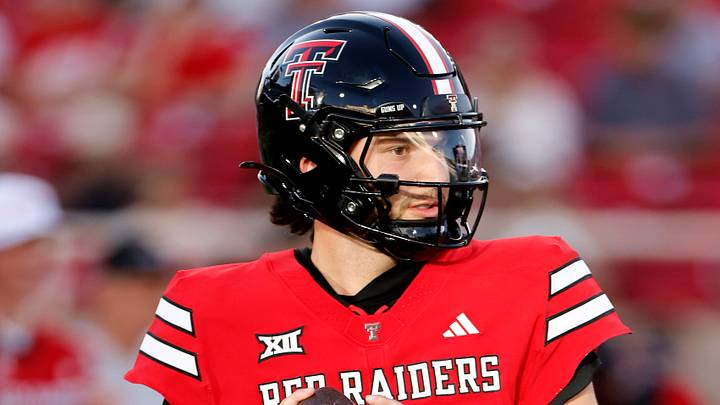
College sports are officially a lawless landscape. Consequences are nonexistent and the only thing that matters is entertainment and making money. That's the precedent a Texas court set when it ruled in favor of Texas Tech quarterback Brendan Sorsby, granting him eligibility for the 2026 college football season despite being found in gross violation of the NCAA's anti-gambling rules.
Sorsby's attorneys apparently demonstrated their client would suffer "probable, imminent and irreparable injury" if he was not allowed to play college football this year. The NCAA found he gambled roughly $90,000 on pro and college sports across four years, including wagers on his own team, the Indiana Hoosiers, when he was enrolled there his freshman year.
Despite the injunction against the NCAA's year-long ineligibility ruling, Sorsby will still miss the first two games for the Red Raiders in accordance with the punishment proposed by his attorneys. In other words, the guilty party got to choose his own sentence. That's not how accountability works.
Brendan Sorsby is college sports' new villain. Somehow the NCAA has joined the rebellion.

So far, there's been an encouraging reaction to the Sorsby ruling from conference and school officials, criticizing what is being viewed as the beginning of an institutional collapse. Here are just a few of the high-profile statements, via ESPN on Monday:
"The ramifications of today's ruling are significant and could have broad impacts across college athletics, creating great concern amongst our membership," Big 12 commissioner Brett Yormark said. "I've been consulting with our key stakeholders and have scheduled meetings with our Conference ADs and Executive Board this week. We are also in touch with [NCAA president] Charlie Baker and anticipate the NCAA to appeal the order in the next 24-48 hours. We will continue to monitor and evaluate the situation."
"As someone who grew up reading about the 'Black Sox Scandal,' and seeing what happened to Pete Rose and just understanding how bright that line seemed to be in all of American sports, I'm stunned that there would be a question at the court level that this is acceptable," Florida athletic director Scott Stricklin said. "That's not a judgment on [Sorsby]. It's just that was a pretty fundamental tenet of American sports, that if you're going to participate, you can't gamble, especially on your own team."
"How is anyone going to trust the outcome of a game again?" TCU head coach Sonny Dykes said.
"We officially lost our soul," an anonymous Big 12 athletic director said.
There's a healthy resistance to what is clearly a step too far in granting student-athletes power over the once-believed-to-be overreaching NCAA. In fact, some schools are going so far as to forbid scheduling Texas Tech in their athletics.
Sorsby court ruling removes NCAA's remaining teeth, opens door for its elimination

If the U.S. judicial system is going to overrule the supposed governing body for college sports on every single enforceable issue, what's the point of the NCAA anymore? The rules are there for a reason, but student-athletes and their representation are taking advantage of the law to circumvent them.
We already knew college sports was a wild west landscape with the advent of NIL payments and the transfer portal. It has increasingly reflected the environment of professional sports more than amateurism, but not even the pros allow gamblers to return practically unscathed, if at all.
And while the outrage expressed by conference officials is encouraging, it seems specifically aimed at the Sorsby decision alone. It's going to be crucial to pay attention to whether the sentiment lasts and extends to the evaporation of the NCAA's authority.
Once things blow over after the 2026 season, don't be surprised if the slow draining of the NCAA's power provides the opening conferences have been waiting for to establish and regulate competition on their own -- specifically in college football. If U.S. law doesn't back its authority, why should conferences?
"The hypocrisy is consistent throughout our profession right now," an anonymous Big 12 head coach told ESPN. "Nobody cares about the betterment of the game and its future anymore. Everybody's in survival mode on how they can win and survive right now -- college administrators, college commissioners and college coaches. That's how it's going to be until it f---ing crashes and burns."
It's never been a secret. Money, entertainment and commercial expansion are the express focuses of conferences and athletic programs. It's been the main driver of giving student-athletes their fair share of the financial pie. But that's mutated into near immunity for them just as institutions have deflected true accountability for malpractice and capital-driven decisions resulting in harm.
There's no better way to leave this argument than with the prescient words of Dykes, ironically, a Texas Tech grad:
"You would hope that there would be someone at some point that says, 'Hey look, this is not a good thing for the game and I care enough about the game to not let this happen.' I think it's sad that these adults and people who are supposed to guide college football aren't guiding it. I think it's a shame. Everyone is looking out for their self interests. No one is looking out for what's right in college football. I think it's important that we as institutions fight for the integrity of the game. We cannot continue to let state courts dictate eligibility. We must stand up for what's right. This isn't right. If we can't agree on this, I don't know what we can agree on."
 Add us as a preferred source on Google