
The NFL prides itself on parity, and has an economic system that borders on corporate socialism for billionaires, with owners congratulating one another when they execute quarterback contracts that don’t include full guarantees, like the collusion case discovery revealed.
So the Los Angeles Rams pulling off a series of blockbuster transactions that have execs around the league referring to them as a super team of sorts that is earning comparisons to the nearby Dodgers pushing for a dynasty or the Shaq/Kobe superteams of the Lakers from years ago clearly isn’t the norm. The Rams being able to land one of the best corners in the NFL still in his prime (Trent McDuffie) a few weeks before landing one of the dominant pass rushers in modern league history coming off a record-setting 23-sack season (Myles Garrett) isn’t supposed to be possible with a salary cap and all.
The Rams have a secret weapon for building their own super team
Tremendous credit has to go to head coach Sean McVay, who essentially has final say over any-and-all football matters with the organization. And general manager Les Snead, who has worked diligently to hatch and execute a flurry of trades in recent years that make it an anomaly when the Rams actually have a first-round pick (and then when they do, they used it on a back-up quarterback, at least for now, because they know the Garrett thing is still to come), merits major kudos. But the Rams also have a lesser-discussed contributor, whom their peers around the league believe has plenty to do with the franchise’s ability to remain this nimble and adroit at adding pieces.
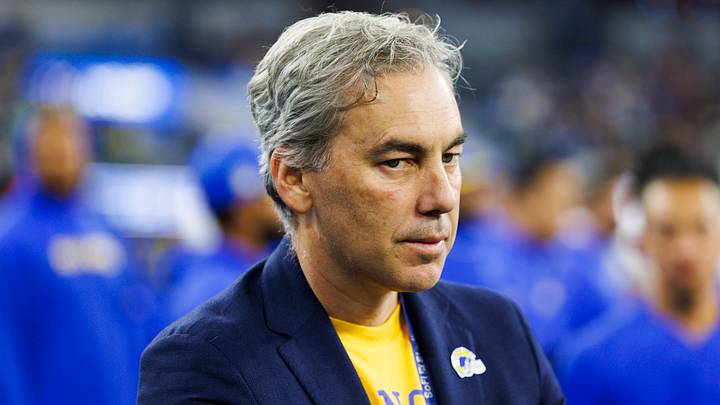
Could it be that team president Kevin Demoff is their secret weapon, of sorts?
“I’m truly fascinated about how they’ve been able to do this,” said one longtime NFL executive who was a part of numerous successful teams. “All the planning that had to go into this, and the months of working within your organization and working on the Browns, in this case, to make something like this happen.
“They are operating at a level unlike anyone else right now, not even (Eagles GM) Howie (Roseman). You can’t tell me Kevin isn’t heavily involved with the strategy and attention to detail and planning with this. Are they operating in two-year windows and everyone is projecting three (years out)?
“Our model is supposed to be the opposite of baseball in a lot of ways, but they’re like the Dodgers right now. You’re not supposed to be able to do that. I really can’t learn enough about their process.”
As one current GM put it: “Dude, Kevin is all over this stuff. Absolutely … I don’t know if he’s the mastermind, but he’s heavily involved in all of this stuff.”
Kevin Demoff's LA roots have continued to guide the Rams

Demoff is a product of the LA scene, with his father, Marvin, one of the most successful and respected agents in the history of the league. He understands why the NFL has failed there before and what it’s like competing with the other franchises and the glitz and gloss of Hollywood and the allure of the beach and everything else in LaLa Land.
He was perhaps the most vital cog — outside of an owner being able and willing to finance his own stadium deal — in the Rams getting back to Los Angeles in the first place and played a key role in identifying and luring McVay as young as the coach was at the time. And Demoff must be given some credit for how harmonious the football operations staff has been after the organization was set back by coach/front office conflicts in various former iterations.
“Kevin understands the big picture in a way that I don’t think a lot of people in this business really do,” said another longtime NFL executive. “His father was the most brilliant football man I’ve ever been around, and I’ve know Kevin since he was probably 10 years old, and he understands that market and how to move around the CBA and economics of football from a unique standpoint.”
It takes a village

The Rams couldn’t become the Dodgers, however, if you will, unless others were complicit in it.
Of course, other owners and front offices being as aggressive or willing to spend or consider any-and-all options and think outside the box should be the norm leaguewide, but it obviously isn’t. Several highly-successful GMs have told me over the years that in any given year there are probably six teams really all-in for a Lombardi — some years a little more and some a little less — based on the status of the QB and owner and stadium deal, etc.
“I’m not competing with 31 other teams from year to year,” one such GM told me a few years back. “It’s usually one in my division and another four or five outside of it.”
The other 31 or clearly not trying desperately to compete with the Rams for any potential top talent even remotely close to hitting the trade market. The Rams were clearly quite persuasive in their dealings with the Browns; the fact the Browns proposed the NFL should increase the amount of years into the future that draft picks can be traded is no coincidence, nor was Cleveland’s attempt to quietly rework Garrett’s deal months ago for no other discernable reason save for making the contract easier to move come June.
The Rams did all of this, extended MVP quarterback Matthew Stafford, are still quite likely to extend All Pro receiver Puka Nacua and they landed a potential successor to Stafford in the draft. And they kept receiver Davante Adams when some thought he might be dealt, and there is a growing sentiment that future Hal of Fame defensive tackle Aaron Donald will come back and join them at some point this season.
All in just few month’s work. Whether it fully pays off or not, the effort, collectively, is to be applauded, and hopefully inspires others to become as emboldened.
More NFL Offseason news and analysis
 Add us as a preferred source on Google