
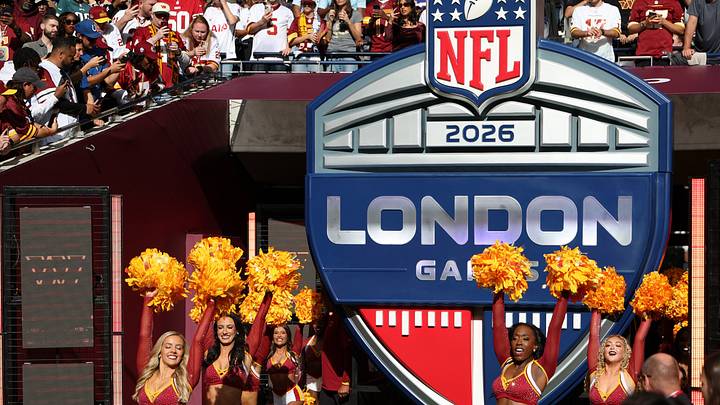
The NFL scheduled nine international games to be played in seven countries across four different continents and eight stadiums this season. The expectation is that the increase in foreign viewership, along with physically bringing the game to other parts of the world, will cause demand to spike. However, the league and its fans shouldn't equate demand with viability of an overseas NFL franchise.
There has been talk of the NFL placing a team permanently in the United Kingdom, specifically the capital London, for many years now. But that's all it's ever really been, and that's all it's ever going to be. British fans have mostly picked which U.S.-based franchise they want to support and have attended games, including the three hosted in London this year. Starting a new team over there isn't going to be the money boon nor the competitive boost commissioner Roger Goodell may envision.
Why putting an NFL team in London is easier said than done
First, let's take a trip back down memory lane to remember NFL Europe. Originally founded in 1991 as the World League of American Football, it contained 10 teams — seven in North America and three in Europe — but failed to ever gain traction in terms of interest and engagement. There was a two-year hiatus before it tried to revive itself with just European franchises — England, Germany, the Netherlands, Scotland and Spain. It officially dissolved in 2007.
The London Monarchs had a killer aesthetic. https://t.co/4cxBdrSlQ8 pic.twitter.com/UjYI3fW08q
— QBgami (@QBgami) August 18, 2026
The London Monarchs were one of those teams, and many speculate that if the NFL were to ever actually expand overseas, that would be the franchise to make a return. The team won the inaugural NFL Europe championship in 1991, but that would be its only success, later folding as the England Monarchs in 1998.
Beyond getting English fans onboard — which would require building a demand that can compete with the clubs in the English Premier League — there's the challenge of finding a home stadium for the club. The NFL currently plays international games at Tottenham Hotspur Stadium and Wembley Stadium in London, but those are rare events and usually occur during a break in domestic soccer league play.
Even if you take Tottenham out of the equation, Wembley is too highly revered as a soccer cathedral to allow an NFL team to call it home for eight to nine games and either tear up the turf or have the field switched out each time. There are other competitions that Wembley hosts which the English find more important to dedicate resources to — the Community Shield in August, for one, as well as England National Team home games.
Then there's the scheduling issue. Which division would England play in? The AFC or NFC East? Either would technically be closest for geographical continuity, but even then the franchise has to fill the other nine games of its schedule with opponents across the U.S. That travel itinerary would be brutal for everybody involved. You might as well be prepared for a player strike, as the union will have a fit having to sort through international travel once it starts mpacting more than just a handful of teams a year.
For now, the league is going to stick to its triple-header of games across the pond. The international initiative, now spread to Australia and South America, has a stated goal of spreading the game (along with being a money grab), but it's really a search for new franchise homes. Goodell might not find the desired demand but, unfortunately, that may not him from moving ahead with a foreign team and perhaps an international division altogether.
 Add us as a preferred source on Google