
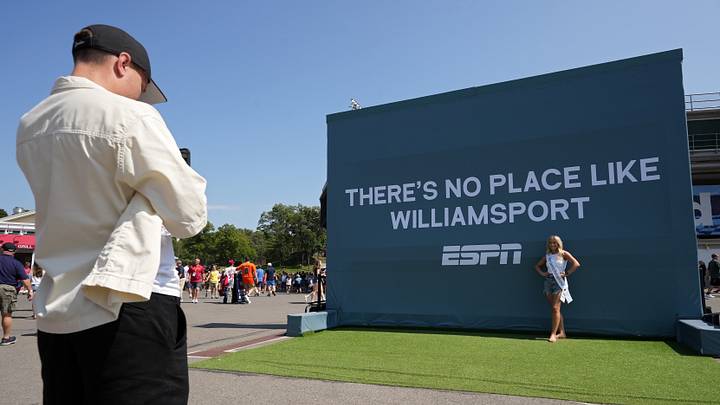
The Little League World Series arrives every August like a balm for the soul, a bunch of kids playing their hearts out in front of a national audience and reminding us all just why we became so invested in sports in the first place. But this year's edition arrives with a reminder that not even the purest sporting event in the country can be entirely free of the real world.
The team from Boerne Little League in Boerne, Tex., will be representing the Southwest Region in Williamsport, one of 10 teams duking it out in the U.S. bracket. But their road to the Little League World Series involved a lawsuit, a restraining order and plenty of bad blood, just the latest in a long line of controversies over the long history of this tournament.
The Tulsa Little League World Series controversy, explained
This story actually began as a softball controversy. On July 19, Industrial Little League from East Texas filed a formal complaint against Tulsa National's softball team, claiming that the latter had six players on its roster who did not meet Little League eligibility requirements based on residency, school attendance and regular-season play. Two days later, after much back and forth, Tulsa National was disqualified from the Southwest Region tournament — but the drama was only beginning.
Two weeks later, Tulsa National's baseball team was in the spotlight, again over a complaint regarding a potentially ineligible player. The player in question lived outside of Tulsa National's boundaries, but was initially granted eligibility because their sibling was a member of Tulsa National's Challenger Division team (a league specifically for kids with physical and intellectual disabilities). The sibling didn't wind up playing in enough Challenger Division games to maintain that eligibility, though, forcing the player to be removed from the Tulsa National Little League team before the Southwest Region tournament began.
The player did play in the Oklahoma state tournament, though, which is technically considered part of the Little League World Series. A complaint was filed, and after a formal investigation, Little League International found that Tulsa National had played an ineligible player — and was thus disqualified from the Southwest Region, despite the fact that they were set to play Bourne for a spot in Williamsport.
The same day Tulsa was disqualified, parents of other players on the team filed for and were granted a temporary restraining order by a District Court in McLennan County, Texas, allowing them to play Bourne after all. But just hours before scheduled first pitch, the same court granted Little League International's motion to dismiss the order. Bourne went on to beat Louisiana — a team that Tulsa had defeated earlier in the tournament — to punch their ticket to the Little League World Series.
The biggest scandals in Little League World Series history

While the Tulsa saga certainly has enough twists and turns to fill a book, this is hardly the first time that the Little League World Series has found itself embroiled in controversy regarding the eligibility of its players.
Jackie Robinson West's feel-good story has a sour ending (2014)
An all-Black team from Chicago, Jackie Robinson West captured hearts around the country when they won the U.S. championship back in 2014. After losing to South Korea in the championship game, however, the team was found to have used an illegal map in order to expand its talent pool and load up its roster. Jackie Robinson was forced to retroactively forfeit all of its wins — including its Great Lakes Region title, which was awarded to runners-up New Albany, Ind., instead.
Danny Almonte becomes a household name (2001)
Of all the breakout stars this tournament has produced, arguably none was bigger than Almonte, who struck out a ridiculous 46 of the 72 outs he recorded (including a perfect game against Florida in round-robin play) while pitching The Bronx to the precipice of a U.S. title.
Happy Danny Almonte Day! #LLWS pic.twitter.com/V1YLzvoHez
— Mr. Smith 👑 (@BadChoiceBurner) August 18, 2026
After the Baby Bombers fell short, however, questions began to swirl around Almonte's real age — questions that ultimately prompted Sports Illustrated to dispatch reporters to his native Dominican Republic, where it was revealed that he'd actually been born two years earlier than the date given on the birth certificate that had been given to the media. The Bronx were forced to forfeit all of their wins from that magical run, while Almonte's stats were scrubbed from the record books.
The Philippines forfeits its title (1992)
It was the first, and still the only, time that a team from the Philippines had made it all the way to Williamsport. They then proceeded to shock the world, toppling a powerhouse Dominican Republic side before upsetting a team from Long Beach, Calif., to capture the title. Such a fairy-tale story aroused plenty of suspicion, and it turned out that the team had lied about both the ages of its players and their home addresses. Long Beach was named the retroactive champs, a title that they backed up with another win in 1993.
Taiwan causes an international uproar (1975)
Taiwan wasn't just dominant in the early 1970s. They were so good — outscoring U.S. teams by a score of 120-2 across a three-year stretch — that then-chairman Peter McGovern decided to ban all international teams from the competition over growing concerns that Taiwan (and other East Asian nations) were sending over-age players to Williamsport. A full investigation found no wrongdoing, though, and the ban was rescinded in time for the 1976 tournament.
 Add us as a preferred source on Google