
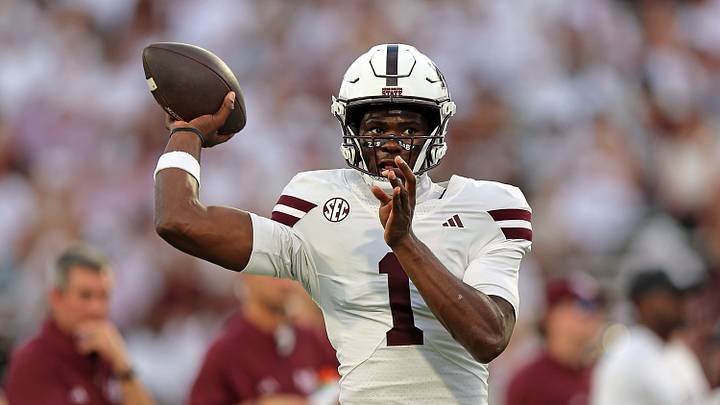
Keelon Russell and Kamario Taylor will highlight Week 5 of the college football season during the Alabama-Mississippi State matchup on Saturday afternoon, a pair of young quarterbacks leading two SEC programs. Both Russell, who beat out Austin Mack, and Taylor are in the same boat, earning starting positions this year after only a few appearances in 2025.
These might be two of the most talked about quarterbacks of the college football season, but they’re part of a bigger trend. Young quarterbacks aren’t development projects anymore. When programs believe their youngsters are good enough, that development gets moved from the sideline to the field. NIL and the transfer portal have changed the incentive.
The pressure isn’t simply to develop quarterbacks faster. It’s to decide sooner whether they’re ready. A program that keeps a promising young quarterback on the bench risks watching him leave for an opportunity elsewhere. Starting him allows coaches to build around his talent, but it also means accepting mistakes that once might have happened on the practice field.
The young quarterbacks who are changing the trend
Russell and Taylor are in the spotlight in this week’s clash between Alabama and Mississippi State but they’re hardly the only youngsters who have worked through the ebbs and flows of a CFB QB. Last year, Ohio State turned to redshirt freshman Julian Sayin and in one year, he went from inexperienced to Heisman finalist. Ohio State has long been waiting for their next quarterback prospect, and Sayin became that player after Will Howard. Two seasons ago, Duke chose then sophomore Darian Mensah as their guy.

Teams aren’t necessarily relying on veteran experience to generate success from the QB position. It also means you have to evaluate talent wisely. Mensah has had a bit of a different path. He started as a true freshman at Tulane before landing at Duke and now at Miami. The paths have been different for each of these quarterbacks, but this week will highlight just how important investment in younger quarterbacks is becoming.
Russell and Sayin developed into stars by winning the jobs early. Mensah became one by moving between programs.
How college football’s evolution is changing college quarterback development
Coaches don’t have the luxury of waiting for a player to find out if they’re going to be the quarterback they need to be championship contenders. DeBoer didn’t choose his quarterback simply because of experience. He chose Russell because his staff believed he was ready. Now, coaches aren’t relying on players to develop in practice, they need them to play and develop at the same time.

Mensah is now a three-year starter, Sayin is in his second year, Taylor has now started four games this season after a few starts as a true freshman. Usually elite quarterbacks take a few seasons before they get on the field. Now, they’re expected to be ready on day one, and if not, definitely after their freshman season.
Is this the best way for quarterbacks to develop?
The distinction is between getting an opportunity earlier and developing faster. Starting young gives quarterbacks more meaningful reps, but it doesn’t automatically make them more prepared. Coaches still have to balance what a quarterback can learn by playing against whether he’s ready to handle the job. Saturday’s matchup gives Russell and Taylor another test of their progress. Both are learning while being asked to lead SEC offenses.
It will highlight just how good they are and just how much college football has changed. Elite quarterback prospects are expected to compete for elite contenders right away. But does playing early necessarily mean developing better?
Not necessarily. Early playing time can accelerate development, but it can also expose quarterbacks who aren’t ready. Not every elite quarterback should start immediately, but there’s continued pressure for coaches to answer that sooner rather than later. College football hasn’t eliminated quarterback development. It changes how quickly that development happens.
 Add us as a preferred source on Google