
I find it very difficult to evaluate a large group of MLB teams in any kind of objective manner. Sure, I got stats popping out of drawers that help me compare stuff, but it still really helps to see Vladimir Guerrero Jr. chase a bad pitch, make weak contact and fly out repeatedly before establishing that with out-of-zone-contact and swing rates in your third “what’s wrong with Vlad Guerrero Jr.” column of the season. You know, that classic experience.
Unfortunately, it is humanly impossible to watch every team play every game. I literally do not think there are enough hours between games to do this even if every waking hour is spent staring at a quadbox of replays to get the fullest picture imaginable. Maybe if you never slept … but then when would I pontificate about my cursed knowledge on the internet?

For a seven-team American League Wild Card race between (inhale) the Baltimore Orioles, Texas Rangers, Toronto Blue Jays, Detroit Tigers, Minnesota Twins, Cleveland Guardians and I suppose the Seattle Mariners … there are simply going to be teams I’ve watched more than others. The AL East is my stomping grounds due to being a Boston Red Sox fan, which equips me to talk much more intelligently about the Blue Jays and the Orioles than about the other five teams involved — we must thus use glorious data and numbers to correct for my lack of complete viewing coverage of the Twins. In any case, human life is nothing if not the effort to succeed in absurd situations, so here we go!
The Mediocre Mariners and the Detroit Differential Debate
Easily the most talented team in that group, save for perhaps the Blue Jays, is the Mariners, who are having a season so disappointing it doesn’t even look numerically silly. It’s a very understandable ebb and flow that is currently ebbing like crazy and threatens to ebb this team off the face of the earth.
Personally and professionally saddened by this Mariners run diff graph pic.twitter.com/Ywy9DBfeW0
— Oliver Fox (@oliversfox) August 17, 2026
Run differential is a good number to kick things off with because it is the simplest possible explanation of a team’s quality beyond their wins and losses. The Mariners have just been falling off the analytical cliff; they’re seeing one of the sharpest declines from a hitter across two seasons in MLB history with Cal Raleigh who, as of this writing, is batting .158 after hitting 60 home runs last season.
It’s hard for me to take the Mariners seriously as a contender even with their talent advantage. They didn’t seriously sell at the trade deadline, but sit 2.5 games back of the third Wild Card spot, squarely behind our other six teams and with little recourse beyond just playing better. They have enjoyed decent team pitching all year but are complete crap in every traditional hitting stat. Eventually, if you can’t score runs, that run differential is going to tank and you are going to lose games.
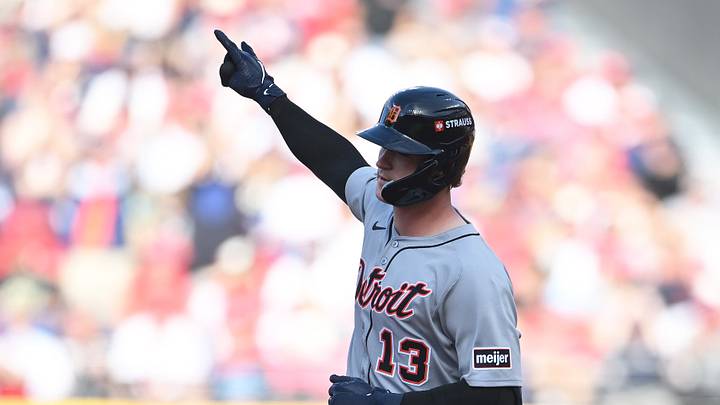
The Tigers are totally different. After hard selling at the deadline — gutting their rotation of Tarik Skubal and Casey Mize — the Tigers have been on a heater. A barnstroming youth movement combined with a Silver Slugger season from Dillon Dingler has made it clear just how set up this team is for long-term success. They’re so set up, in fact, that it’s started turning into short-term success just for fun.
Positively delighted by this Tigers one, though pic.twitter.com/ksXyZfAWXb
— Oliver Fox (@oliversfox) August 17, 2026
Detroit has the qualities of a playoff team, if not necessarily in pitching talent. They’re overflowing with young impact hitters who have brought their run differential up to the level of a contender even though their record has lagged behind. It’s a wack situation, because Detroit is certainly the best 2026 team on this list; they also might just run out of time.
We’re pretty well past the “over time this should get better” part of the season. They have 38 games left to separate themselves from the pack, meaning one cold streak could end it all. If the season was 200 games instead of 162, I’d feel more confident in the Tigers. But this is Major League Baseball with Major League stakes, and it’s going to be stressful until the final bell.
The Questionable Contact-Quality Dilemma: Guardians, Twins, Rangers, and Blue Jays

All four of these teams have red flags popping out of drawers, but none of them actually “sold” at the trade deadline. Cleveland tried to improve, the Twins held firm and Toronto sorta just … re-tooled, swapping out Kevin Gausman for Jose Soriano and shedding Dalton Varsho. The Rangers apparently tried to trade Jacob deGrom to the Atlanta Braves, but he blocked the trade. It’s all-consuming weird vibes in this group; nobody is happy, everyone is stressed-out and more than a few of them (maybe all of them) will be looking back at 2026 as the year where they should have gotten more at the deadline.
In any case, these are four offensively challenged squadrons, ones that expected statistics are not kind to. In terms of contact quality (xwOBA), Texas, Toronto and Cleveland are three of the four worst teams in the majors (ignore the Los Angeles Angels, they’re not having a good time). Minnesota is ninth-worst, and everyone is suffering from injuries or poor performance from stars they are nominally counting on. The Blue Jays in particular must feel nauseous from this season after coming so close to winning the World Series.
Anecdotally, it feels like these four teams just fluctuate between 3-7 in their last 10 or 6-4 in their last 10 depending on when you check. It’s never “oh, the Guardians are on a eight-game win streak” or “oh, the Jays have won 15 of 20.” That’s obviously not something you should expect, but it’s also what these teams need to do to get out of the hellacious pits of the AL Wild Card. It’s how the Red Sox made it out, and someone is going to have to turn and burn eventually. These teams are so close together that anyone could do it. It could be cheap, unearned or totally reliant on batted-ball luck; it won’t matter. All that counts in this league is wins and losses.
A Baltimore Orioles Subplot

When parsing through league stats for this piece, I separated out the prior four because of their putrid contact quality. But Baltimore levitated above them because they are actually producing excellent contact as a team — they are third in the majors in xwOBA and are tied with the Los Angeles Dodgers for first in xwOBA on contact. They lead the Majors in hard-hit rate and in average exit velocity. Those are attractive metrics, making eyes at you and fluttering their eyebrows until you talk yourself into Baltimore as a dark-horse World Series contender.
Significant ink was spilled over the Adley Rutschman trade and how traumatic it was for Baltimore fans, who were asked to endure a torturous rebuild around Rutschman and now will have to deal with that again. But this team isn’t actually bad; it’s just insultingly mediocre at everything but hitting the ball hard. Pitching has been below-average across the board, and they have been nursing a negative run differential all year despite being 13th in runs per game. In English: they are not preventing runs.
So Baltimore is a question of what do you believe in: brilliant contact quality overpowering shoddy pitching? Or pitching problems ruining what would otherwise be a playoff-caliber team?
I probably lean more negative, given that Baltimore struggles to prevent runs defensively or with quality pitching. In a race this tight, I’d want to bank on a solid rotation or bullpen rather than hard hits that may or may not result in runs. But it’s a really tight situation, and among the seven teams, Baltimore is probably the hottest … right now. All of this could flip in a moment, and the race will come down to who locks in at the most opportune time. It really is anyone’s race, how fun! Or, if you’re a fan of one of these teams, how awful!
 Add us as a preferred source on Google