
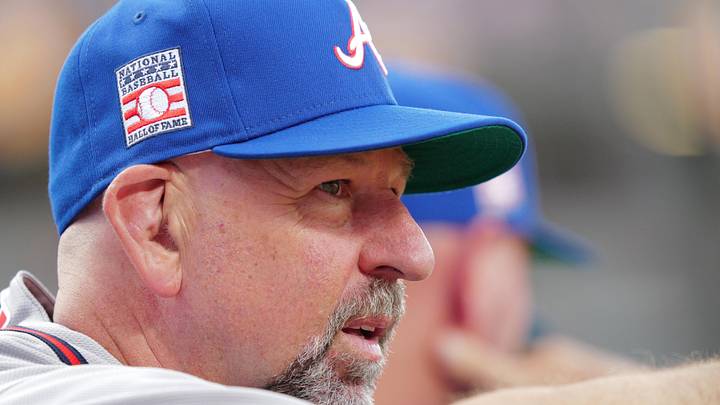
Don’t let the narrative about the Los Angeles Dodgers building a superteam fool you into thinking they’re the reason why Major League Baseball might be headed for a lockout. Sure, teams like the Dodgers and Mets have taken advantage of baseball's lack of a salary cap (to varying degrees of success), but even the Braves have found a loophole in the collective bargaining agreement.
The NL East-leading Braves have decided to exploit the MLB Draft bonus pool system. The Athletic reported on Friday that at least three draft picks — catcher Jacob Jarrell (No. 232 overall), outfielder Parker Brosius (No. 262), and first baseman Ben Zeigler-Namoa (No. 292) — signed with Atlanta for only $500. All were college seniors who had exhausted their eligibility.
The Athletic’s Jesús Cano estimated that the Braves saved roughly $653,000 to use on “higher-priority picks.”
“At the end of the day, the Braves used the system in place to their advantage,” an agent told Cano. “Is it illegal? Nope. Do others act in better faith? Sure. They know [college seniors] have no leverage, and it is good business for them to maximize the pool.”
The Atlanta Braves love exploiting baseball’s broken salary systems

In fairness to the Braves, Cano reported that at least six additional teams have paid $5,000 or less in signing bonuses to 20 total draft picks since 2024. The Angels gave three separate draft picks in their 2023 class only $1,000, a total the Blue Jays matched with catcher Jake Bennett (No. 252) in this year’s draft.
And yes, the Dodgers participate in the practice, too, though they’ve only done it twice in that span. Outfielder Kole Myers and catcher Connor O’Neal, who were ninth-round picks in 2024 and 2025, respectively, both received $2,500 signing bonuses.
Are these teams going too far — or, arguably, not far enough — by handing out such paltry signing bonuses? That’s a discussion to be had with Major League Baseball, which has long done everything in its power to suppress players’ earnings. That’s why teams like the Braves, Pirates, and Red Sox have been proactive in signing their young prospects to team-friendly deals.
The Dodgers narrative isn't what you think
There is a misconception that the Dodgers have won three titles in six years solely because they’ve fielded such lofty payrolls. Yet, nobody wants to discuss the impact that first baseman/outfielder Cody Bellinger (No. 124 in 2013) or pitchers Tony Gonsolin (No. 281 in 2016) and Justin Wrobleski (No. 342 in 2021) have had despite being later-round picks.

Successful drafting and player development still matter in baseball, and it’s telling that we’ve rarely heard the late-round signing bonus practice mentioned as something to be addressed in labor talks. So are the players themselves fine with this, knowing how little leverage they have and that if they play well enough, they could easily land a multi-year extension?
Objectively, the NFL has one of the fairest rookie contract systems for both teams and players. Every draft pick has a standard four-year contract, and they’re paid based on where they were drafted. Those selected in the first round also have a fifth-year team option. Teams can begin negotiating with their draft picks following their third season, preventing a team like the Titans from signing second-year receiver Chimere Dike to a five-year, $40 million deal this summer.
Don’t expect to see Major League Baseball address this situation anytime soon, though. The salary cap and a potential impending lockout are far greater problems than teams only awarding a $1,000 signing bonus to a 23-year-old prospect. The Braves' actions are just further evidence that no matter what system MLB owners pitch to the players, they will always find a way to exploit it. That's just the name of the game.
 Add us as a preferred source on Google