
Key Points
Bullet point summary by AI
- Our midseason MLB manager report card is out, grading all 30 skippers across the league.
- Several veteran coaches are facing scrutiny while unexpected leaders are proving their value with limited talent.
- The real debate centers around a few managers whose steady hands have lifted rebuilding teams into contention.
It's a tough life, being a Major League manager. When things are going well, it's your players — and maybe your GM — who gets all the credit. But when things aren't going well, you know you're going to be the first place fans turn to when they look for someone to blame. Plus, most of those fans (and, heck, most of the media, myself very much included) don't even have a firm sense of what your job entails in the first place.
So we try to at least offer some benefit of the doubt when it comes to evaluating skippers around the league. That said, the fact remains that they're the on-field leader of their organization, the one in charge of everything from commanding the clubhouse to deciding who hits and who pitches at any given moment. Who's lived up to that responsibility so far this season? As we reach the halfway mark, let's hand out grades to all 30 MLB managers.
Torey Lovullo, Arizona Diamondbacks: B

Despite a threadbare bullpen for seemingly the zillionth year in a row and tons of injuries up and down the lineup, Arizona has kept its head above water and defied its run differential to occupy the third and final NL Wild Card spot. It's hard to be too disappointed with that result, and it's also hard to ignore that Lovullo year in and year out gets his clubhouses to play hard for him.
Mark Kotsay, Athletics: C+
Kotsay was viewed as something of a placeholder hire, someone who would keep the seat warm until the A's finally moved to Las Vegas for good. He deserves credit for stewarding this young core of position players, even if his inexperience does show up every now and then in his bullpen management. (Then again, it's not like he has a great pitching staff to work with.)
Walt Weiss, Atlanta Braves: A-

Weiss' debut year looked DOA when half his starting rotation got hurt in the spring, but here the Braves are, rebounding from a nightmare 2025 with baseball's best record and arguably its most terrifying lineup. Weiss has shifted the vibe dramatically, and he's done nice work making more out of less with a bullpen that didn't have a ton of known quantities behind Raisel Iglesias and Robert Suarez.
Craig Albernaz, Baltimore Orioles: C-
Albernaz isn't the one who's been unable to build a credible rotation, of course, but the O's seemed to be struggling a bit mentally during their slow start to the season. That has to be, at least somewhat, on the manager, and it's worth noting that he's also been at odds with his own players at times this year. In all, it's hard to feel too inspired by his performance so far.
Chad Tracy, Boston Red Sox: C+

It feels unfair to render any judgment one way or the other on Tracy. Boston has been largely the same team they were under Alex Cora, one with a solid pitching staff but an offense that is woefully short on power. Tracy hasn't been able to wave his magic wand and fix that issue overnight, but nor has he been able to right the ship much.
Craig Counsell, Chicago Cubs: D
Did Counsell forget how to manage when he came over from Milwaukee? Of course not. Then again, the Brewers have just kept on chugging without him, which raises the question of just what the secret sauce was up there. Counsell can't control how many of his pitchers get injured (the answer: all of them, apparently), but his tinkering with Chicago's struggling lineup hasn't done much of anything. And when you're the highest-paid manager in the sport, one game over .500 isn't good enough.
Will Venable, Chicago White Sox: A

It felt like Venable was taking the league's most thankless job when he signed up to be White Sox manager amid a seemingly endless rebuild. Now, though, he's got the South Siders in possession of a Wild Card spot and riding a frankly ridiculous wave of momentum. He has this young core playing smart, clean baseball, and he's managed to tip-toe around a pitching staff that doesn't have nearly as much depth as the AL heavyweights he's trying to compete with. No notes.
Terry Francona, Cincinnati Reds: B-
The Reds are in free fall right now, last in the NL Central with the second-worst run differential in the NL. And yet it's hard to really lay that at the feet of Francona, one of the most respected managers in the sport who's forgotten more about baseball than any of us will ever know. Sure, he can be a bit old-school in his tactics sometimes, but it's not his fault that his terminally cheap front office once again refused to spend on offensive reinforcements over the winter. He can't swing the bat himself.
Stephen Vogt, Cleveland Guardians: B+

Death, taxes and the Guardians punching above their weight in the AL Central. Vogt has felt like a hand-in-glove fit here since pretty much the moment he took the job, and he's done nice work in shepherding young talent and cobbling together a lineup that's performed better than the sum of its parts. He feels like the ideal blend of old school and new, someone well-versed in analytics who nonetheless knows how to talk to a clubhouse.
Warren Schaeffer, Colorado Rockies: B-
Really, it feels almost unfair to grade the manager of the Rockies right now. Obviously Colorado is in last place; then again, it's year one under a new regime, and at the very least this team has been more credible on the field than what we saw in 2025. They're still bad, but they're at least respectably bad, and that — plus a handful of young hitters showing flashes — is something.
AJ Hinch, Detroit Tigers: C-

I don't want to take away from the great work that Hinch has done in past seasons in Detroit. And to be sure, some of what's happened to the Tigers so far this year isn't on him, unless he secretly sabogated Tarik Skubal's elbow or convinced Scott Harris to commit to Framber Valdez. But the mixing and matching that worked so well previously is simply not the right way to approach this year's team, and yet he's refused to adjust. He remains one of the better managers in the sport, but this isn't his best work.
Joe Espada, Houston Astros: D
Again, managers cannot control which of their players get hurt. And if you want to put Dana Brown above him in the hierarchy of blame in Houston, go right ahead. But Espada was on the hot seat entering 2026 for a reason, and talent issues aside, his team has played some pretty lifelessly baseball so far this season.
Matt Quatraro, Kansas City Royals: C

Another above-average manager who hasn't exactly covered himself in glory of late. Quatraro can't take at-bats for underperformers like Vinnie Pasquantino, but he's also been far, far too willing to stick to his guns and trust "his guys" despite his guys not playing very well. The Royals would be bad no matter who was at the helm, but it's also hard to argue that he's helped matters much.
Kurt Suzuki, Los Angeles Angels: Does it matter?
I mean, seriously, does it? This is and has been the most dysfunctional organization in baseball, cheap and craven in equal measure, and the first-timer they hired to a one-year deal because someone had to manage this team was never going to change that. It feels almost insulting to Suzuki to judge his performance, so we simply won't, no matter how good or bad a job he's done.
Dave Roberts, Los Angeles Dodgers: A-

It's easy to write Roberts off as a product of his payroll, but for all the talent in L.A., this has been a tricky team to navigate through the regular season — even this year, when injuries have once again struck both the pitching staff and the lineup. He keeps a level head even when everything around him appears to be melting down, his players love him and he's a three-time World Series champion for a reason. He's the right man for this job, and he deserves more credit than he gets.
Clayton McCullough, Miami Marlins: B
The Marlins have cooled off a bit since their hot start, and regression from young building blocks like Jakob Marsee and Kyle Stowers is concerning. That said, the fact that this team has remained relatively competitive despite injuries and ineffectiveness from several key starting pitchers is a credit to the work that McCullough has done making lemonade. He still doesn't have much talent to work with, and yet Miami remains a pain to play against.
Pat Murphy, Milwaukee Brewers: A

Speaking of pains to play against: The postseason criticisms are valid, but few teams have won more consistently than Milwaukee under Murphy's tenure, and they're once again looking like they'll run away with the NL Central despite trading their best pitcher over the winter. The Brewers' development machine goes beyond the manager, obviously, but it's also unfair not to give him any credit, and he mixes and matches with the best of them while keeping a steady hand over a young team.
Derek Shelton, Minnesota Twins: C-
You have to feel for Shelton in one sense, as he went from a thankless situation in Pittsburgh — where Bob Nutting finally decided to open his wallet after Shelton had already been fired — to arguably an even more thankless one under the Pohlads' tenuous ownership in Minnesota. That said, it's also hard to argue that he's distinguished himself as something more than a mediocre MLB manager, with plenty of curious decisions and oversights following him between stops.
Carlos Mendoza, New York Mets: F

No, it's not all Mendoza's fault; he didn't put this roster together, nor did he decide to turn Bo Bichette into a pumpkin offensively. But what is his value add here, exactly? Clearly his team isn't responding to him particularly well, and throughout a nightmare start to the season he's refused to change his demeanor even one iota. He sure seems like a man without answers, and the expectations and the payroll are too high for that to be acceptable.
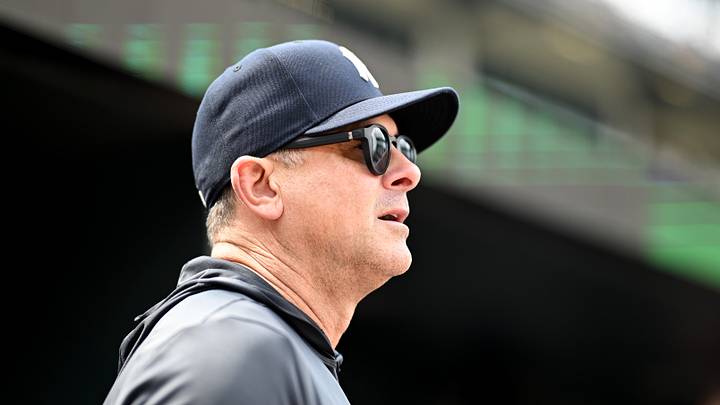
Aaron Boone, New York Yankees: B
The most embattled man in baseball has been ... you know what, actually pretty good so far this season. Yankees fans are determined to find something to complain about at all times, but the team entered Wednesday tied for the league's best record and with by far its best run differential — all this despite Gerrit Cole, Carlos Rodon, Aaron Judge and Giancarlo Stanton all spending time on the IL and Brian Cashman's bullpen being revealed as woefully inadequate. Boone's players love him, and he handles the circus as well as anybody. That counts for something, even if I won't argue for him as an elite manager or anything.
Don Mattingly, Philadelphia Phillies: B

Perhaps this seems harsh for a man that took over a team in crisis and has steered it to a 27-12 record since. But I have a hard time crediting Mattingly for that gaudy record, nor can I identify really anything he's done to help spark this turnaround. The Phillies are, by and large, the same team that they were under Rob Thomson, one with awesome top-line talent but highly questionable depth. The only difference has been close-game luck, and while you can chalk some of that up to managerial wiles, that doesn't exactly gibe with Mattingly's reputation at previous stops.
Don Kelly, Pittsburgh Pirates: B+
Kelly acquitted himself well taking over for Shelton midstream last season, and he's done nothing to dispute the notion that he's a rising star so far this year. The Pirates have a ton of pitching talent, sure, but it's hardly like he's been given a Murderer's Row to work with. And much of that talent is young; Kelly's ability to lead like a wizened hand rather than a first-time skipper has been invaluable in keeping this team on track.
Craig Stammen, San Diego Padres: D+

Pity anyone who has to manage under AJ Preller, but Stammen has proven incapable of stopping San Diego's slide down the standings. No, he's not the one who hollowed out the organizational depth, and no, he can't make Fernando Tatis Jr. and Manny Machado and Jackson Merrill go back to hitting like stars. Still, the failure to adjust has been glaring.
Tony Vitello, San Francisco Giants: D-
We only shied away from an F here out of the hope that Vitello might get better at this the more experience he gets under his belt at the big-league level. Besides, Buster Posey is the one who chose to make this unprecedented hire in the first place. It's gone pretty much exactly as we should've expected it to, with Vitello looking overmatched not just on the field but behind the microphone too.
Dan Wilson, Seattle Mariners: C

Wilson didn't inspire confidence with his performance last October, and while Seattle's been playing much better ball of late, I still don't have a ton of faith in his ability as a motivator or as a tactician. This is one of the more talented teams in baseball; it deserves a real difference-maker at the helm, and after watching Wilson consistently bungle high-leverage moments, I'm not sure he fits the bill.
Oli Marmol, St. Louis Cardinals: A-
What a difference a year or so can make. Cardinals fans had wandering eyes for everyone from Yadier Molina to Albert Pujols last season, but this team has taken a big step forward in year one of the Chaim Bloom era. And you have to give Marmol a lot of credit for that, both for how he's handled such a young group and for how he's gotten the most out of a pitching staff that remains well below average. There's some close-game luck involved, sure, but he's pushed all the right buttons so far.
Kevin Cash, Tampa Bay Rays: A

How many of you realized that Cash is MLB's longest-tenured manager? He's been at the helm in Tampa since the 2015 season now, and he just keeps on finding ways to put his teams in position to overachieve. No one expected much of anything from the Rays this season, but they've cobbled together a heck of a pitching staff and just enough runs to rack up a bunch of wins. This is simply what Cash does, and his teams always play hard for him.
Skip Schumaker, Texas Rangers: C
Schumaker developed quite a reputation during his two years in Miami, but his debut season in Texas has been a bit of a disappointment so far. Granted, injuries to Corey Seager and Wyatt Langford have helped hamstring this offense, but the Rangers have been unable to even climb above .500 in a season in which the goal was very much contention. I don't think he's a bad manager, but the proof is in the pudding right now.
John Schneider, Toronto Blue Jays: C+

On the one hand, half his team has been injured and he was just two outs away from being a world champion last October. On the other, some of the decisions are still a bit head-scratching — particularly in regards to bullpen management — and his offense has taken a big step back this season. Schneider still very clearly has the loyalty of his players, but that only goes so far, and I'm not sure he's the man you want in a roster crisis.
Blake Butera, Washington Nationals: A
There's still much we don't know about Butera as a manager. But the fact is that the Nats looked to be among the most hopeless teams in baseball before Opening Day ... only to be two games above .500 with the most runs scored in the Majors by early June. That's a pretty remarkable feat considering how little big-league talent Butera was given to work with, and all of his young players have taken steps forward.
 Add us as a preferred source on Google