
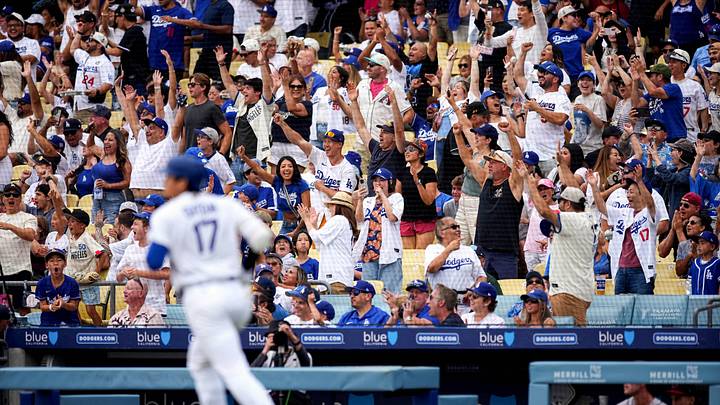
The Los Angeles Dodgers have become the face of MLB's looming labor war, despite the fact that they're not even the most expensive team in baseball this season. Hoovering up star free agents while winning two straight World Series — and eying a third, despite an August swoon — has a lot to do with that, but it's also because, despite the endlessly deep pockets of New York Mets owner Steve Cohen, L.A. is in a class of its own when it comes to how much money the team itself brings in each year.
We already know that the star status of Shohei Ohtani is earning the Dodgers unprecedented revenue overseas. But that's not the only way in which this franchise is financially lapping the field. If you want to know just what an uphill climb the rest of the league is facing, look no further than how many fans are showing up to the ballpark every day.
Top 10 teams by MLB attendance in 2026
Baseball's most popular teams in terms of attendance are more or less what you'd expect — Petco Park and the departure of the Chargers have turned the Padres into a mainstay in San Diego, and beyond that, you've got the big markets like L.A., New York, Toronto, Philadelphia, Chicago and Boston. But what is surprising is the margin by which the Dodgers are outpacing everybody else.
Team | Total fans | Per-game average |
|---|---|---|
Los Angeles Dodgers | 3,157,434 | 50,118 |
San Diego Padres | 2,601,448 | 41,292 |
New York Yankees | 2,384,827 | 41,117 |
Toronto Blue Jays | 2,702,331 | 40,944 |
Philadelphia Phillies | 2,502,957 | 39,729 |
Chicago Cubs | 2,298,845 | 36,489 |
San Francisco Giants | 2,239,146 | 36,115 |
Seattle Mariners | 2,201,235 | 35,503 |
New York Mets | 2,177,058 | 35,113 |
Boston Red Sox | 2,119,424 | 34,744 |
The Dodgers have already cracked the three-million mark in terms of attendance before the end of August; to put that number in perspective, only one other team is over 2.7 million, and the Jays have an entire country behind them. The per-game average is even more telling: Los Angeles is the only team currently pulling more than 50,000 fans for every home game, nearly 10,000 more than the Padres and Yankees in second and third place.
I'm no economist, but it doesn't take an advanced degree to wrap your head around what kind of revenue gap that creates. An extra 10,000 fans means tens of thousands in extra revenue; multiply that by 81 home games over the course of a season, and that's an extra few million that Los Angeles is pocketing over their competitors.
The Dodgers are in a financial league of their own

That's just the tip of the iceberg, though. Because all those extra fans aren't just buying tickets to home games. They're buying jerseys. They're boosting local TV ratings, where the Dodgers are already locked into one of the friendliest arrangements in North American sports. They're creating interest against which Los Angeles can sell all sorts of advertisements and media deals, a force-multiplying effect that helps explain just why this team can seemingly spend like there's no tomorrow in a way that not even their ostensible peers can.
You can advocate for a salary cap, and sure, that would prevent the Dodgers from plowing all of that extra money right back into payroll. But it won't stop them from spending on amenities, on player development, on international scouting, on growing their already massive footprint in places like Japan — in short, all the things that really separate Los Angeles from the rest of the pack. Baseball remains a wonderfully weird and unpredictable game, one that even the Dodgers won't be able to master forever. But if you think that more economic parity will render them just like everybody else, you've got another thing coming.
 Add us as a preferred source on Google