
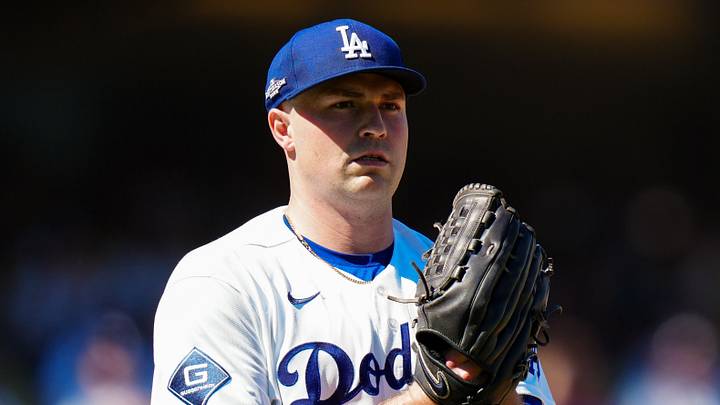
Tarik Skubal will join the New York Mets on a nine-year, $450 million contract, per ESPN's Jeff Passan. He now headlines a rotation that includes up-and-comers like Nolan McLean and Christian Scott. Steve Cohen and Mets management continue to reaffirm their willingness to pay premium prices in free agency and run up their tax bill in the process, even without consistent on-field results.
BREAKING: Tarik Skubal and the New York Mets are in agreement on a nine-year, $450 million contract, sources tell ESPN.
— Jeff Passan (@JeffPassan) November 22, 2026
Is this an overpay? Almost definitionally, but the Mets (and Dodgers) just don't do business like every other team. The impending lockout could throw a wrench into New York's plans, but if the players manage to fend off such changes, why shouldn't the Mets spend $50 million per year on the best pitcher in MLB? There's currently zero cap on spending. If signing Skubal won't prevent the Mets from chasing other stars, it's hard to complain about numbers on a ledger. Signing Juan Soto didn't prevent the Mets from signing Bo Bichette, which didn't prevent the Mets from signing Skubal. So here's where New York can turn next in their attempts to build a World Series team.
Mets should trade Marcus Semien and Jorge Polanco (if possible)

The Mets are clearly undeterred by their current cap situation, but even MLB's richest team probably wants to balance the payroll a little bit. All these splash signings carry a bit more risk, a bit more strain, when there are albatrosses slung around their neck. Jorge Polanco (expiring $20 million contract) and Marcus Semien (two years, $46 million left) are two such examples.
Both Polanco (-1.4 fWAR) and Semien (-0.5 fWAR) were sub-replacement level players last season. The Semien trade was always a bit of a head-scratcher, but there was no way for New York to anticipate his sudden defensive collapse. He was 35, sure, but he was a Gold Glover in 2025. The Polanco signing in free agency was viewed far more favorably, but the magic behind his 2025 production vanished (as it did for the rest of the Mariners' 2025 standouts, apparently).
It shouldn't be too hard to shed Polanco's expiring contract. He's only 33, he can play a couple positions in theory, and he's a switch-hitter a year removed from swatting 26 homers with an .821 OPS. Trading Semien is a bit trickier with the extra year on his deal, but the Mets can get creative with a salary dump — even if that means dumping only part of the salary.
Neither Polanco nor Semien have a clear place in the Mets' 2027 plans, much less beyond that. Trading them frees up money and roster spots to be aggressive.
Mets should trade for Trevor Megill

The Mets' track record with high-profile bullpen additions of late is... suspect. That said, Trevor Megill was absolute nails for the World Series champion Milwaukee Brewers in October, and he's coming off of a third-straight sub-3.00 ERA season. We know David Stearns has a connection to the Brewers organization — and we know Milwaukee are willing to trade Megill before his walk year.
The lockout complicates the trade market for expiring contracts, but the Mets should be able to acquire Megill without sacrificing too much long-term value. He compiled 30 saves in 2026, with a sterling 2.63 ERA and 1.85 FIP in a career-high 61.2 innings. Megill would immediately take over closer duties, in turn allowing Devin Williams to transition to a slightly less pressurized setup role; that could benefit the uber-talented Williams, who has great metrics but an annoying habit of inopportune meltdowns.
A great bullpen is the key to any deep playoff run. The Mets need to look beyond just Megill, but he's the ninth-inning ace New York clearly needs.
Mets should trade for Ryan Weathers

The Mets could aim much higher (Reid Detmers, Jacob deGrom, etc.) but the Mets can always save their bullets for the trade deadline, or for later in the spring/summer when the lockout ends and the cap rules are etched in stone.
For now, targeting an upside guy like Ryan Weathers — under club control for two more years and stuck on the periphery of the New York Yankees' rotation plans — could yield the most bang for the Mets' buck. Weathers was rock-solid in 25 starts last season, with a 3.60 ERA and 3.62 FIP. He recorded 137.1 innings, a new career high, and notced 143 strikeouts with an elite 49.5 percent groundball rate.
Weathers deserves to start regularly somewhere. His injury history is worrisome, but the Mets can't rely on over-the-hill veterans Kodai Senga and Sean Manaea (Senga should be in the bullpen); it's also too early to fully trust the likes of 24-year-old Zac Thornton or 23-year-old Jonah Tong. Weathers is an excellent No. 4 starter behind Skubal, McLean and Scott, so long as he's available.
Mets should sign Teruaki Sato

If the Mets have one more free agency splash in them — and why shouldn't they? — Japanese third baseman Teruaki Sato is probably their best bet. Sato faces questions about his elevated strikeout rate and the lack of clarity around his best position on defense. The Mets aren't going to win on defense next season, though. Sato is 27 years old. The Mets can lock him up for five-plus years, potentially on a (relative) bargain given all the uncertainty inherent to international free agents.
Sato could take over at the hot corner, with Bo Bichette moving to second base. Or the Mets can simply tab Sato as their belated Pete Alonso replacement at first base, which removes a lot of defensive responsibility outright. Either way, he has the chance to crank 30-plus homers every year and provide meaningful long-term protection behind Juan Soto and Francisco Lindor in the lineup.
There is downside risk, to be sure, especially with all the money already on New York's books. But Sato is the biggest power bat available and he's on a much better timeline than veteran outfielders Seiya Suzuki and Randy Arozarena. Jazz Chisholm Jr. is another fun option on the infield, but there's a bit too much baggage and variance there.
 Add us as a preferred source on Google