
Major League Baseball and the Major League Baseball Players Association aren’t close to agreeing on a new collective bargaining agreement, though the sides are at least talking during this holiday week.
The current CBA expires at 11:59 p.m. ET on Dec. 1, at which point commissioner Rob Manfred and league owners are expected to impose a lockout. Manfred says the owners won’t agree to any deal without an economic system that includes a salary cap and floor. The players are adamant that they will never accept a cap.
Time will tell what the next CBA looks like. However, the owners can use these 15 players as an example of why the sport needs a cap. The players will counter that baseball is healthy, pointing to the nine-year, $450-million contract that the New York Mets and left-hander Tarik Skubal agreed upon Sunday, the largest for a pitcher in MLB history.
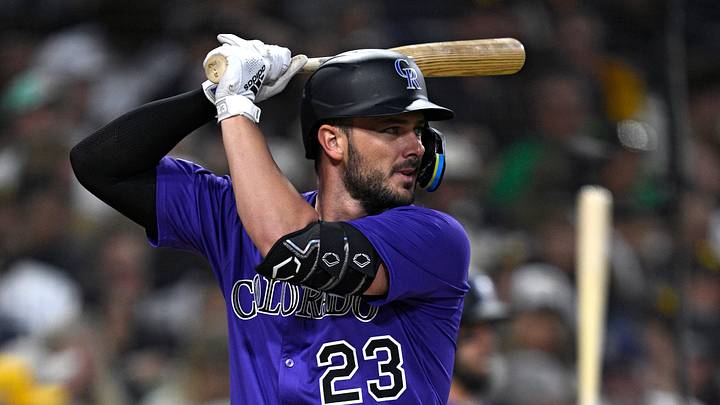
Kris Bryant, 1B/OF, Colorado Rockies
Bryant still has $54 million owed to him, $27 million a year in both 2027 and 2028. The former NL MVP has hit .244/.324/.370 with 17 home runs and 61 RBI in 170 games in the first five seasons of his seven-year, $182-million contract with Colorado, and back issues may keep him from ever playing again. He is owners' Exhibit A, because there's no defense of his contract in any direction — wrong player, wrong market, wrong medical file, fully guaranteed. When owners say, "the system makes us do this," Bryant is the name they say first, even though owner Dick Monfort did it to himself.
Xander Bogaerts, SS, San Diego Padres

Bogaerts’ 11-year, $280-million contract runs through 2033, when he will be 40 and no longer a viable shortstop or a middle-of-the-order bat. That decline may already be here: He had a subpar season this year, hitting .231/.332/.344 with 13 homers in 153 games. The Padres paid for the Boston Red Sox’s version of Bogaerts and will spend a decade paying for something less. He fuels the cap argument as the pure term problem: to win the bidding, the Padres had to guarantee years everyone knew would be bad.
Javier Baez, INF/OF, Detroit Tigers
Baez’s six-year, $140 million contract mercifully expires next year when he will be paid $25 million despite not being projected to be a regular. Baez has been a below-average hitter in each of his five seasons with the Tigers and hit .241/.270/.364 with three home runs in 58 games in 2026. His value now lies mostly in his defensive versatility, which is a $5 million skill at five times the price. Owners cite him as proof that even mid-tier markets get trapped with one signature spawning six years of regret.
Trea Turner, SS, Philadelphia Phillies

Turner’s 11-year, $300 million contract runs through 2033. Yet Phillies president of baseball operations Dave Dombrowski already says Turner will need to move from shortstop to the outfield, perhaps as soon as next season. Turner won the National League batting title in 2025 but hit .242/.297/.378 this year with an alarming minus-15 Defensive Runs Saved. Turner is a case of a player whose last five years were the cost of the first five.
Mike Trout, OF, Los Angeles Angels
Sadly, injuries derailed Trout on his way to becoming one of the greatest players in history. Trout was selected to the All-Star Game this year and slashed .242/.382/.421with 22 home runs and 11 stolen bases in 142 games. That is good but not elite production from a player who still has five years and about $148 million to go on a 12-year, $426.5 million contract. This is the owners' most sympathetic exhibit, because nobody blames Trout. Still, their point is that a mid-revenue club's entire flexibility can be consumed by one guaranteed contract the moment the injuries start, and there's no mechanism to get out. Stan Kroenke will find that out in January when his purchase of the Angels from Arte Moreno is expected to be completed.
Kyle Tucker, OF, Los Angeles Dodgers

Tucker has one of the highest average annual values (AAV) in baseball: $60 million on a four-year, $240 million contract he signed with the Dodgers last winter. He had a poor first season with Los Angeles, hitting .233/.330/.385 with 17 homers in 154 games. The owners can pair his deal with Skubal's as the arms-race argument that the top of the market never resets; it only escalates, and just three or four clubs can play that game over the long haul.
Willy Adames, SS, San Francisco Giants
Adames’ seven-year, $182 million contract is the largest in franchise history. Yet just two years in, the Giants are willing to dump Adames’ money on any team willing to take him. He hit just .230/.289/.424 with 21 home runs in 121 games this year while regressing defensively at shortstop. Owners can use him as a warning: Even a smart, wealthy club took seven years to land a good-not-great player and now lives with the back half.
Giancarlo Stanton, DH, New York Yankees

Stanton set what was then the record for the largest contract in North American team sports when he signed a 13-year, $325 million deal with the Miami Marlins before the 2015 season. That contract ends in 2027, and Stanton will be coming off a 2026 campaign in which he played in just 24 games. The Yankees, with all their resources, have spent years building lineups around his absences. If the richest club in the sport can't escape a deal like this, owners ask, what chance does anyone else have?
Masataka Yoshida, OF/DH, Boston Red Sox
Yoshida might have a hard time surviving the last cut in spring training next year – whenever that might be – despite having one year remaining on his five-year, $90 million contract. Yoshida slid further down the depth chart last week when the Red Sox signed free agent Jake Bauers to a four-year, $58 million contract. In four MLB seasons, Yoshida has hit .280/.339/.420 in 390 games but just 34 home runs. The Red Sox have been trying to trade Yoshida, with money attached, for two years, but teams value him as only a bench bat who should be used strictly as a designated hitter.
Carlos Correa, 3B, Houston Astros

Concerns about a chronic ankle condition caused both the Mets and Giants to back out of tentative contract agreements with Correa during the 2022-23 offseason, and he wound up signing a six-year, $200 million deal with the Twins. Correa needed ankle surgery in 2026 and appeared in just 32 games for the Astros, which acquired him from the Twins at the 2025 trade deadline. Owners cite Correa as the information problem because the medical risk sits entirely with the club, the guarantee sits entirely with the player, and the two failed physicals elsewhere are treated as gossip rather than priced into the deal.
Bo Bichette, 3B, New York Mets
Bichette signed a three-year, $126 million contract last winter that included opt-outs after the 2026 and 2027 seasons. Not surprisingly, Bichette exercised his $42 million option for 2027 rather than return to the open market after a season in which he hit .260/.312/.390 with 18 home runs in 160 games and struggled to transition from shortstop to third base. Owners will point to the shape of a contract where a one-year salary is bigger than most teams' entire infields, for a player one position down the defensive spectrum from what was purchased.
Jose Altuve, 2B, Houston Astros

Altuve is one of the greatest players and most popular figures in franchise history, but the five-year, $125 million contract he signed before the 2025 season is not aging well. Altuve hit just .250/.306/.395 with 16 home runs in 136 games this year. The contract is a sentiment payment, and owners privately view it as the kind of deal a floor-and-cap system protects teams from — the hometown star you can't afford to keep and can't afford to let walk.
Corbin Burnes, RHP, Arizona Diamondbacks
Burnes has made 14 starts and pitched 74.1 innings in the first two seasons of a six-year, $210 million contract, injuring his elbow in 2025 and undergoing Tommy John surgery. His comeback didn't go well late in the 2026 season, when he posted a 7.84 ERA in three starts. Pitcher contracts are the owners' favorite evidence because the failure mode isn't decline; it's catastrophe, all at once, fully guaranteed.
Anthony Santander, DH/OF, Toronto Blue Jays

Santander signed a five-year, $92.5 million contract during the 2024-25 offseason but has played in just four games since May 30, 2025, including none in 2026, because of a shoulder injury. A year after winning the American League pennant, the Blue Jays finished last in MLB in runs scored and home runs in ‘26, and the switch-hitting slugger could have helped.
Corey Seager, SS, Texas Rangers
The Rangers are unsure what they will get from Seager as he enters the second half of his 10-year, $325 million contract. He has been on the IL six times over the last two seasons because of hamstring and back problems, as well as a concussion and appendicitis. That is why the Rangers are willing to deal Seager, though he has full no-trade rights as a player with at least 10 years of MLB service time, including five with the same team.
 Add us as a preferred source on Google