
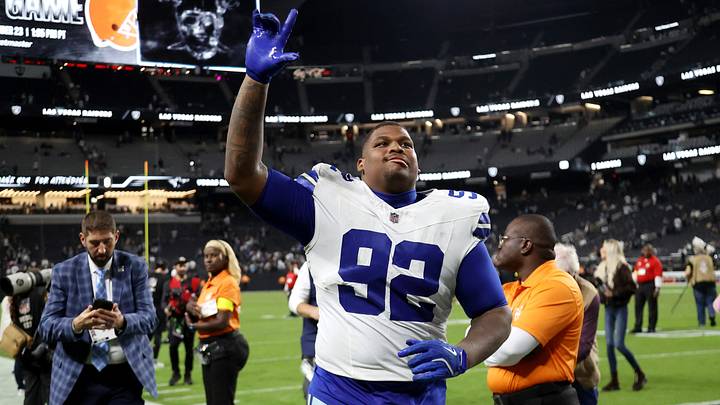
The Dallas Cowboys finally feel like the Micah Parsons trade is complete. This is on the heels of giving interior defensive lineman Quinnen Williams a three-year, $105 million extension. Williams was part of a trade deadline move last season to improve the defensive line after dealing Parsons to the Green Bay Packers. A lot of times when the Cowboys – specifically the Jones family – says anything, you have to take it with a grain of salt.
In this case, though, Dallas is probably right that they’ve successfully closed the Parsons deal and honestly, it’s hard to think they didn’t win the deal. Yes, they had to give up one of the most destructive pass rushers in the NFL, but they also did a really good job at filling out this roster. Not only did they get Williams, but they landed Malachi Lawrence, who is showing a lot of potential as a pass rusher while also getting Kenny Clark.
#Cowboys COO Stephen Jones believes the Micah Parsons trade is now full and complete following the Quinnen Williams extension:
— Ari Meirov (@MySportsUpdate) August 11, 2026
• Packers get: Micah Parsons (4-yrs, $186M)
• Cowboys get: Quinnen Williams (3-yrs, $105.9M), Kenny Clark, Malachi Lawrence
• Jets get: 2026… https://t.co/08lsvp62BM pic.twitter.com/pcQFomzgZ8
Adding both Clark and Williams to improve the weakest part of their defensive line was exactly what they needed to do in any deal involving Parsons.
Why the Dallas Cowboys won the Micah Parsons trade
It’s not often your team gets better after trading away the best defender. The Cowboys got better, not just because of Williams but because they addressed all their major defensive needs. Sure they’ll have to wait out Lawrence’s development, but if he turns into the player the Cowboys hope for, it was worth giving up Parsons for. Green Bay needed an elite pass rusher and had no problem spending for one, but is Parsons really the answer they needed?
Last season before Parsons tore his ACL, which is threatening the start of his 2026 season, he was exactly who Green Bay thought he was. The problem though is Green Bay doesn’t have a team good enough to contend without him. After Parsons’ injury, the Packers didn’t win a single game, including a wild card playoff loss to the Chicago Bears. It’s hard to think they got the better end of the deal looking at what Dallas turned Parsons into and what Green Bay did last year.

Winning the Parsons trade for Dallas was always about maximizing the return. They got two first round picks – turning into Clark, Malachi Lawrence and a 2027 option. They had the cap space to then add Williams and extend him. This isn’t just about making any move, this was about making championship moves and I believe this year that as long as Dallas is healthy, it might actually be the year Cowboys fans have been waiting decades for.
Dallas had to trade Micah Parsons to turn into legitimate contenders
If Dallas had kept Parsons, they still would have the run defense problems that have suffocated this defense. With Parsons, they have a dominant pass rusher, but a crippling secondary that has little help in front of them. For now, Dallas’s weakest position group on defense is the linebacker room, but there’s potential. Had they re-signed Parsons, there would be more holes on this defense.

That’s why this year truly feels like it will be different than years past. They have a young core that could develop into solid contributors. Lawrence can be good enough down the road to anchor the defensive line. Dallas added Rashan Gary to give the Cowboys some veteran depth on the defensive line as well, which gives Lawrence more time to grow into the NFL world and no pressure to immediately be an elite defensive player.
The fact that the Cowboys inked Williams for three more years, linking him to Dallas for five more seasons is exactly why they should be legit contenders. These are the serious moves fans have begged for, for quite some time. Yes, they still need to have results on the field, but for now, they’re a team that’s serious about winning. Every move since trading Parsons have proved that.
 Add us as a preferred source on Google