
Not only were the Los Angeles Dodgers dethroned in the NLCS by the Milwaukee Brewers, but they were embarrassed. L.A. was swept four games to none in the best-of-seven series, and to make matters worse, the Dodgers blew a 4-0 lead in the deciding Game 4. Forget the Dodgers failing to three-peat as World Series champions; they couldn't even make it back to the Fall Classic.
Virtually everyone deserves blame for a series that ended in a sweep, but these Dodgers deserve larger pieces of the blame pie, with the 2026 season in the dust.
DH Shohei Ohtani

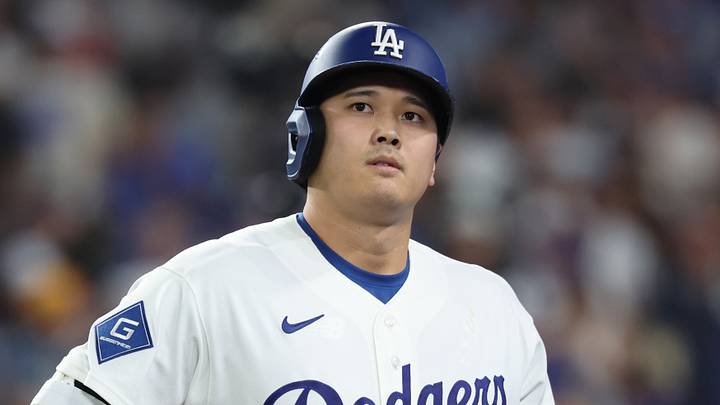
Shohei Ohtani's three-run home run to give the Dodgers a 4-0 lead in Game 4 of the NLCS could've been a stunning turning point for L.A. Instead, thanks largely to his strikeout in the bottom of the seventh inning, it's a swing that'll be forgotten pretty quickly. Andy Pages led off that inning with a double against Aaron Ashby, and Kiké Hernandez moved him over to third base with a sacrifice bunt, meaning that one fly ball from Shohei Ohtani, a four-time MVP, would've tied a game the Dodgers had to have at five runs apiece. Instead, Ohtani fouled off a first-pitch slider, swung through a sinker, and then waved at a pitch in the other batter's box for a strikeout. Mookie Betts would then ground out to end that threat.
Shohei Ohtani chases one out of the zone and strikes out with the tying run on third pic.twitter.com/PD1CJXjiPW
— Talkin' Baseball (@TalkinBaseball_) October 16, 2026
The Brewers even pitching to Ohtani in that spot was telling, but that seventh-inning at-bat encapsulated a horrific series from Ohtani, who looked like a shell of himself. He went 3-for-13 with six strikeouts in the NLCS, and went 5-for-26 with 10 strikeouts in the postseason. He looked so overmatched at the plate that the Dodgers contemplated benching him ahead of Game 3 of the NLCS. I understand that he wasn't healthy, but this is supposed to be the best player on the planet. He was healthy enough to play, and just didn't do his job. It's hard to win when your best player hits .192 in the postseason.
1B Freddie Freeman

Freddie Freeman has had more electrifying postseason moments than I can count, including a pair of walk-off home runs in the World Series. It looked like he was about to turn it on again when he homered twice in four NLDS games against the Braves, but that couldn't have been further from the truth. Freeman went 1-for-14 in the NLCS (.071 BA) and 5-for-29 overall in the postseason.
37-year-old Freeman was showing some signs of decline in the second half of the regular season when he only hit one home run in 249 plate appearances, but he still hit .286 in that span. Watching him, a player who has done so much when it matters most, shrink under pressure was genuinely shocking.
SS Mookie Betts

Mookie Betts has played a starring role in three World Series wins for the Dodgers, but it's safe to say he just isn't the same player he once was. He wrapped up arguably the worst regular season of his career, and followed that up with an even more disappointing postseason.
Betts went 3-for-15 in the NLCS and 6-for-29 overall. What was really alarming is that Betts, in eight postseason games, did not record a single extra-base hit. Yes, this player with more than 300 home runs and more than 400 doubles in his big-league career, couldn't tap into any power in October. His inability to set the table at the top of the Dodgers' order is a huge reason why their offense just couldn't get going.
OF Kyle Tucker

To his credit, Kyle Tucker was the Dodgers' best hitter this postseason. He hit .333 with a .938 OPS overall, and he got on base at a .419 clip. It was nice to see Tucker show up when it mattered, but it's hard to ignore the fact that in the bottom of the eighth inning of Game 4, with Will Smith on at third base and the Dodgers trailing by a run, Tucker hit a shallow fly ball that was not deep enough to score the tying run. He could've tied the game with a productive out, giving the Dodgers a chance to keep their season alive, but their last golden opportunity to score a run fell through the cracks.
Perhaps if Tucker had a Tucker-esque regular season we'd be able to give him some grace, but his struggles in the regular season played a role in L.A. ceding home-field advantage to Milwaukee in this series. I'm not saying that would've changed anything, but it wouldn't have hurt. Now, the Dodgers are stuck with Tucker for several more years at an AAV I don't even want to disclose here.
Entire Dodgers starting rotation

There were legitimate questions about the Dodgers' lineup (that hadn't been great the entire second half of the regular season) and their bullpen, but it was easy to brush those aside knowing how dominant this starting rotation was. I mean, what team was going to beat a staff consisting of Tarik Skubal, Yoshinobu Yamamoto, Blake Snell and Tyler Glasnow four times in a best-of-seven series? The offense is the biggest reason why the Dodgers were sent home, but it's not like the starters dominated either.
Skubal allowed two runs in just five innings in Game 1. Yamamoto was unable to get through three innings and allowed three runs in Game 2. Snell had allowed just one run through six innings in Game 3, only for him to allow back-to-back home runs in the seventh inning, turning a 2-1 lead into a 4-2 deficit. Glasnow was perfect through three innings in Game 4, but allowed two runs to score in the fourth and fifth, turning a 4-0 lead into a tie game.
Overall, this vaunted rotation allowed 13 runs in 18 innings this series, pitching to a 6.50 ERA. Last postseason, they allowed a total of two earned runs in 28.2 innings of work, pitching to a 0.63 ERA. Again, the offense had to do more, but the Dodgers expected better from what was supposed to be a super-rotation.
Manager Dave Roberts

There's only so much that a manager can do when virtually nobody is hitting. Kyle Tucker was the only individual with more than three hits in the NLCS, and he only had four. What a manager can do, though, is ensure that a player swinging the bat well can come up to the plate more often, and also, do a good job of deploying his bullpen. It felt like Dave Roberts did neither of these things.
Tucker spent most of the postseason hitting eighth before Roberts finally moved him up to the heart of the order in Games 3 and 4 of the NLCS. Josue De Paula, a rookie who impressed in limited regular-season action and reached base in two of his three postseason appearances, couldn't find his way into the starting lineup a single time, while Teoscar Hernandez was flailing at pitches nowhere near the zone for much of the NLCS.
On the pitching side, why did Blake Snell get to allow two home runs in the seventh inning of Game 3? Why didn't the Dodgers' best relievers pitch in Game 3, putting a winnable game they really had to win out of reach? Why did he ask Edwin Diaz, a one-inning reliever, to go three innings (something he hadn't done in a decade) in Game 4? Diaz allowed a key insurance run to score in his third inning of work.
Dave Roberts did not lose the Dodgers this series, but he didn't exactly help them either, which is why he finds his way onto this list.
 Add us as a preferred source on Google