
Key Points
Bullet point summary by AI
- A veteran infielder's refusal to follow his manager's late-game strategy has sparked controversy in San Francisco.
- The incident echoes past behavior that led to his departure from a previous franchise, raising concerns about clubhouse dynamics.
- The player's long-term contract and repeated resistance to team decisions could complicate any potential trade moves this season.
When the San Francisco Giants acquired Rafael Devers for what looked like a bag of baseballs at the time, it felt like an utter steal. Sure, they were taking on a ton of money, but they were acquiring one of the league's premier hitters who, with his new team, was seemingly willing to do whatever it took to succeed. Well, Devers has not come close to meeting expectations with the bat, and that's not even the worst of it.
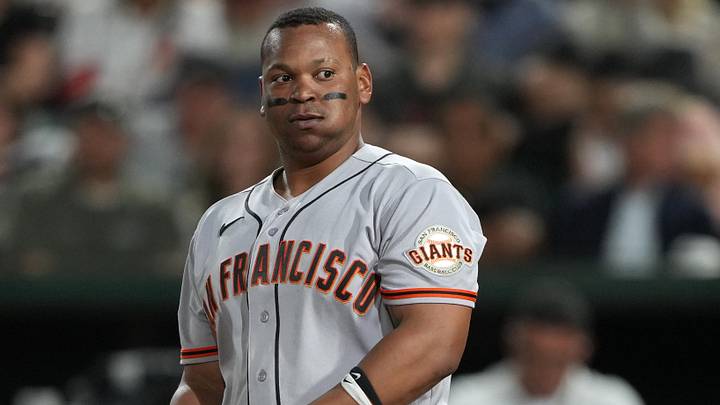
With the Giants trailing by one run in Sunday's game in Miami, Devers drew a clutch lead-off walk, giving San Francisco some hope. Manager Tony Vitello made the obvious decision immediately, once Devers reached base, to remove his slugger in exchange for the much faster Jonah Cox, only for the veteran infielder to flat-out refuse to leave the game.
Rafael Devers didn't want to be removed for a pinch runner after a leadoff walk to start the ninth pic.twitter.com/PR3DCOFd3M
— SF Giants on NBCS (@NBCSGiants) June 21, 2026
I wasn't kidding. Devers was literally waving his finger at the Giants dugout, hoping Vitello would, for some reason, change his mind. Once Devers eventually gave up, he expressed frustration in the dugout, wanting to be nowhere near any of his teammates. This, obviously, is not a good look, yet it is entirely predictable for a player like Devers based on what happened at the tail end of his Boston Red Sox tenure.
Rafael Devers' shenanegans are far-too familiar for Red Sox fans

Devers was a fantastic player with the Red Sox, yet he was traded in his prime for a few reasons. His declining defense and contract were obviously front and center, but Devers, the teammate, wasn't helping his cause either.
The Red Sox famously told Devers he was their third baseman before signing Alex Bregman to man the position. This irritated Devers, who made it abundantly clear that "I play third" and had no interest in moving to designated hitter. Devers eventually agreed to that switch, but when Triston Casas suffered a season-ending injury, and the Red Sox asked Devers to replace him at first base, this was his response:
"I know I'm a ballplayer, but at the same time, they can't expect me to play every single position out there. In spring training, they talked to me and basically told me to put away my glove. I wasn't going to play another position other than DH. Right now, I don't think it would be an appropriate decision by them to ask me to play another position."
Devers never wound up moving to first base for the Red Sox, but was instead traded to the Giants, as Boston had had enough. While initially things seemed to be fine, with Devers agreeing to play first base full-time in San Francisco, they clearly are anything but fine after this incident.
Rafael Devers shows biggest reason why the Giants will be unable to trade him at deadline

With how poorly the Giants are playing, they're open to trading most of their veterans on large contracts, and that includes Devers, who is locked in through the 2033 season at $28.5 million per year.
There was some reason to expect that perhaps if the Giants were open to eating some of his contract, there might be a team desperate enough to take him on, especially since he has a rock-solid .879 OPS since the start of May, looking more like the powerful force at the plate that he was in Boston. This incident might've ended all trade talks, though.
It's one thing for a player to be a liability in the field and on the base paths like Devers is, but it's another for a player to be far from perfect, yet consistently run into trouble in the clubhouse. Devers was traded partly because of his refusal to be a team player in Boston, and after refusing to be a team player once again with a brand new team in a brand new year, why would another organization willingly take him on?
Even when Tony Vitello makes a smart decision, it backfires

Tony Vitello has faced a lot of criticism in his first season as the Giants' manager, and most of that criticism has been warranted. This call, though, was undoubtedly the right one. Not only is Devers in the 22nd percentile in sprint speed per Baseball Savant (while Jonah Cox is in the 89th percentile), but he's also coming off some soreness in his leg that resulted in him serving as their DH in the opener of the series. The Giants wanted more speed on the base paths as they attempted to tie the game, and Vitello was planning on getting them that speed. Yet, that right decision still feels wrong now.
This is obviously to no fault of Vitello's, but Devers clearly is making him look bad by undermining his authority to attempt to stay in a game that objectively called for someone else. It's one thing to want to play every inning of every game, and it's another to argue with your manager like a little leaguer in the ninth inning of a one-run game.
I'd say Vitello has some work to do to win the clubhouse over, but it feels like this would've happened no matter who was in charge, and that's a problem that the Giants are stuck with for many more years.
More MLB news and analysis:
 Add us as a preferred source on Google