
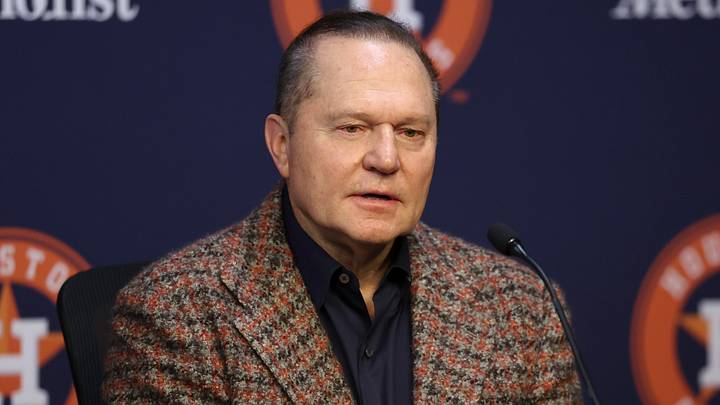
Outside of the players themselves, Scott Boras is arguably the man with the most to lose if Major League Baseball incorporates a salary cap — and we’re not being hyperbolic, either.
Boras represents players in an uncapped sport, and he’s still reaping the benefits of Juan Soto’s 15-year, $765 million contract. Those are exactly the deals the league wants to avoid, hence the recent proposal about five- and six-year contract limits. Never mind the fact that plenty of teams rarely hand out deals exceeding two years, but we digress.
We’ve repeatedly pointed out the absurdity of fans and owners focusing on the Dodgers’ and Yankees’ budgets when ignoring that five teams — the Athletics, Cardinals, Rays, Marlins and Guardians — voluntarily have payrolls below even $100 million.
“The mere fact that some owners choose not to invest, and they’re profiting at high levels, making $100 million a year, and owning a franchise and not being successful,” Boras recently argued. “That is not a reason to change the system.”
Scott Boras perfectly explained why Major League Baseball’s proposed salary cap isn’t the solution

Even those who haven’t watched baseball in years have likely heard about the small-market Rays and Brewers making the World Series. We won’t go so far as to say they’re the exception rather than the rule; Milwaukee has seven playoff appearances in eight years, and the Rays have always been competitive despite their low budget.
The problem is both teams often trade their best players, whether it was Blake Snell or Freddy Peralta, ahead of them hitting free agency. Ownership doesn’t approve those moves amid a lost season, but instead at least a full year ahead. The Rays were coming off a World Series appearance when they sent ace Snell to San Diego in December 2020, when he had three years of team control left.
Pittsburgh went nearly a decade without signing a free agent to a multi-year deal. Colorado effectively stopped trying after the Kris Bryant deal. The Guardians fielded a league-low $74.4 million payroll and can easily justify it this coming winter by pointing to their near-World Series run.
Would Peralta or Devin Williams have re-signed with the Brewers had they not been traded? Does it matter? We don’t even know whether Milwaukee would have extended a contract to either pitcher. If anything, that’s more reason to root against a salary cap, because financial constraints could tempt teams to trade players well before free agency.
High payrolls don’t ensure championships, and low payrolls don’t guarantee a team will lose 100 games. Tampa, Milwaukee and Cleveland are all successful because of their player development systems and personnel hires. The Yankees haven’t won a World Series since 2009 partly because they’ve consistently struggled to develop their homegrown talent around Aaron Judge.
But remember: The league needs a salary cap solely for competitive balance reasons. Keep telling yourselves that, guys.
 Add us as a preferred source on Google