
Key Points
Bullet point summary by AI
- The WNBA season has seen several teams and players underperform expectations, with some surprises in both success and disappointment.
- Multiple franchises face internal challenges, from injuries to roster imbalances, that have derailed early hopes.
- The debate over which teams or players have disappointed the most highlights the razor-thin margins in this competitive league.
This WNBA season has featured a number of success stories, from the Dallas Wings figuring things out to the expansion teams playing significantly better than expected. At the same time, there have also been some disappointments — players and teams that simply aren't at the level we expected.
What have been the biggest disappointments? Here are the five that stand out this season.
Phoenix Mercury

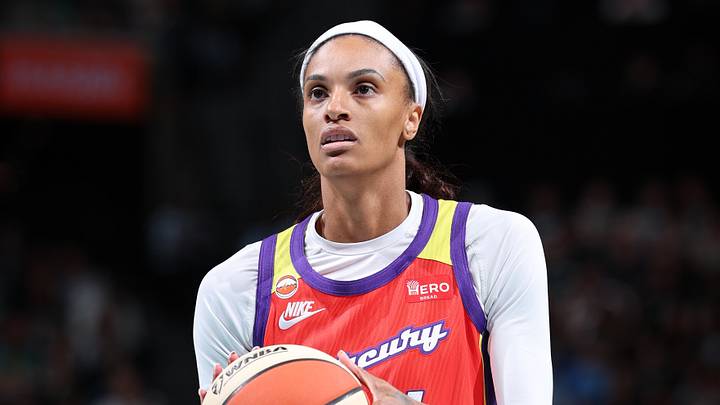
The entire Phoenix Mercury team deserves mention here. After making it to the WNBA Finals last season, Phoenix has completely fallen apart. If the team is a Jenga tower, the thought was that it would be wobbly but still standing after losing Satou Sabally, but she appears to have been a load-bearing block, and without her, Phoenix has hit the floor.
One issue is that because Alyssa Thomas is really more of a point forward on offense, the lack of Sabally really makes it tough for the team to have much of a frontcourt presence on that end. Natasha Mack has stepped up, but how long can Mack keep shooting 71.9 percent from the floor?
It's just hard to see a solution. The team did a great job with international scouting to find role players, but you also need high-end starters in this league to compete. Phoenix has Thomas and Kahleah Copper, but there's just massive fall-off beyond that, and Monique Akoa Makani playing just four games so far doesn't help. DeWanna Bonner's inefficiency is killing the Mercury as well. It's just a mess right now.
Alanna Smith, Dallas Wings

The Dallas Wings have been a very good basketball team this season in large part due to the addition of Jessica Shepard this offseason, who has become one of — if not the — most important glue players in the league. But Shepard wasn't the biggest name to join Dallas ths offseason. Her former Minnesota Lynx teammate Alanna Smith, last year's co-Defensive Player of the Year, signed in Dallas as well, but the results there have been a disappointment.
(Granted, Smith has been impacted by a facial injury suffered in the preseason that's forced her to wear a protective mask while playing, something she seems uncomfortable with.)
Smith number's are down across the board so far this season in a very concerning way.
Points Per Game | FG% | 3P% | Rebounds Per Game | Blocks Per Game | |
|---|---|---|---|---|---|
2025 | 9.6 | 48.5 | 32.9 | 5.1 | 1.9 |
2026 | 3.9 | 33.3 | 11.1 | 3.5 | 0.5 |
Yikes. Additionally, Smith is the only Wings player with a negative on-court net rating. The team is outscored by 12.1 points per 100 possessions with her on the floor. This is wild — for every other player, the Wings are winning the minutes they're on the floor, while during the minutes Smith plays, the team is 34.1 points per 100 possessions worse than when she's off the floor.
Gianna Kneepkens, Connecticut Sun

The entire point of drafting Gianna Kneepkens was that you were getting a potentially elite off-ball shooter, and considering that's a thing that the Connecticut Sun needed desperately, it made sense for the team to select her. Sure, her lack of on-ball creation was an issue, but all you had to do was stick her in the corner and let her fire away when the ball rotated her way, yeah?
Instead, the rookie is shooting 21.4 percent from 3-point range, and that's basically made her unplayable, as she's averaging 9.6 minutes per game. Connecticut even moved her into the starting lineup for four games, but she never hit the 20-minute mark in any of those contests, and on Tuesday she played under five minutes for the third time this season.
In theory, the Kneepkens pick made sense. In reality, she simply isn't where she needs to be at the moment to make an impact for the team.
Chicago Sky

This one deserves as asterisk, as the biggest issue for the Chicago Sky is largely outside of the team's control: everyone keeps getting hurt.
Through the first nine games of the season, only four Sky players have played in nine games, and with Rickea Jackson tearing her ACL, the Sky have lost a huge part of why there was excitement about a potential playoff run.
The roster also feels very unbalanced — too heavy at guard, too light up front. Finally getting Azura Stevens back has helped that issue a bit, but the Sky still feel one frontcourt injury away from complete disaster. Might be a good time to ask if they're able to take back the Angel Reese trade.
Ariel Atkins, Los Angeles Sparks

I guess you can technically say that the Los Angeles Sparks came out ahead in the trade that sent Rickea Jackson to Chicago and landed them Ariel Atkins, but that's only because of the technicality that Jackson suffered a torn ACL and is done for the year.
Atkins was supposed to provide the Sparks with outside shooting help and a little bit of secondary creation to take pressure off of Kelsey Plum. Instead, she's averaging a career-low 9.3 points per game while shooting 24.1 percent from 3-point range.
It definitely seems like Atkins has been on a downslide since leaving Washington. 2025 with Chicago was, at that point, her worst season since 2019, and now 2026 is quickly supplanting that. She's not defending at the level she was earlier in her career either, and the Sparks can't afford to be getting so little out of one of the team's most important offseason acquisitions.
More WNBA news and analysis:
 Add us as a preferred source on Google