
Key Points
Bullet point summary by AI
- The World Cup schedule now features six matches a day with simultaneous kickoffs to ensure fairness in group stage outcomes.
- This change originated from a controversial match where two teams manipulated the result to their advantage, altering the tournament's structure permanently.
- An upcoming match between two nations could test whether those historic rules still prevent repeat controversies.
For armchair fans of the World Cup, we can all mourn the end of four games a day. Wait, what's that, we're moving to six games a day?! For the next four days, as the World Cup group stage comes to a conclusion, there will be six matches every day — albeit with only three different kickoff times.
Matches within the same group will all start simultaneously to one another, as is pretty universal all across soccer, both in club and international competitions. But if you are new to the sport, perhaps you've only just got into soccer during this World Cup, you may be wondering why the schedule is changing. The answer is fascinating, and dates back 44 years.
Why FIFA moved to simultaneous kickoffs
Simultaneous kickoffs are standardized across the sport in the interest of fairness. As is often the case in groups of four, the outcome of one match can have a direct impact on the other, and having both matches start at the same time ensures that everyone is operating on a level palying field.
Let's take Group G at this summer's tournament as an example. Egypt must beat Iran to retain the top spot, but only if Belgium beats New Zealand. If the Belgium vs. New Zealand match took place first, and produced a draw for example, that would change the equation for the Pharaohs and allow them to take their foot off the gas.
Similarly, in Group F, if both Netherlands and Japan win their final fixtures, whoever scores more goals would finish first. Hypothetically, if the Dutch went first and won 3-0, Japan would have an advantage because they'd know exactly what number they need to hit. Thus, concurrent kickoffs seem like common sense — but that hasn't always been the case.
The Disgrace of Gijón changed the World Cup forever

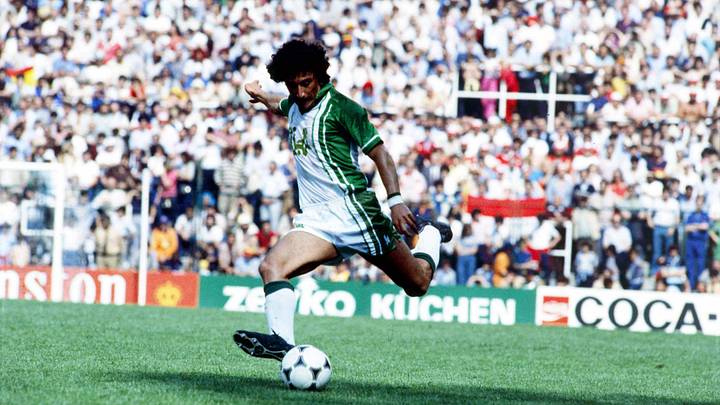
Let's all jump in our proverbial DeLoreans and go back to the World Cup of 1982. Tournament debutants Algeria had just pulled off a massive shock by beating West Germany 2-1 at El Molinón. Despite defeat to Austria a few days later, a 3-2 win over Chile in Oviedo left Algeria in a strong position to progress to the second round.
However, the following day, neighbors West Germany and Austria would go head-to-head. Just 10 minutes in, Horst Hrubesch gives the Germans the lead. At this point, all three teams have four points, with Algeria holding the worst goal difference — and thus needing Germany to score more goals or Austria to earn a draw.
However, at this point, both teams simply stop playing — passing the ball around midfield aimlessly and not attacking, agreeing that a 1-0 final suited both just fine. In this old format, there was no tangible benefit to finish first or second. The match finished 1-0 and both teams went through, sending Algeria home, to widespread outrage.
The match has gone down in history as the Disgrace of Gijón, one of the most impactful in global soccer history. Four summers later in Mexico, all final group games took place at the same time, which is now the case at all levels of the sport around the globe as a result of this controversy.
Austria vs. Algeria unlikely rematch
Amazingly, ever since Austria's 2-0 win over Algeria at Estadio Carlos Tartiere during Spain's 1982 World Cup, the two nations have never met again — until now. On Saturday night in Kansas City, the pair will go head-to-head for second place in Group J. Both have beaten Jordan and lost to Argentina.
In an ironic twist of fate, given that eight of the 12 third-place teams will advance, a draw at Arrowhead Stadium would more than likely see both progress, doing so at the expense of a third-place finisher from another group. Thus, could we see a repeat of the Disgrace of Gijón, one that the Algerians won't mind quite as much? The disgrace of Missouri, coming to a Wikipedia page near you!
 Add us as a preferred source on Google