
Key Points
Bullet point summary by AI
- MLB teams' biggest offseason additions are being evaluated at the season's midway point, revealing both successes and disappointments.
- The Atlanta Braves and New York Yankees are celebrating strong performances from key signings, while others face criticism.
- Several high-profile acquisitions continue to struggle, leaving their teams and fans wondering what comes next.
This past MLB offseason was an eventful one. While there wasn't a Juan Soto- or Shohei Ohtani-level free agent available, there was tons of high-end talent changing teams both on the open market and via trades. Some of these big moves played out about as expected, while others have left a lot to be desired thus far.
With the season reaching its midway point, let's take a trip down memory lane and, with the power of hindsight, grade every team's biggest move based on how it's panned out in year one,.
Arizona Diamondbacks: RHP Zac Gallen
- How Gallen was acquired: Re-signed (1 year, $22.05 million)
- Grade: F
The Arizona Diamondbacks hoped to see Zac Gallen bounce back following the worst year of his career in 2025, essentially signing him to an unofficial qualifying offer. Yet the right-hander has been even worse than last season — in fact, his 6.15 ERA is the worst of all 60 qualified starters. Yeah, it's been bad, and the fact that the Diamondbacks are in dire need of starting pitching help makes his struggles feel even worse. At least it's only a one-year deal.
Athletics: 2B Jeff McNeil

- How McNeil was acquired: Trade (via NYM)
- Grade: D
The Athletics were seemingly buying low on Jeff McNeil, an established veteran, by acquiring him (with the Mets eating part of his contract) in exchange for an 18-year-old in rookie ball. But it hasn't played out that way: McNeil, a player known for spraying hits all over the diamond at his best, has a .612 OPS, the eighth-worst mark of all 152 qualified position players. It's too soon to know what Rodriguez will become, but the A's made this move expecting solid play at the keystone from McNeil for this season. He has not given that to them.
Atlanta Braves: RHP Robert Suarez
- How Suarez was acquired: FA (3 years, $45 million)
- Grade: A
It was fairly surprising to see the Atlanta Braves commit quite a bit of money to a 35-year-old reliever in Robert Suarez, but we can now see why they did it. Suarez has been nothing short of dominant, allowing just two runs in 32 innings of work (0.56 ERA) while serving as Raisel Iglesias' setup man. The Braves' bullpen is as good as anyone's when healthy, and Suarez is a big reason why.
Baltimore Orioles: 1B Pete Alonso
- How Alonso was acquired: FA (5 years, $155 million)
- Grade: B
The Baltimore Orioles were eager to make a splash to get them back into contention, and while they haven't been winning as much as they'd like, that isn't Pete Alonso's fault. After a slow start to his O's career, Alonso wrapped up an impressive month of June and is getting closer to where you'd expect him to be numbers-wise. What he provides offensively, paired with the best defensive season of his career by far, makes for a pretty good deal to date. I still am not convinced that it'll age well, but for now, Alonso is living up to the billing.
Boston Red Sox: LHP Ranger Suarez

- How Suarez was acquired: FA (5 years, $130 million)
- Grade: B+
The Boston Red Sox went all-in on attempting to improve their run prevention this offseason, and while things haven't gone quite as planned, Ranger Suarez isn't to blame. Suarez has a 2.94 ERA in 16 starts, and despite pitching half the time at Fenway Park, he's allowed just five home runs all year. While getting consistent length out of him was an issue early in the year, he's had quality starts in four of his last five outings. Craig Breslow hasn't done many things right, but this is proving to be money well spent thus far.
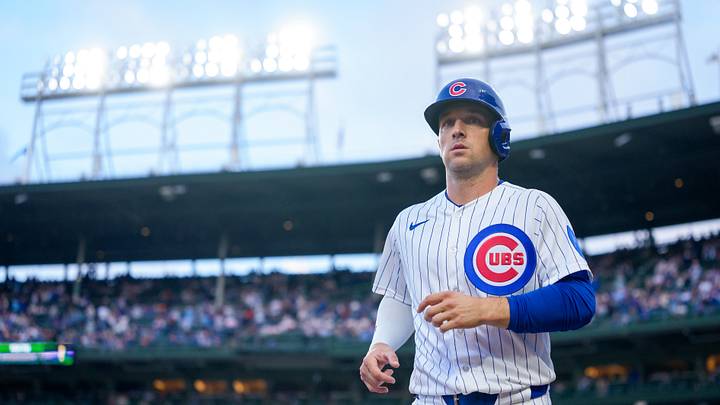
Chicago Cubs: 3B Alex Bregman
- How Bregman was acquired: FA (5 years, $175 million)
- Grade: D
The Chicago Cubs were finally willing to spend big-market money on a marquee free agent — but unfortunately that marquee free agent, Alex Bregman, is having the worst season of his career by far. Bregman's .689 OPS is nearly 100 points lower than his previous career low, and he's been even worse at Wrigley Field (.646 OPS). Bregman's offensive fit in Chicago always felt weird at best, and it's not been pretty thus far. He's still a quality defender at third base and his leadership can't be ignored, but the Cubs need a lot more than what they've gotten from him to this point.
Chicago White Sox: 1B Munetaka Murakami
- How Murakami was acquired: FA (2 years, $34 million)
- Grade: A+
The Chicago White Sox took a chance on a free agent seemingly nobody wanted, landing Munetaka Murakami on a cheap two-year deal, and they've reaped the benefits. Murakami looked like a legitimate MVP candidate before going down with injury, hitting 20 home runs with a .938 OPS in 57 games and looking like Kyle Schwarber-lite thanks to his elite eye. Yes, he strikes out a lot, and no, he isn't a great defender, but he has adjusted to the league better than anyone expected. Don't be surprised to see the White Sox take off once he returns from the IL. This is clearly one of the biggest steals of the offseason.
Cincinnati Reds: 3B/DH Eugenio Suarez

- How Suarez was acquired: FA (1 year, $15 million)
- Grade: D
After missing out on Kyle Schwarber, the Cincinnati Reds went the cheap route to address their glaring need for more power, and now they're paying for it. Bringing Eugenio Suarez back, especially on a pretty cheap one-year deal, made a lot of sense, but Suarez has just eight home runs and a .646 OPS in 55 games despite playing half the time at Great American Ballpark. He's always been streaky, so perhaps he'll turn it on sooner rather than later, but for now, he's having the worst year of his career for a Reds team that could really use the version of Suarez they had not too long ago.
Cleveland Guardians: RHP Shawn Armstrong
- How Armstrong was acquired: FA (1 year, $4 million)
- Grade: C-
You read that right: The biggest move the Cleveland Guardians made in the offseason was signing Shawn Armstrong, a middle reliever, to a one-year, $4 million deal — and it hasn't even aged well. Armstrong has a 4.56 ERA in 27 games, walking more batters than he ever has before. He's already missed a month due to injury and isn't pitching in high-leverage moments on most nights. Essentially, the Guardians got what they deserved for cheaping out in the winter.
Detroit Tigers: LHP Framber Valdez
- How Valdez was acquired: FA (3 years, $115 million)
- Grade: C
The Detroit Tigers signed Framber Valdez to a short-term, high-AAV deal in a desperate attempt to win now with Tarik Skubal. That has not gone well, as Detroit is likely to deal Skubal at the deadline, and Valdez hasn't done his job either. He's been better of late, but he has a 4.05 ERA while posting a career-worst strikeout rate (18.5 percent) and allowing more balls in the air than ever before (and showing the same character concerns that were prevalent in Houston). In other words, it hasn't been great, and I don't see things getting much better.
Houston Astros: RHP Tatsuya Imai

- How Imai was acquired: FA (3 years, $54 million)
- Grade: C
Tatsuya Imai was essentially the Framber Valdez replacement for the Houston Astros, and while his season got off to a dreadful start, he's been much better of late — even recording back-to-back double-digit strikeout games. The Astros need to see more of this to feel great about this deal moving forward, but he's helped play a role in their turnaround of late which is encouraging.
Kansas City Royals: LHP Matt Strahm
- How Strahm was acquired: Trade (via PHI)
- Grade: D-
The Kansas City Royals traded an unproven reliever with cheap club control, Jonathan Bowlan, to the Phillies in exchange for a proven veteran on an expiring deal in Matt Strahm. The Royals were hoping to shore up the back end of their bullpen to try and win right now, yet not only have they been among the worst teams in the league all year, but Strahm has struggled mightily. He has a 5.74 ERA, and as his 6.85 FIP would suggest, he might be lucky that mark isn't even higher. He isn't generating any whiffs and has already given up more home runs this season than in 2025 and 2024 combined.
Los Angeles Angels: RHP Grayson Rodriguez
- How Rodriguez was acquired: Trade (via BAL)
- Grade: D
In a vacuum, trading one year of Taylor Ward for four years of Grayson Rodriguez, as the Los Angeles Angels did, was a no-brainer. Unfortunately, there was clear risk with the Rodriguez deal, and we're seeing it play out in real time. The righty missed the first month of the season with shoulder inflammation, came back for six starts, had an ERA over 8.00 in those outings and is now back on the IL with lower back inflammation. Rodriguez has all kinds of talent, but not only has he had his share of ups and downs while on the mound, simply being healthy enough to pitch has been an issue. Rodriguez has the upside to turn things around, but for now, it's been ugly.
Los Angeles Dodgers: OF Kyle Tucker

- How Tucker was acquired: FA (4 years, $240 million)
- Grade: D
The biggest move of all might've also been the least surprising, as the Los Angeles Dodgers won a bidding war to sign Kyle Tucker to a massive short-term, high-AAV deal. What is surprising, though, is that Tucker has struggled mightily in Los Angeles, essentially being a league-average hitter at the plate. The Dodgers assumed they'd be adding another superstar to a team full of them, but instead they have a mediocre outfielder making $60 million this season. Tucker's struggles haven't impacted the team much at all, and he's likely to get going at some point, but these facts don't mean it's been a good signing thus far.
Miami Marlins: OF Owen Caissie
- How Caissie was acquired: Trade (via CHC)
- Grade: C+
The Miami Marlins traded Edward Cabrera to the Cubs in a deal that brought Owen Caissie and other prospects back to Miami. Cabrera hasn't been great in Chicago, but the same can be said for Caissie in Miami: The former top prospect has a mediocre 107 OPS+ and is striking out a whopping 38.5 percent of the time while only playing in a platoon role for most of the year. He has immense upside as a slugging outfielder, but so far, it hasn't clicked.
Milwaukee Brewers: RHP Brandon Woodruff
- How Woodruff was acquired: Re-signed (Accepted one-year, $22.05 million QO)
- Grade: B
Brandon Woodruff accepted the Milwaukee Brewers' qualifying offer, locking him in for 2026 on a one-year, $22.05 million deal. This season has gone about as expected for Woodruff, who has pitched well when he's been able to take the mound (2.59 ERA in eight starts) but has also missed nearly two months with shoulder inflammation. He remains extremely effective when healthy, but how healthy he'll be down the stretch is part of the equation too.
Minnesota Twins: C/1B Victor Caratini

- How Caratini was acquired: FA (2 years, $14 million)
- Grade: B-
The Minnesota Twins said they wanted to win now, which is why they didn't trade Joe Ryan over the winter, yet their biggest offseason move was signing Victor Caratini — a backup catcher — to a two-year deal. Caratini is fine, and has actually played quite well since Ryan Jeffers landed on the IL, but the fact that he was their biggest move is ... an issue.
New York Mets: 3B/SS Bo Bichette
- How Bichette was acquired: FA (3 years, $126 million)
- Grade: D+
After missing out on Tucker, the New York Mets quickly pivoted to Bo Bichette, signing him to a bloated three-year deal with opt-outs. In Bichette, the Mets assumed they'd be getting shaky defense, especially since they'd be asking him to play third base, a position he hadn't played before. But they also assumed they'd be getting the consistent All-Star-caliber bat he was in Toronto. While he's been better of late, Bichette ended the month of May with a .583 OPS; he's a huge reason why the Mets got off to such a dreadful offensive start. This is undoubtedly one of the worst value deals of the winter, and with how this season has gone, there's a chance Bichette won't even be opting out, saddling the Mets with at least one more year of this contract.
New York Yankees: OF Cody Bellinger
- How Bellinger was acquired: Re-signed (5 years, $162.5 million)
- Grade: A
The New York Yankees prioritizing Cody Bellinger over Tucker drew a ton of scrutiny at the time but is proving to have been a wise move. Bellinger has always been a better defensive outfielder than Tucker, but he is also having a better offensive year than Tucker even with a rough June. His bat plays perfectly in Yankee Stadium, and his defense in left field is as good as anyone's. Good deal all around.
Philadelphia Phillies: DH Kyle Schwarber

- How Schwarber was acquired: Re-signed (five years, $150 million)
- Grade: A+
Re-signing Kyle Schwarber was a move that the Philadelphia Phillies had to make, but it also felt as if signing a 32-year-old DH coming off the best year of his career was bound to age poorly. Well, all Schwarber has done at age 33 is get even better, as he leads the Majors with 30 home runs in 81 games while leading the NL with a .583 slugging percentage. This deal still might not age well, but for now, how can you not love what you're seeing?
Pittsburgh Pirates: 2B Brandon Lowe
- How Lowe was acquired: Trade (via TB)
- Grade: A
The Pittsburgh Pirates finally made a serious attempt to improve their offense this offseason, with their biggest move being the acquisition of Brandon Lowe in a three-team deal that sent Mike Burrows to Houston. This has been a slam dunk for Pittsburgh: Lowe has been a game-changer offensively, slugging 20 home runs in 79 games, just three home runs shy of tying the franchise's single-season record for a second baseman. The only downside is that he's on an expiring contract.
San Francisco Giants: OF Harrison Bader
- How Bader was acquired: FA (2 years, $20.5 million)
- Grade: F
The Harrison Bader signing looked like a good one for the San Francisco Giants. He'd always been an elite defensive center fielder (which they needed), and he was coming off his best offensive season in 2025. Unfortunately, the Bader signing has been emblematic of the season this team has had, as he's slashing .170/.198/.358 with five home runs in 30 games and has already had a pair of IL stints. Even his defense hasn't been as good as expected. Just a bad deal all around.
San Diego Padres: RHP Michael King

- How King was acquired: Re-signed (3 years, $75 million)
- Grade: B
It was a bit surprising that the San Diego Padres were able to re-sign Michael King given their financial restrictions, and boy, should they be pleased that a deal crossed the finish line. The right-hander is their only really consistent starter right now, with Nick Pivetta missing most of the year with injury. If they didn't have him, who knows where they'd be in the NL standings?
Seattle Mariners: 1B Josh Naylor
- How Naylor was acquired: FA (5 years, $92.5 million)
- Grade: C
The Seattle Mariners were ultra-aggressive to ensure they'd retain Josh Naylor, and while the deal was seen as an easy win at the time, it's been anything but thus far. Yes, Naylor has steadily been improving after a horrendous April, but his numbers are still nowhere near where you'd expect, both offensively and defensively. While better times are certainly to come, Naylor is among those most deserving of blame for what's been an incredibly uneven start to Seattle's season.
St. Louis Cardinals: RHP Dustin May
- How May was acquired: FA (1 year, $12.5 million)
- Grade: B+
The Dustin May signing was about as low-risk, high-reward as it could get, given the fact that it was a cheap one-year deal for a pitcher who has always had high-octane stuff. He was coming off a rough season, but had once been considered a high-end prospect with the Los Angeles Dodgers. You could see May turning a corner in the right situation, and that's what's happened with the St. Louis Cardinals. While his ERA might be a bit high, he's had quality starts in nine of his 15 appearances, and he has a 3.32 FIP that suggests better days are ahead. He'll either be a crucial piece for a Cardinals team trying to make the playoffs or be traded at the deadline for a nice haul. This is one of the best value signings of the offseason.
Tampa Bay Rays: RHP Nick Martinez

- How Martinez was acquired: FA (1 year, $13 million)
- Grade: A
Speaking of the best value signings of the offseason, how about Nick Martinez? The Tampa Bay Rays took a one-year gamble on him just before spring training, and he's had the best season of his career to date. The right-hander has allowed three runs or fewer in all but one of his 16 starts, and the Rays have gone 12-4 when he's taken the mound. I have my doubts that his 2.66 ERA will sustain the entire season, but on a cheap one-year deal, Tampa will take what it can get. There's a very good chance Martinez will be an All-Star this month.
Texas Rangers: LHP MacKenzie Gore
- How Gore was acquired: Trade (via WSH)
- Grade: B-
The Texas Rangers made two massive offseason trades, the biggest of which saw them part with five prospects in exchange for MacKenzie Gore from the Washington Nationals. Gore has been the same kind of pitcher he was with the Nats, displaying immense upside in some games while struggling mightily in others. He's been fine, but the Rangers were surely betting on him taking a step forward given what they paid to acquire him — and given his history of poor second halves, I'm not sure that'll come any time soon.
Toronto Blue Jays: RHP Dylan Cease
- How Cease was acquired: FA (7 years, $210 million)
- Grade: A-
Eyebrows were raised when the Toronto Blue Jays gave Dylan Cease a seven-year, $210 million deal in free agency, but they shouldn't have been, and you're seeing why. After a down year in 2025, Cease is back in Cy Young form, posting a 3.02 ERA in 15 starts with an absurd 36.7 percent strikeout rate and a 2.36 FIP. He'll never give you consistent length, and walks have been an issue at times (particularly lately), but this guy is a bona fide ace. He's also as durable as they come, which made his early-season injury rather shocking (even though he only missed the minimum of 15 days).
Washington Nationals: C Harry Ford

- How Ford was acquired: Trade (via SEA)
- Grade: D+
The biggest splash Paul Toboni made in his first offseason running the Washington Nationals was acquiring Harry Ford in a deal that sent reliever Jose A. Ferrer to the Seattle Mariners. Ford was seen as Washington's catcher of the future, but he failed to win the starting role coming out of spring training and he has not swung the bat well at all in Triple-A. With how well Keibert Ruiz has played, I'm not sure Ford will ever become the long-term starter in Washington, and knowing that they gave Ferrer, a reliable reliever they could certainly use, up to get him makes it sting even more. There's time for Ford to get going and show why he was so highly coveted, but for now, it isn't looking great.
More MLB news and analysis:
 Add us as a preferred source on Google