
Key Points
Bullet point summary by AI
- The first round of the 2026 NBA Draft followed expectations for the top eight picks before diverging into chaos.
- Multiple teams landed impactful prospects with high upside despite some surprising selections and reach grabs.
- The draft's depth and variability set the stage for significant roster reshaping and emerging contenders across the league.
The first round of the 2026 NBA Draft went chalk for about eight picks until the floodgates opened and chaos reigned. A lot of interesting picks in a deep class with a ton of instant impact potential.
Let's grade em all, starting with the No. 1 overall pick out of Brigham Young University...
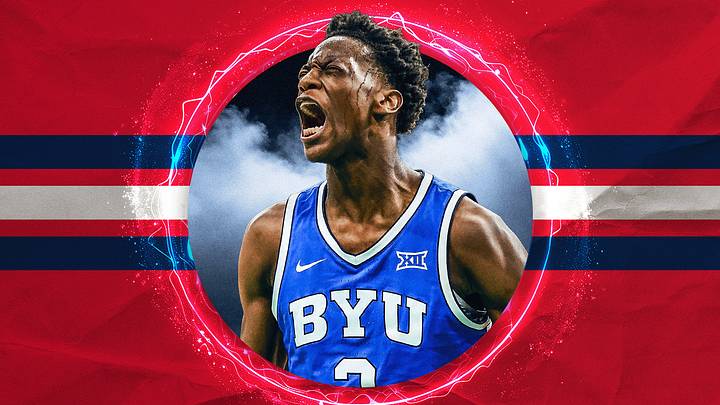
1. Washington Wizards: AJ Dybantsa, F, Brigham Young

No surprise here. AJ Dybantsa was the immediate favorite as soon as Washington won the lottery. He aligns with Washington's desire to stack big, skilled wings. Dybantsa immediately elevates the Wizards offense with his ability to put pressure on the rim and create shots from scratch. Though not a great playmaker (yet), Dybantsa made real strides on that front as a freshman.
There are questions on defense, but Dybantsa has every physical tool to improve on that end. His fit as a heliocentric scorer next to another heavy on-ball star in Trae Young merits further interrogation, but Washington's new cornerstone has arguably the highest ceiling in the draft.
Grade: A
2. Utah Jazz: Darryn Peterson, G, Kansas

As expected, the Jazz add the cleanest fit on the board in Darryn Peterson, the No. 1 recruit in his high school class and a supremely gifted perimeter scorer. Injuries held Peterson back this past season and he was still one of the absolute best guards in college basketball when available. He will need to prove that he can rediscover his downhill burst and playmaking ability, but the versatile, scalable offensive skill set — his ability to hit movement 3s and get to his spots off-ball — gives him a high floor.
The Jazz can add Peterson next to Keyonte George in the backcourt, with a star-studded frontcourt already in place. Utah is building toward something special. Don't be shocked when Peterson is playing postseason basketball sooner than later.
Grade: A
3. Memphis Grizzlies: Cameron Boozer, F, Duke

The best prospect in the draft for my money, Cameron Boozer was the obvious pick for Memphis. He joins a supersized, super-physical frontcourt next to Zach Edey. The Grizzlies are going to dominate the glass and abuse smaller teams in the paint. He has his limitations as a defender — he won't block a ton of shots — but Boozer has precious few true weaknesses. He's a fluid mover with elite anticipation on both ends.
Boozer can handle in the pick-and-roll, distribute on the short roll, create out of the post or drill spot-up 3s. He is the most polished and versatile offensive player in the draft. His IQ, at just 18 years old and with an NBA-ready frame, puts Boozer on a special trajectory.
Grade: A+
4. Chicago Bulls: Caleb Wilson, F, North Carolina

Another no-brainer — and another home run selection. The Bulls really couldn't get this pick wrong. Caleb Wilson's season was cut short by a freak hand injury, but he was incredibly dominant on both ends of the floor for North Carolina. He's a trampoline athlete, dunking everything and creating frequent disruptions as a defender.
Wilson can slide his feet out in space. He has the length to protect the rim in drop, but he's especially fruitful as a weak-side roamer. He crashes the glass. There are hints of shooting touch. He will need to refine his ball skills and decision-making, but the ceiling is the sky. Chicago's next chapter is off to an killer start.
Grade: A+
5. Los Angeles Clippers (via IND): Keaton Wagler, G, Illinois

Keaton Wagler emerged as the overwhelming favorite to land in Inglewood over the past few days. While there are concerns around Wagler's ability to hold up defensively, especially next to Darius Garland, the Clippers are understandably betting on his elite shot-making and advanced feel. Wagler does not turn the ball over and he feels smart (and versatile) enough to contribute on day one. While he struggles to create clean looks inside the arc, Wagler has added 20 pounds of muscle over the last year. He embraces physicality and could improve as a 2-point finisher as his frame improves.
Grade: B
6. Brooklyn Nets: Mikel Brown Jr., G, Louisville

Despite some troubling Nate Ament rumors, the Nets opt for another guard in Mikel Brown Jr. — the right choice, as letting positional need guide their decision-making at this stage would have been a fatal mistake. Brown gives the Nets a proper engine. He has great size and twitch for a point guard, able to break down defenders or bury them with a barrage of pull-up 3s. His vision as a passer is unmatched. He will need to cut down on turnovers and play with a bit more control, but Nets head coach Jordi Fernandez feels like the perfect match to both refine and empower Brown.
Grade: A
7. Sacramento Kings: Darius Acuff Jr., G, Arkansas

Shocking! Not. The Kings basically telegraphed their desire to add Darius Acuff Jr. on lottery night. The best freshman guard since Trae Young, Acuff's offensive production at Arkansas was prodigous. He's a knockdown shooter, a stocky, shifty ball-handler and an extremely poised distributor out of the pick-and-roll. His command of tempo and his maturity in big moments really stands out. He was also a complete disaster on defense, which Sacramento needs to figure out, but Acuff feels like the potential stabilizer — and leader — this Kings organization needs.
Grade: B+
8. Atlanta Hawks (via NOP): Kingston Flemings, G, Houston

Kingston Flemings is easy to root for. He has a super high character and exhibited tremendous leadership skills as a freshman at Houston, a program where teenagers aren't often granted a long leash. He also happens to be a killer on the court. Flemings combines the best first step in the draft with slick distribution skills and a smooth mid-range pull-up, which he should expand beyond the 3-point more consistently in the years to come. He's undersized, but he's also a true warrior on defense. The Hawks like to get out in run. Flemings can run.
Grade: A
9. Dallas Mavericks: Morez Johnson Jr., F, Michigan

A "surprise," but not really. Morez Johnson Jr. has received nothing but rave reviews on the workout circuit, per every pre-draft report. He's lauded as a great teammate who sets the ton in practice. He was a rock in Michigan's super-powered frontcourt this past season, able to slide between the four and the five, with the strength to battle inside and the foot speed to guard out on the perimeter. Johnson, Cooper Flagg and Dereck Lively immediately becomes a special defensive backbone. The Mavs will compete hard next season. If Johnson can ramp up his 3-point volume, he will be a very helpful player.
Grade: B
10. Milwaukee Bucks: Brayden Burries, G, Arizona

Brayden Burries was the best player on a dominant Arizona team. It's fair to question his ceiling offensively, but strong guards who can shoot, finish at the rim and defend like hell are en vogue. Anyone watching the conference finals through an NBA Draft lens probably thought of Burries. He feels like a safe bet to contribute at a high level on a good team. Are the Bucks a good team right now? Absolutely not, but Burries will set the tone with his rugged defense and get plenty of buckets out in transition or attacking closeouts.
Grade: B-
11. Golden State Warriors: Yaxel Lendeborg, F, Michigan

Yaxel Lendeborg's incredible basketball journey culminates with a lottery selection, landing in Golden State where he can learn from Draymond Green and Jimmy Butler — a couple bullish defenders with a mean streak, not unlike Lendeborg. Yes, he's old for a lottery pick. He will turn 24 as a rookie. But Lendeborg is on a unique developmental arc, with incredible two-way versatility. He has blossomed into an elite rim finisher and a legitimate volume shooter. He can switch one-through-five on defense. He can help the Dubs right away.
Grade: B
12. Oklahoma City Thunder (via LAC): Aday Mara, C, Michigan

OKC lands FanSided's No. 5 prospect, because of course. Aday Mara becomes the third Michigan star taken in the first dozen picks. There are valid questions about Mara's durability, but he's a special rim protector with a supermassive 9-foot-9 standing reach. He's also a brilliant high post and face-up passer who should thrive as an Isaiah Hartenstein understudy with OKC's gaggle of elite finishing guards. The best defensive team in the NBA just added arguably the best defender in the draft. Another good bit of business for Sam Presti and company.
Grade: A+
13. Milwaukee Bucks (via MIA): Nate Ament, F, Tennessee

The good: Milwaukee should be swinging for the fences, and after taking a "safe" player at No. 10 in Burries, the Bucks are gambling on Nate Ament's high theoretical ceiling in this spot. Ament offers compelling range and versatility as a defender. The theoretical shooting touch and potential for self-creation from a 6-foot-10 wing is an easy selling point. That said, Ament is a disastrous rim finisher for his size. He lacks burst and strength and really struggles to operate under pressure inside the arc. The drew a bunch of fouls, but is also prone to ugly turnovers and forcing bad shots. This feels like a reach, even if he "fell" further than expected.
Grade: C
14. Charlotte Hornets: Hannes Steinbach, F, Washington

Hannes Steinbach was a logical Hornets target from the beginning. He's an elite rebounder and a graceful interior scorer, with enough touch to believe he can consistently space the floor in due time. The Hornets needed help on the front line. He moves well enough to play the four or five, depending on matchup. While not a great rim protector, Steinbach is a heads-up defender who applies his physicality liberally. Don't shocked if Steinbach is starting games on a winning team soon.
Grade: A
15. Chicago Bulls (via POR): Dailyn Swain, F, Texas

Dailyn Swain was FanSided's No. 8 prospect, in the same tier (for me) as Kingston Flemings, Mikel Brown Jr. and several lottery guards. He's an awesome slasher with bendy handles and excellent touch at the rim, which Chicago certainly hopes will translate to more consistent results from 3-point range down the road. He needs to iron out his clunky mechanics, but Swain presents a unique blend of size, ball-handling craft and rim pressure on the wing. He has the chance to blossom into a significant contributor for the new-look Bulls.
Grade: A+
16. Oklahoma City Thunder (via PHX): Bennett Stirtz, G, Iowa

OKC adds another guard to its endless rolodex. Bennett Stirtz basically was the Iowa offense last season. Head coach Ben McCollum, whom Stirtz followed from D-II to Drake, and then finally to Iowa, has built a successful career on Stirtz's incredible point guard play. He's a knockdown shooter and a prodigous pick-and-roll creator. Stirtz has more defensive question marks than your typical OKC guard, but the Thunder can probably compensate. His poise and IQ are off the charts. He should step in and help on some level.
Grade: B+
17. Detroit Pistons (via PHI): Ebuka Okorie, G, Stanford

Ebuka Okorie was the great surprise of this past season — an unheralded recruit who flipped his commitment from Harvard to Stanford, then led the ACC in scoring. He's a bucket, plain and simple. Okorie consistently tilts the defense with incredible speed and shiftiness. He's built strong and quite committed on defense. The only major concern, aside from size, was his low assist rate. That is mitigated next to Cade Cunningham, whom Okorie figures to spend a lot of time next to in Detroit's rotation. He gives the Pistons some much-needed halfcourt shot creation.
Grade: A
18. Charlotte Hornets (via ORL): Christian Anderson Jr., G, Texas Tech

Christian Anderson Jr. is the second Hornets first-round pick with a connection to Germany. He's also the best shooter in the draft and a skilled facilitator out of the pick-and-roll. There are natural concerns over his slight frame, but Anderson gives Charlotte another high-octane contributor in the second unit behind LaMelo Ball, Kon Knueppel and Brandon Miller. The Hornets are going to put up 3s. Does he really address a need in lieu of the Coby White move? Not really, but he's a dude.
Grade: B-
19. Toronto Raptors: Allen Graves, F, Santa Clara

A very Raptors pick. Allen Graves is an elite off-ball defender, with a cerebral approach and a nonstop motor. He's not a great athlete by any stretch, but Graves put up stupendous stock numbers for a freshman. He hit 40 percent of his 3s, too. He'll crash the offensive glass. He can pass it pretty well in the flow. This is Toronto tripling down on a strength. Good player. Good value. Even if he does not really addres what ails the Raptors.
Grade: B
20. San Antonio Spurs (via ATL): Jayden Quaintance, C, Kentucky

Jayden Quaintance was my No. 1 defender in this draft. He's a monster. The length, fluidity and explosiveness is rare enough, not to mention his sixth sense for sniffing out blocks. Quaintance can guard all over the floor. He can mirror guards or defend in drop. The only reason he isn't a lottery pick is health. Quaintance has lost 1.5 seasons to injury at this point. The Spurs are banking on the 18-year-old's youth and potential. For a team this deep, that leap of faith — and the patience required to take it — is totally justifiable.
Grade: A+
21. Memphis Grizzlies (via MIN): Karim López, F, Mexico

Karim López maybe fell further than expected, but this is a much better range for him than the lottery. He's an interesting addition next to Cameron Boozer, giving Memphis a physical slasher and another excellent positional rebounder, adding to their massive advantage in that category. López isn't a super twitchy athlete, but he's strong, with great footwork and touch on drives. He carves out buckets at the rim with great poise. If he can solidify his 3-point shooting and his defense, Memphis will come away a big winner.
Grade: B
22. Philadelphia 76ers (via HOU): Labaron Philon Jr., G, Alabama

Was it worth the Jared McCain trade? That remains to be seen, but Mike Gansey picks the best remaining prospect — ranked No. 10 on FanSided's big board — in Labaron Philon. For as much as Philly needs size and physicality in the frontcourt, the guard room behind Tyrese Maxey and VJ Edgecombe was disastrous down the stretch. Philon adds instant offense to the second unit. He's a slippery ball-handler with three-level scoring chops, strong playmaking feel and a workable defensive projection, despite his thin frame. A big win for new Sixers president Mike Gansey.
Grade: A+
23. Atlanta Hawks (via CLE): Zuby Ejiofor, C, St. John's

Zuby Ejiofor has a mean you-know-what. He competes so freakin' hard and he is going to bring a real defensive edge to the Hawks second unit, which is desperately needed after Karl-Anthony Towns punked them in the first round. He's a smidge undersized for a "center," but he's mobile enough to guard on the perimeter (and potentially play some four) and strong enough to battle inside. The shooting is a question, but Ejiofor can bulldoze to the rim and operate as a passing hub at the elbow. A damn fine pick for Atlanta. This front office knows what it's doing.
Grade: A-
24. Los Angeles Lakers (via NYK): Cameron Carr, G, Baylor

Another first round shooter for JJ Redick. Cameron Carr has super deep range on his jumper, with the explosive, fluid athleticism to slice backdoor and play above the rim — an attribute Luka Dončić figures to take full advantage of. Carr also presents intriguing upside as a shot-blocking, weak-side helper. This is not the center solution Lakers fans wanted, but Carr fell further than he should have. This is great value and a tremendous fit. The Lakers can find a big somewhere else.
Grade: A
Dallas Mavericks (via LAL): Sergio de Larrea, G, Spain

New Mavericks GM Mike Schmitz has an excellent command of international prospects, so this should not come as a surprise. After targeting frontcourt depth at No. 9, the Mavs add a strong complementary guard in Sergio de Larrea, with a knockdown jumper, a compelling 6-foot-6 frame and incredibly high feel for the game. There are questions about his ability to pressure the rim and create his own offense reliably, but those are mitigated next to Cooper Flagg and Kyrie Irving.
Grade: B
26. San Antonio Spurs (via DEN): Tarris Reed Jr., C, Connecticut

The Spurs add more UConn DNA next to Stephon Castle. This is a brilliant trade for the Spurs, who compensate for the immediate uncertainty of Jayden Quaintance by adding a ready-made backup center in Tarris Reed. He's a prolific rebounder, a skilled finisher and short roll passer, and a legitimate rim deterrent. Reed needs to cut down on fouls and better position himself as a drop coverage anchor, but he has the range and the instincts to become a very solid two-way force behind Victor Wembanyama. The Spurs are planting the seeds for Luke Kornet, now and in the future.
Grade: A
27. Boston Celtics: Chris Cenac Jr., C, Houston

An upside swing for the Celtics. This is the appropriate range for Chris Cenac, a deeply flawed but incredibly exciting prospect. His 7-foot-5 wingspan and elite perimeter agility on defense points to major upside. He flashes 3-point range and is very comfortable (maybe too comfortable) in the mid-range. Cenac needs to learn to play with physicality in the paint and he is an extremely erratic decision-maker offensively, but the Celtics develop players well and this late in the first round, it's a solid dart throw.
Grade: B
28. Brooklyn Nets (via DET): Joshua Jefferson, F, Iowa State

The Nets... did very well tonight! Joshua Jefferson is a surprise first-round pick, but he was No. 21 on FanSided's board. This is also a very Sean Marks-coded selection. Jefferson is a smart, physical forward with legitimate ball skills. He was basically Iowa State's point guard while masquerading as a rebounding, stock-getting four man. Questions persist about age, athleticism and shooting, but players with Jefferson's IQ and positional bonafides don't fail often.
Grade: A+
29. Sacramento Kings (via SAS): Alex Karaban, F, Connecticut

The Kings move up with Cleveland to acquire Alex Karaban, who I've mocked to Sacramento at No. 34 on several occasions (including on Tuesday morning). Karaban is a proven winner at the college level and a knockdown shooter with real forward size. He's a limited athlete, but a solid positional defender. This feels like a slight reach, but the Kings drafting certified impact guys with skill and feel should probably happen more often. It's fine.
Grade: C+
30. Phoenix Suns (via OKC): Koa Peat, F, Arizona

Phoenix trading into Round 1 to draft the Arizona guy feels a bit goofy, but this is solid value — potentially great value, if Koa Peat can ever figure out the jump shot. The concerns about his defensive position and offensive role are vast and valid, but he has won a lot, both in high school and college. He also seems like an easy guy to bet on in terms of personality. Peat is built like a tank and he plays with every ounce of power inherent to his 245-pound frame. He's a willing screener and connective passer. There's some promising touch in the mid-range. Good business for the Suns, who keep stockpiling culture guys in the post-KD era.
Grade: B+
More NBA news and analysis:
 Add us as a preferred source on Google